


Description
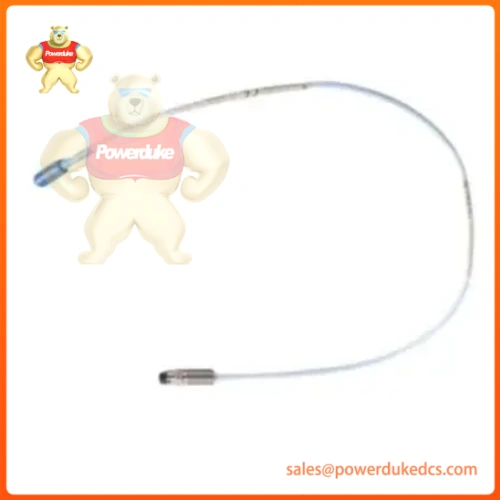 Model & Brand: Bently Nevada (Baker Hughes) / 3300 XL Series (Catalog No. 330190-045-01-CN / Extension Cable)
- Physical Dimensions: Standard high-frequency coaxial configuration with 4.5 meters (14.8 feet) total system extension length and miniature ClickLoc connectors
- Estimated Shipping Weight: 0.35 kg (Packaged in multi-layer anti-static ESD shielding and structural foam crating)
- What’s in the Box: 330190 extension cable with corrosion-resistant connectors, connector protector caps, and factory transmission test verification report.
Rotating machinery applications in power generation, oil and gas, and heavy industrial processing often require remote mounting of Proximitor sensors away from harsh turbine enclosures. System engineers integrate the Bently Nevada 3300 XL Extension Cable (Catalog No. 330190-045-01-CN) to bridge the physical gap between the proximity probe installed in high-temperature machine casings and the Proximitor sensor housed in a secure local junction box or instrument rack (—which is vital for maintaining signal integrity, preserving system linearity, and ensuring uninterrupted vibration and position monitoring without attenuation or electrical phase shift).
Technicians must ensure clean, finger-tight torque connections at both probe and sensor interfaces, ensuring the ClickLoc mechanism engages fully to prevent high-frequency signal noise injection from plant electrical fields.
| Parameter | Value |
| System Platform | Bently Nevada 3300 XL 8 mm / 5 mm Proximity Transducer System |
| Cable Type | High-frequency coaxial extension cable with fluorocarbon insulation |
| System Length Option (-045) | 4.5 metres (14.8 feet) extension length component |
| Connector Option (-01) | Miniature ClickLoc connectors with connector protectors |
| Country Suffix (-CN) | Factory regional designation and authorized distribution processing tracking |
| Operating Temperature | -51°C to +177°C (-60°F to +350°F) extended thermal rating |
| Characteristic Impedance | 75 ohms nominal matched coaxial impedance |
Auditors inspecting critical turbomachinery protection systems demand rigorous documentation verifying electrical safety, signal insulation properties, and hazardous area compliance.
- CE Mark: Confirms conformity with European Union directives covering electromagnetic compatibility (EMC) and low-voltage safety.
- cULus / CSA Listed: Validates North American standards for industrial and hazardous location deployment.
- ATEX / IECEx Approvals: Certified for deployment in explosive gas atmospheres (Zone 0/1/2 hazardous zones).
- RoHS Compliance: Restricts hazardous chemical substances in electronic component manufacturing.
Compliance Note: Compliance with API 670 specifications ensures that coaxial extension cables maintain system scale factor accuracy and signal stability across varied thermal conditions. Verify specific hazardous area installation drawings with Baker Hughes prior to plant audits.
Dormant extension cables stored in warehouse stockroom bins face terminal oxidation on connector pins and outer jacket degradation if environmental parameters exceed strict control limits.
Keep the extension cable assembly coiled neatly and sealed tightly inside its original anti-static (ESD) moisture-barrier bag to safeguard the precision coaxial pins and ClickLoc threads from dust and static discharge. Maintain warehouse storage temperatures between -51°C and +105°C with relative humidity kept strictly below 95% non-condensing to prevent micro-corrosion on gold-plated connector contacts. Ensure the hardware remains protected from heavy physical crushing forces that could deform the inner conductor or alter cable impedance.
Proper routing and bend radius management dictate installation success in complex industrial junction boxes. Ensure all machinery monitoring loops are completely powered down or bypassed prior to handling. Route the coaxial cable away from high-voltage motor feeds and variable frequency drives (VFDs) to prevent electromagnetic coupling, respect the minimum bend radius (typically 25.4 mm / 1.0 in), and connect hand-tight until the ClickLoc mechanism distinctly snaps into place.
- What is the correct HS Tariff Code for international customs clearance?Industrial monitoring instrument cables and electrical transmission components classify under harmonized code 8538.90 (or regional variants like 8537.10/8544.42), though exact regional rulings should be verified with your broker.
- Does this extension cable require individual bench calibration?No, the 3300 XL system design allows complete interchangeability of probes, extension cables, and Proximitor sensors without individual component matching or bench calibration.
- How does the Country of Origin (COO) impact global trade compliance?The verified COO dictates trade agreement qualification and must match commercial shipping paperwork to eliminate border customs clearance delays.
- Why is comprehensive transit insurance mandatory for this component?Precision coaxial connections, fine threading, and delicate connector pins can suffer structural strain or thread distortion under severe impact forces during transit.






