Description
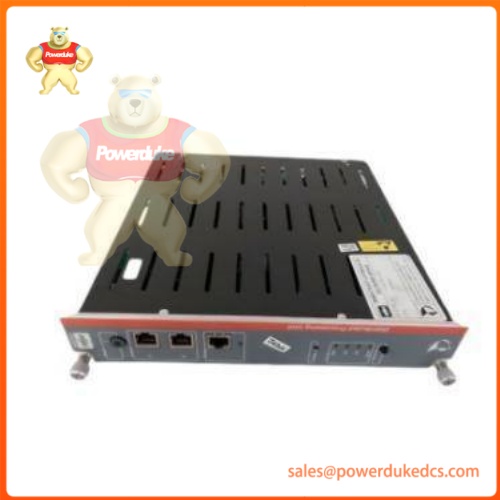
The Metso D201832L IPSP (Integrated Power Supply Unit) is a specialized power management module designed for the Metso DNA (formerly Neles/Valmet) automation system. It is a critical component of the ACN (Advanced Control Node) I/O rack, responsible for converting bulk cabinet power into the regulated voltages required by the I/O bus, the local controller, and the interface modules.
Commercial and Availability Status
-
Condition: New Original (Factory Sealed) or Refurbished (Certified)
-
Warranty: 12-Month Mechanical and Electrical Warranty
-
Availability: In Stock
-
Lead Time: Ships within 1 to 3 business days
-
Pricing Note: As a core infrastructure component, pricing is subject to current inventory levels. Contact our sales department for a firm quote.
Technical Specifications
| Parameter | Specification / Value |
| Model Number | D201832L |
| Type | IPSP (Integrated Power Supply) |
| Input Voltage | 24 V DC (Nominal) |
| Input Range | 18 to 32 V DC |
| Output Voltages | Regulated +5 V DC, +3.3 V DC (Internal Bus Power) |
| Efficiency | > 85% at full load |
| Isolation | Galvanic isolation between input and output |
| Protection | Overvoltage, Overcurrent, and Reverse Polarity protection |
| Mounting | Specific slot in Metso DNA / ACN I/O Rack |
Technical Architecture and Role in the Rack
The D201832L is not just a standard power supply; it is an intelligent power interface for the Metso DNA architecture.
Power Distribution
The IPSP takes the primary 24 V DC from the cabinet power bus and “cleans” it. It filters out high-frequency noise and surges before distributing logic-level power to the backplane. This protects the delicate microprocessors on the I/O modules and the ACN controller from “dirty” industrial power.
Redundancy Support
In high-availability configurations, two D201832L modules are typically installed in a single rack.
-
Diode Oring: The modules are internally decoupled, meaning if one IPSP fails, the other takes over the full load instantaneously without a voltage dip.
-
Load Sharing: Under normal conditions, the two units balance the power load, extending the lifespan of the internal capacitors.
Engineering and Maintenance Guidelines
1. Diagnostic Indicators
The front panel features critical status LEDs that should be part of daily maintenance rounds:
-
Input OK: Indicates the external 24 V DC supply is present and within range.
-
Output OK: Indicates the internal bus voltages (+5V/+3.3V) are stable.
-
Fault: Illuminates if the module has entered a thermal shutdown or detected an internal component failure.
2. Hot-Swap Procedure
The D201832L is hot-swappable, provided a redundant module is present and healthy.
Critical Field Note: Before removing a D201832L, always verify that the second IPSP in the rack has a solid “Output OK” LED. If you remove the only healthy power supply, the entire ACN node will crash, leading to a loss of control for all I/O modules in that rack.
3. Thermal Management
The IPSP generates heat as a byproduct of voltage conversion. Ensure that the rack’s ventilation fans are operational and that the air filters are clean. High ambient temperatures inside the cabinet are the leading cause of premature failure for these modules.
Frequently Asked Questions
Can I replace a D201832 with the D201832L?
The “L” version is the modern revision of the legacy IPSP. It features improved efficiency and better heat dissipation. It is generally backward compatible with the standard D201832, but it is recommended to replace them in pairs if you are running a redundant configuration to ensure identical load-sharing characteristics.
What should I do if the “Input OK” LED is off?
Check the 24 V DC supply at the backplane terminals. This is often caused by a tripped circuit breaker in the power distribution panel or a loose screw terminal on the rack’s power input block.
Does the module require software configuration?
No. The D201832L is a pure hardware/firmware device. Once inserted into the rack, it begins providing power immediately. However, the Metso DNA system will monitor its “Health Status” signal via the I/O bus, which will be visible in the system’s diagnostic display.
Is this for an emergency replacement of a failed unit, or are you stocking up on spares for an upcoming turnaround?