Description

Metso Valmet A413240: Securing Legacy DCS Data Routing
Field Observation: The Silent Threat of Backplane Bus Timeout Errors
Why do plant engineering teams focus endlessly on optimizing server database runtimes while entirely ignoring the physical data routing cards nesting in their marshaling enclosures? During a production ramp at a large chemical pulp mill, a primary fiber-washing node suddenly dropped completely offline. In the control room, operations were blinded as every graphic block tied to that specific processing rack turned a frozen magenta. The root cause wasn’t a ruptured fiber line or a server database crash; it was an internal communication handshake failure on an aging hardware link—specifically, the legacy Metso Valmet PIC2 Processor Interface Card (factory part number A413240).
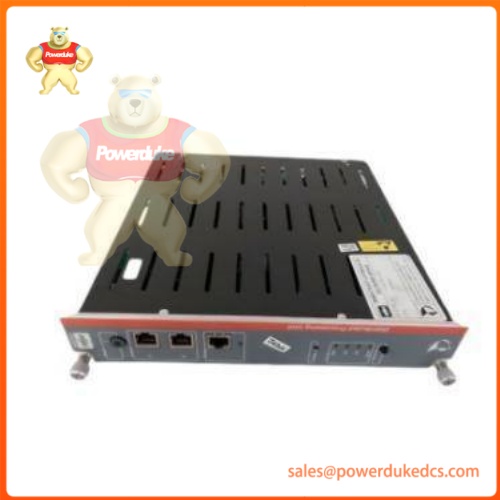
The A413240 is a dedicated, board-level Processor Interface Card engineered for legacy Distributed Control Systems (DCS) developed under the Metso Automation / Valmet banner (such as vintage Damatic/MAX platforms). It serves as a high-speed communication bridge, negotiating the critical data exchange between the rack’s central subsystem processors and the downstream physical input/output (I/O) networks. Because these cards run continuously inside conditioned cabinets, maintenance teams often misclassify them as zero-maintenance hardware.
However, over decades of service, microvolt noise on the backplane can degrade the card’s bus transceivers, leading to intermittent timing sync packet losses that can blind the master processor and trigger safety shutdowns across the entire processing rack.
[Main DCS Subsystem Processor] ───(High-Speed System Bus)───> [A413240 PIC2 Interface Card]
                                                                        │
                                                            (Data Handshake Routing)
                                                                        ▼
[Physical Field Loop Channels] <───(High-Density I/O Subplane)────────┴─── [Internal Register Matrix]
Technical Specification Baseline
| Parameter | Value | Field Implication |
| OEM Brand | Metso Automation / Valmet | Proprietary architecture engineered for process-heavy automation systems. |
| Card Series Profile | PIC2 (Processor Interface Card – Gen 2) | Acts as the primary data exchange bridge inside legacy racks. |
| Factory Part Number | A413240 (Also cross-referenced as A413240A) | The primary product identifier required to source functional matches. |
| Module Type | Communications / Processor Interface Card | Directly handles rack data handshakes; contains no native I/O lines. |
| Hardware Form Factor | Slide-In PCB Card Assembly | Fits into dedicated card-cage slots inside the master system chassis. |
| Physical Weight | 0.35 lbs (Approx. 130–160 grams) | Slim, unshielded circuit board layout requiring careful extraction handling. |
| Country of Origin | Finland | Original manufacturing base for Metso/Valmet hardware systems. |
ABC Classification & Stocking Recommendations
Managing proprietary communication routing hardware like the PIC2 A413240 requires an asset strategy built around structural availability rather than typical individual channel counts.
Class B Spares: High Process Impact, Zero Hot-Swap Interoperability
The Metso Valmet A413240 fits within Class B inventory parameters. While it does not directly feed an analog 4–20mA loop or trip an individual solenoid, a failure on this card can knock out communication for the entire rack. Because its data bus architecture, specific backplane timings, and trace geometries are entirely proprietary to this platform, you cannot temporarily retrofit a modern, off-the-shelf industrial communication card into the slot during an emergency failure.
- Stocking Recommendation: Maintain a strict minimum safety stock of 1 verified backup card for every 6 active units deployed across your processing lines.
- Buffer Stock Logic: This hardware line is highly mature and legacy-retired, meaning standard OEM factory supply chains are constrained or limited entirely to certified repair brokers. Sourcing load-tested refurbished or verified “New Surplus” hardware can take anywhere from 3 to 6 weeks. Your local warehouse inventory must completely cover this window.
- Revision Match Warning: Pay close attention to the version tags printed on the card faceplate or circuit board silkscreen (such as Ver. 06). Subtle component changes across production years can alter data transmission speeds or bus timing tolerances; always match revision levels to prevent hardware handshake conflicts.

Not Recommended For
Do not deploy the A413240 outside its native, proprietary DCS rack environment. It lacks an independent micro-controller layer or open communication stacks, meaning it cannot function as a standalone industrial protocol converter for modern, third-party PLCs.
Lifecycle Tracking & Vendor Management
Controlling the Total Cost of Ownership (TCO) across aging DCS architectures requires disciplined storage environments and detailed verification of incoming hardware assets.
Overcoming Long-Term Storage Pitfalls
While unpowered circuit traces don’t experience component-level switching fatigue on a shelf, they remain highly vulnerable to environmental factors like humidity and electrostatic discharge (ESD) while in storage. If kept in unconditioned warehouses, humidity can oxidize the edge connector fingers or cause micro-fractures in old solder joints. Furthermore, improper handling without grounding straps can damage the high-speed data bus transceivers, rendering a spare dead on arrival.
To protect your safety stock, store all spare A413240 boards inside factory-sealed, static-shielding ESD bags with active silica desiccant packets. Keep them in a temperature-controlled vault.
Vendor Verification Protocols
Because replacement components must be sourced from the independent industrial surplus and refurbishment markets, you must enforce rigid incoming quality validation protocols.
When ordering cards from independent parts brokers, require a complete functional testing certificate. Never accept a simple “powers up” or “visual inspection passed” note. Require your vendor to plug the board into an active, multi-point system rack simulator to verify consistent data routing stability, error-free high-speed bus communication, and clean logic-level execution under continuous full rack loads before the card is accepted into your safety stock pool.
Quick Conclusions
- Keep at least 1 verified A413240 card locally in stock to ensure your electrical technicians can resolve a rack-wide communication failure within minutes.
- Store all safety stock in sealed anti-static ESD bags to shield delicate on-board logic chips from static charges and moisture corrosion.
- Always verify and match version suffixes (e.g., Ver. 06) to ensure seamless electrical and timing compatibility with your active rack slots.
- Partner with vetted surplus vendors who provide detailed bus testing logs to guarantee your backup hardware operates reliably when deployed.
FAQ
1. Can the Valmet A413240 PIC2 card be hot-swapped while the DCS rack is powered?
Unless your specific system documentation explicitly confirms hot-swap capabilities for your exact chassis generation, you should power down the target card cage before inserting or removing the card. well, technically some advanced backplane loops include current-limiting protection pins to prevent logic damage during a live swap, but doing so on an older system carries a risk of inducing a voltage transient that can glitch adjacent active cards on the same data bus.
2. What are the common symptoms of a failing A413240 interface card?
The primary indicators are intermittent communication timeout warnings in your system alarm logs, flickering or dead diagnostic status LEDs on the card faceplate, or a sudden, total data freeze across all I/O modules housed within that specific rack enclosure section.
3. How should a technician clean dusty or oxidized edge connectors on a spare A413240 card before installation?
Use a specialized electronics contact cleaner that evaporates quickly and leaves no residue, then gently wipe the edge contacts with a lint-free microfiber swab. Never use abrasive pads or harsh wire brushes, as rubbing too hard can scratch away the thin gold plating on the contact fingers, leading to poor signal connections and intermittent bus errors down the road.
4. What is the difference between the A413240 and the A413240A part numbers?
The inclusion of the A suffix typically denotes a manufacturing component revision or a change in the internal printed circuit board trace layout. While the core logical functions remain compatible, you must cross-reference both versions with your system’s slot configurations to ensure complete timing compatibility.
Channel Adaptation Notes
B2B Product Page Blueprint
- Title Construction: Use
Metso Valmet A413240 PIC2 Processor Interface Card. - Technical Callouts: Highlight its slot-mounting card form factor, PIC2 communication design, compatibility with legacy Valmet/Metso systems, and Finnish manufacturing origins in bold text near the top of your technical specs table to capture precise engineering search queries.
- Condition Declaration: Use clear marketplace condition tags such as “Legacy Component — New Surplus (Open Box)” or “Refurbished (All Bus Channels Tested and Guaranteed with 12-Month Warranty)” to streamline corporate technical procurement validation.
Industrial Network Social Strategy
- Topic Focus: Focus on maintaining legacy automation system uptime and managing lifecycle risks for classic hardware. Discuss how tracking core telemetry components like the
Metso Valmet A413240protects large process facilities from sudden production losses when mature control systems approach end-of-life status. - Tone Structure: Write directly to control engineers, instrument technicians, and maintenance managers. Keep the copy professional and technical; skip the marketing fluff and focus on operational realities like bus transceivers, revision alignment, and rigorous bench testing protocols.