Description
 Metso Valmet BOU82 D200536: Securing Legacy Process Telemetry
Field Observation: The Threat of Intermittent Signal Churn
Why do control engineers meticulously back up application code while ignoring the physical breakdown of the discrete input cards that feed their safety interlocks? During a critical startup sequence at a regional chemical plant, a primary gas-valve position feedback node failed to register status transitions in the control room. This dropped the startup sequence into a hard safety abort. The root cause wasn’t a ruptured field limit switch or a broken multi-pair trunk cable; it was localized optocoupler degradation on a legacy slot-mounted circuit card—specifically, the Metso Valmet BOU82 (factory part number D200536).
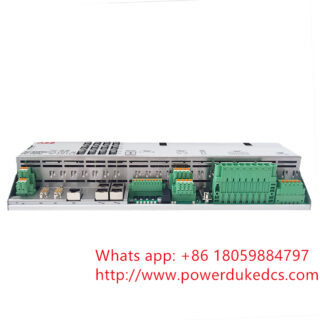
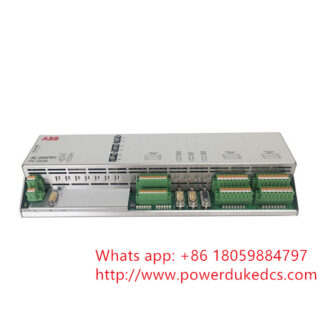
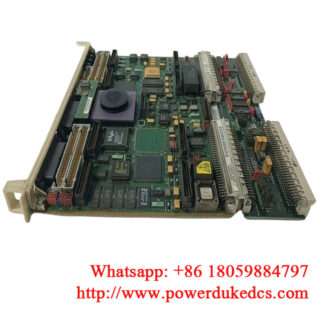
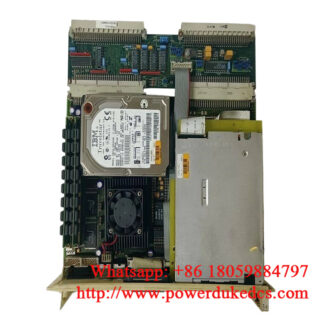
The BOU82 D200536 is a high-density, board-level Binary Input Module engineered for legacy Distributed Control Systems (DCS) developed by Metso Automation (now Valmet). It converts high-voltage or dry-contact field sensor states into isolated logic-level data across the system backplane. Because these cards sit quietly inside pressurized marshaling enclosures, maintenance teams often classify them as passive assets—well, until an optocoupler burns out. When this card fails, it can freeze critical field feedback status signals, blinding your system logic and causing unpredicted process shutdowns.
[Field Devices: Switches/Relays] ──(Discrete Signal Loop)──> [D200536 BOU82 Terminal Block]
                                                                      │
                                                           (Optical Iso-Barrier)
                                                                      ▼
[DCS Processor Bus Communication] <──(Stabilized Backplane Logic)──────┴── [Internal Register Matrix]
Technical Specification Baseline
| Parameter | Value | Field Implication |
| OEM Brand | Metso Automation / Valmet | Proprietary architecture engineered for process-heavy automation loops. |
| Module Identifier | BOU82 | Circuit card assembly designation for specific binary tracking tasks. |
| Factory Part Number | D200536 (Often detailed by revisions like Ver. L or Ver. 21) | Universal part number required to source functional matches. |
| Module Type | Discrete / Binary Input Module | Monitored input card tracking binary statuses (e.g., On/Off, Open/Closed). |
| Form Factor | Slot-Mounting PC Board | Slides directly into proprietary system chassis card cages. |
| Signal Isolation | Integrated Optocoupler Barrier | Insulates sensitive bus processors from high-voltage field line surges. |
| Origin Country | Finland | Original manufacturing base for Metso/Valmet hardware systems. |
ABC Classification & Stocking Recommendations
Managing vintage proprietary discrete logic cards like the BOU82 D200536 requires an inventory strategy designed around part availability rather than simple quantities.
Class B Spares: High Process Impact, Predictable Wear Profiles
The Metso D200536 module fits within Class B inventory parameters. While a single broken input point can sometimes be bypassed or remapped to a vacant channel on an adjacent card via software edits, a total card failure can drop an entire field node offline. Because the card cage format, trace pin arrays, and internal backplane addressing are completely unique to this platform, you cannot replace it with third-party components during a system failure.
- Stocking Recommendation: Maintain a minimum safety stock of 1 clean module for every 5 active cards deployed across your plant.
- Buffer Stock Logic: This hardware line is highly mature and legacy-retired, meaning standard factory supply chains are constrained or limited entirely to certified repair brokers. Sourcing load-tested refurbished or verified “New Surplus” hardware can take anywhere from 2 to 5 weeks. Your warehouse inventory must cover this window.
- Revision Match Warning: Pay close attention to the version tags printed on the card faceplate or circuit board silkscreen (such as Ver. L or Ver. 21). Subtle engineering modifications can alter channel response profiles or loop current limits; always match configuration versions to prevent hardware mismatches.
Not Recommended For
Do not deploy the BOU82 D200536 for new system additions or standalone PLC setups outside its native legacy chassis architecture. Forcing this specialized card into generic third-party enclosures introduces unnecessary reliability risks and consumes a rare asset that should be reserved to protect active process racks.

Lifecycle Tracking & Vendor Management
Controlling the Total Cost of Ownership (TCO) across aging DCS infrastructures requires disciplined storage environments and detailed incoming test procedures.
Overcoming Long-Term Storage Pitfalls
While unpowered input modules don’t experience circuit trace wear on a shelf, they remain highly vulnerable to environmental factors like humidity and electrostatic discharge (ESD). If stored in unconditioned spaces, humidity can corrode the edge connector fingers or cause micro-fractures in old solder joints. Furthermore, improper handling without grounding straps can damage the sensitive input logic chips, rendering a spare dead on arrival.
To protect your safety stock, store all spare D200536 boards inside factory-sealed, static-shielding ESD bags with active silica desiccant packets. Keep them in a temperature-controlled vault.
Vendor Verification Protocols
Because replacement components must be sourced from the independent industrial surplus and refurbishment markets, you must enforce rigid incoming quality validation protocols.
When ordering cards from independent parts brokers, require a complete functional testing certificate. Never accept a simple “powers up” or “visual inspection passed” note. Require your vendor to execute a complete multi-point test that exercises every input channel using a dynamic loop simulator to verify consistent optical isolation, clean logic transitions, and stable backplane bus communications before the board enters your safety stock pool.

Quick Conclusions
- Keep at least 1 verified D200536 card locally in stock per system area to ensure your technicians can resolve discrete loop dropouts within minutes.
- Store all safety stock in sealed anti-static ESD bags to shield delicate on-board logic chips from static charges and moisture corrosion.
- Always verify and match version suffixes (e.g., Ver. L vs. Ver. 21) to ensure seamless electrical and timing compatibility with your active rack slots.
- Partner with vetted surplus vendors who provide detailed channel testing logs to guarantee your backup hardware operates reliably when deployed.
FAQ
1. Can the BOU82 D200536 module be hot-swapped while the DCS rack is powered?
Unless your system documentation explicitly confirms hot-swap capabilities for your specific chassis generation, you should power down the target card cage before inserting or removing any board-level component. well, technically some advanced backplane loops include current-limiting protection pins to prevent logic damage during a live swap, but doing so on an older system carries a risk of inducing a voltage transient that can glitch adjacent active cards on the same data bus.
2. What are the common symptoms of a failing optocoupler channel on a D200536 card?
The primary indicators are intermittent signal chatter or a stuck logic state in your control software (e.g., a channel remains “High” or “Low” regardless of the physical status of the field contact). If a channel fails to register field state transitions while the faceplate LED indicator works correctly, the internal optical isolation barrier has likely degraded and the card needs to be replaced or rebuilt.
3. Is the Metso D200536 interchangeable with the Valmet A413152 BOU82 module?
While both parts share the “BOU82” module designation, they utilize completely different internal circuit board tracing designs and component arrangements. Well, technically they carry out the same operational task within the control system, but the part number variations indicate different product families or chassis generations. You must verify your system’s exact part number requirements rather than relying solely on the module code.
4. How should a technician clean dusty or oxidized edge connectors on a spare D200536 card before installation?
Use a specialized electronics contact cleaner that evaporates quickly and leaves no residue, then gently wipe the edge contacts with a lint-free microfiber swab. Never use abrasive pads or harsh wire brushes, as rubbing too hard can scratch away the thin gold plating on the contact fingers, leading to poor signal connections and intermittent bus errors down the road.
Channel Adaptation Notes
B2B Product Page Blueprint
- Title Configuration: Use
Metso Valmet BOU82 D200536 Binary Input Module. - Technical Callouts: Highlight its slot-mounting form factor, binary discrete input type, optical signal isolation, and Finnish manufacturing origins in bold text near the top of your technical specs table to capture precise engineering search queries.
- Condition Declaration: Use clear marketplace condition tags such as “Legacy Component — New Surplus (Open Box)” or “Refurbished (All Channels Tested and Guaranteed with 12-Month Warranty)” to streamline corporate technical procurement validation.
Industrial Network Social Strategy
- Topic Focus: Focus on maintaining legacy automation system uptime and managing lifecycle risks for classic hardware. Discuss how tracking core telemetry components like the
Metso BOU82 D200536protects large process facilities from sudden production losses when mature control systems approach end-of-life status. - Tone Structure: Write directly to control engineers, instrument technicians, and maintenance managers. Keep the copy professional and technical; skip the marketing fluff and focus on operational realities like optocoupler wear, revision alignment, and rigorous bench testing protocols.
Metso D201925 Metso D201138 Metso D201832 Metso D201126