

Description
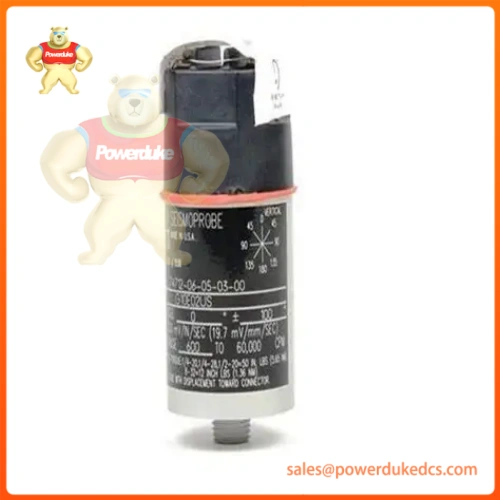
1.Unboxing & Physical Snapshot (Dynamic List)
- Model & Brand: Bently Nevada 74712-06-05-02-00
- Physical Dimensions: 41 mm diameter x 102 mm height (Approximate cylindrical dimensions excluding mounting stud)
- Estimated Shipping Weight: 1.5 kg (Packed with molded industrial foam dunnage)
- What’s in the Box: Cadmium-plated aluminum transducer housing, 1/2-20 UNF-3A mounting stud, top-mounted connector plug, and factory test report sheet.2.Product Introduction
Extreme steam turbine surface temperatures and high-frequency structural vibration punish standard monitoring instruments within hours. Protecting critical turbo-machinery requires sensors engineered to endure continuous ambient heat up to 204°C without internal coil distortion.
Field technicians thread this velocity transducer directly onto bearing housings utilizing the integrated 1/2-20 UNF-3A stud, routing raw analog signals back to rack monitors. Maintain proper mounting torque to prevent mechanical decoupling during high-amplitude transient events.
3.Core Technical Specifications
- Electrical Sensitivity: 20 mV/mm/s (500 mV/in/s) nominal at +22°C
- Frequency Range: 10 Hz to 1 kHz (600 to 60,000 cpm)
- Operating Temperature Range: -29°C to +204°C (-20°F to +400°F)
- Dynamic Operating Range: 2.54 mm (0.100 in) peak-to-peak maximum displacement
- Coil Resistance: 1.25 kΩ ±5%
- Housing Material: Cadmium-plated aluminum with silicone gasketing
- Maximum Shock Resistance: 50 g peak acceleration along non-sensitive axes4.Global Compliance & Industry Certifications
Auditors demand clear verification of safety ratings when monitoring high-speed rotating assets in hazardous process units.
- CE Mark: Fulfills European Union directives concerning electromagnetic compatibility.
- CSA / NRTL / C: Validates electrical safety for industrial measurement gear in North America (note that variant suffix
-00indicates baseline unapproved configuration). - ATEX / IECEx: Permits deployment in explosive atmospheres only when specified by alternative suffix codes.
- DNV GL Marine Approval: Qualifies the sensor for heavy vibration environments on shipboard turbines.
Compliance Note: This specific part number configuration carries no hazardous area approvals (-00 suffix). Never install unrated instrumentation directly into classified explosive zones without secondary safety barriers.
5.Long-Term Storage & Asset Preservation Guide
Moving-coil mechanisms and internal silicone gasketing degrade if warehouse environments lack humidity control over long storage cycles.
Store the transducer inside its sealed original packaging to keep airborne particulates away from the top-mount connector pins. Maintain indoor storage temperatures between 10°C and 30°C with relative humidity kept strictly below 60% to prevent internal moisture condensation across the magnetic coil assembly. Rotate stock inventory using a strict first-in, first-out method to avoid permanent mechanical spring relaxation in dormant spare units.
6.Physical Installation Prerequisites
Mechanical alignment dictates measurement fidelity for seismic velocity detectors. Thread the unit perpendicular to the shaft axis onto a flat, spot-faced mounting pad, applying exactly 5.6 N·m (50 in·lb) of torque to the 1/2-20 stud. Keep twisted-pair signal cables routed away from high-voltage motor feeds to eliminate induced electromagnetic interference.
- Buyer’s FAQ (Logistics & Compliance Focus)
- What is the correct HS Tariff Code for customs processing?Vibration measurement transducers classify under international harmonized code 9031.80.8085, though verify exact country requirements with your broker.
- Does this part number include hazardous area agency approvals?The trailing
-00suffix designates a standard configuration with no hazardous location certifications. - How does the Country of Origin (COO) impact cross-border shipping?The verified COO determines eligibility for regional trade preferences and must match commercial paperwork to prevent customs clearance holds.
- Why is transit shock insurance mandatory for this shipment?Internal moving-coil suspension assemblies can suffer permanent calibration shifts if dropped violently during express freight transit.






