

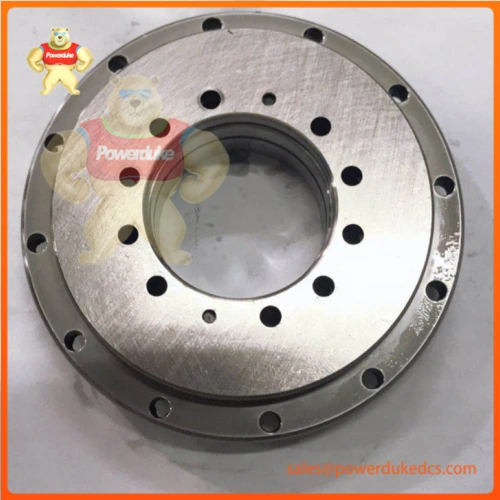
Description
1. Unboxing & Physical Snapshot
- Model & Brand: Applied Materials (AMAT) Semiconductor Processing Equipment Subassembly — Part Number: 0010-32695 (Signal Interface / Control Board & Pedestal Assembly Component)
- Physical Dimensions: Precision-engineered industrial electronics circuit board / subassembly module profile designed for tight integration into cleanroom processing chambers (e.g., Centura / Producer tool platforms).
- Estimated Shipping Weight: Approximately 0.6 kg to 1.2 kg net (Packaged securely in multi-layer anti-static cleanroom vacuum-sealed shielding and heavy corrugated transport packaging)
- What’s in the Box: AMAT 0010-32695 module assembly, interface connectors, and manufacturer traceability/conformance documentation.
2. Product Introduction
Structure B (Architecture hook): Engineered for high-precision semiconductor manufacturing and ultra-clean vacuum processing environments, the Applied Materials (AMAT) 0010-32695 functions as a critical signal interface and control board assembly. Deployed within advanced wafer processing platforms (such as chemical vapor deposition and etch toolsets), this module coordinates sensor signal acquisition, pedestal/chamber logic control, and real-time communication between subsystem hardware and central tool controllers.
Housed in a rugged, contamination-controlled component format, the internal circuitry is built to maintain signal integrity under strict vacuum, thermal, and electromagnetic conditions. Its reliable I/O handling ensures seamless deterministic data exchange across complex semiconductor fabrication lines.
3. Core Technical Specifications
| Parameter | Value |
| Component Type | Signal Interface Control Board / Subassembly Module |
| Product Family | Applied Materials (AMAT) Tool Hardware Line |
| Part Number Designation | 0010-32695 |
| Core Functionality | Sensor signal conditioning, chamber control, and subassembly interfacing |
| Operating Voltage | Standard industrial / tool-level control rails (e.g., 24V DC logic standard) |
| Communication Interface | High-speed internal bus / serial / digital I/O protocols specific to AMAT tool architectures |
| Mounting Format | Modular chamber rack / internal chassis mounting slot |
| Operating Temperature Range | 0°C to +50°C cleanroom-controlled environment threshold |
| Storage Temperature Range | -20°C to +70°C |
| Enclosure Protection Class | IP20 cleanroom rack-mount module format |
| Physical Net Weight | Approximately 0.5 kg to 0.9 kg |
4. Global Compliance & Industry Certifications
Type-test verification and rigid cleanliness/material standards compliance are mandatory for parts integrated into semiconductor processing tools.
- Expected Certifications: SEMI compliance guidelines, CE Mark, RoHS material declarations, and cleanroom compatibility classifications (ISO Class standards).
- Safety Relevance: Integrated grounding paths, low-voltage isolation barriers, and robust circuit protections safeguard sensitive tool control networks against electrical noise and static transients.
- Audit Note: Verify that hardware revision suffixes and subassembly compatibility match your specific AMAT tool serial number and chamber configuration matrix prior to installation.
5. Long-Term Storage & Asset Preservation Guide
Veteran Maintenance Note: Storing delicate semiconductor tool replacement boards requires strict moisture barrier packaging and absolute electrostatic discharge (ESD) protection to prevent trace degradation and micro-corrosion.
- ESD & Vacuum Sealing: Keep the control board permanently sealed inside its original anti-static moisture-barrier cleanbag to shield sensitive logic integrated circuits from static strikes and particulate contamination.
- Climate Baseline: Store the unit in a clean, climate-controlled warehouse maintaining relative humidity strictly below 40% non-condensing and ambient temperatures between +15°C and +35°C.
- Physical Preservation: Store modules flat on dedicated anti-static shelving trays; never stack heavy inventory directly on top of the assembly to prevent component stress or board flexing.
6. Physical Installation Prerequisites
- Ensure that the specific AMAT processing tool rack or chamber power distribution feed is completely locked out (LOTO) and de-energized before handling or replacing the control module.
- Utilize proper grounding straps and electrostatic precautions during uncrating and insertion into the system backplane or chassis rack.
- Verify that all wiring harnesses, multi-pin plugs, and communication cables are firmly seated and strain-relieved to prevent intermittent connections during tool motion.
7. Buyer’s FAQ (Logistics & Compliance Focus)
- What Harmonized System (HS) code governs international customs clearance?
The standard global export classification for this semiconductor equipment component is 8538.90.8180 (Parts suitable for use solely or principally with the apparatus of semiconductor manufacturing control systems).
- How does Country of Origin (COO) verification impact tool maintenance compliance?
Accurate origin tagging on commercial shipping documents ensures alignment with international trade frameworks and semiconductor fab import mandates (typically United States manufacturing origin).
- Does this board require firmware programming upon replacement?
Most AMAT interface boards operate as hardware subassemblies; however, system-level calibration or parameter verification via the tool’s system controller software may be required post-installation.
- What level of transit insurance should be specified?
Always mandate fully declared-value, tracked air cargo insurance to protect delicate printed circuit assemblies against drop shocks or handling impacts during global transit.






