

Description
 Meta Description
Technical asset guide for the AMAT 0200-36118 RTP Edge Ring. Covers 200mm wafer processing requirements, handling protocols, and stocking strategies for semiconductor fabs.
Main Body
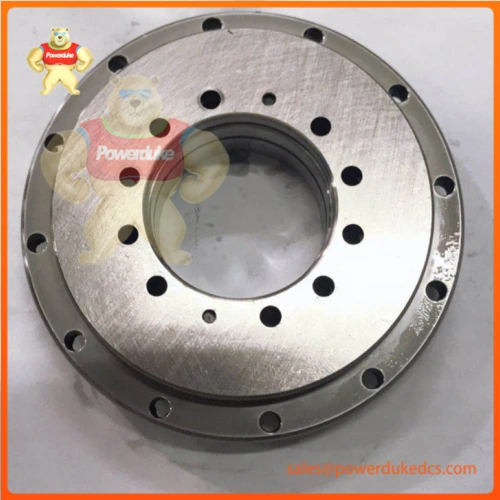
The AMAT 0200-36118 is a 200mm Edge Ring engineered for Applied Materials Rapid Thermal Processing (RTP) chambers, specifically within the Centura 5200 platform. In the semiconductor manufacturing flow, the edge ring is not just a support fixture—it is a critical thermal mass component. Any variation in the ring’s emissivity or physical condition directly shifts the temperature profile at the wafer edge, which leads to immediate yield loss or “ring signature” issues on your process control charts.
Technical Specifications Snapshot
Verification of the material and dimensions is the first step in avoiding chamber contamination or wafer breakage.
- Parameter: Value
- Part Number: 0200-36118
- Application: Rapid Thermal Processing (RTP)
- Wafer Size: 200 mm
- Component Type: Edge Ring (Thermal/Mechanical)
- Equipment Platform: Centura 5200 / RTP
- Material: High-purity Silicon or Silicon Carbide (Verify against specific process recipe requirements)
- Coating: Batch coated (Typical)
Field Experience & Scenario-Based Analysis
Maintaining thermal uniformity in an RTP chamber requires strict adherence to handling protocols. During routine chamber cleans (PM), technicians often overlook the underside of the edge ring where backside deposition accumulates. This build-up acts as an insulator, changing the thermal gradient between the ring and the wafer.
[Lamp Bank/Heat Source]
        |
[0200-36118 Edge Ring] <--- (Maintains Thermal Uniformity)
        |
[200mm Wafer]
In field deployments, we often see “edge temperature droop” after 500–1,000 thermal cycles. If your metrology detects systematic edge-exclusion non-uniformity, inspect the edge ring for erosion or surface glazing. Well, technically the ring is designed to withstand thousands of cycles, but reactive ion etch residues from prior process steps can accelerate surface degradation, requiring an earlier replacement than the MTBF (Mean Time Between Failures) estimate suggests.
Inventory Strategy & Lifecycle Management
Because this component is specific to 200mm legacy platforms, availability is tightening. You cannot treat this as a generic shelf item.
- Critical Spares Recommendation: Maintain a buffer stock of at least 2 units. The lead time variability for precision-coated ceramics is high, and a cracked ring halts production on that chamber entirely.
- Storage Protocol: Store in a vacuum-sealed or nitrogen-purged cabinet. Even if the part is “new,” microscopic surface contamination or moisture absorption—though minimal—can outgas during the first few high-temperature ramp cycles in the RTP chamber, causing process drift.
- Last-Time-Buy Rules: As Applied Materials shifts focus toward 300mm+ platforms, source these rings only from validated OEM suppliers or reputable secondary market vendors who provide material certificates. Avoid “as-is” pulls from scrapyards, as the thermal history of the ring is unknown and may cause catastrophic failure under high-ramp rate conditions.
Limitations & Alternative Paths
Do not attempt to resurface or chemically strip a heavily eroded 0200-36118 ring unless you have an in-house cleanroom facility validated for silicon coating. Improper resurfacing changes the emissivity of the material, which will permanently skew your thermal feedback loop. If you are experiencing frequent breakage, the issue is rarely the ring itself; investigate the robot transfer arm alignment or the lift-pin synchronization timing, as mechanical shock during wafer placement is the primary cause of premature edge ring damage.
Quick Conclusions
- Stocking Target: Hold 2 units minimum for every active RTP chamber to mitigate long procurement lead times.
- Handling Rule: Always use cleanroom-grade, non-marring ceramic tweezers; never use metal tools that could introduce metallic contamination to the silicon surface.
- Process Check: If you see edge non-uniformity, correlate the cycle count of the edge ring with the metrology data before adjusting lamp power settings.
- Procurement: Require material certification with every purchase to ensure consistent emissivity levels.
FAQ
- Can I replace this with a standard silicon ring if the coated version is out of stock?Not necessarily. The coating is applied to control emissivity and thermal absorption. Using an uncoated or differently coated ring will alter your temperature ramp rates, forcing a re-characterization of your process recipes—a time-consuming and expensive task.
- How often should I replace the 0200-36118?There is no fixed time interval; replace based on thermal performance data and physical inspection. If the surface shows visible pitting, discoloration, or chipping, pull it from service immediately to prevent wafer scratching.
- Why does the ring crack during the ramp-up phase?This is usually caused by excessive thermal shock or mechanical stress. Verify that your chamber lift-pins are moving synchronously. If one pin lags, the wafer sits unevenly on the ring, causing a localized stress concentration that cracks the ring as it expands during heating.
Channel Adaptation Notes
- For B2B Marketplaces: Highlight “New in OEM Packaging” or “Certified Coated” in the title. Procurement teams prioritize these qualifiers to ensure process repeatability.
- For Plant Maintenance Logs: Log the “Cycle Count at Install” and “Cycle Count at Removal” for every ring. This data is essential for calculating your chamber’s specific consumption rate and optimizing your replenishment cycle.


![AMAT 0040-22274 - [Component/Module Name] for Semiconductor Equipment](https://www.powerdukedcs.com/wp-content/uploads/2026/04/9707a119f051dc8b372e.jpg)





