Description

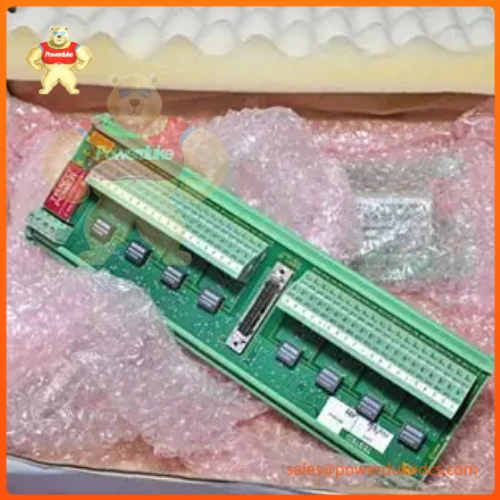
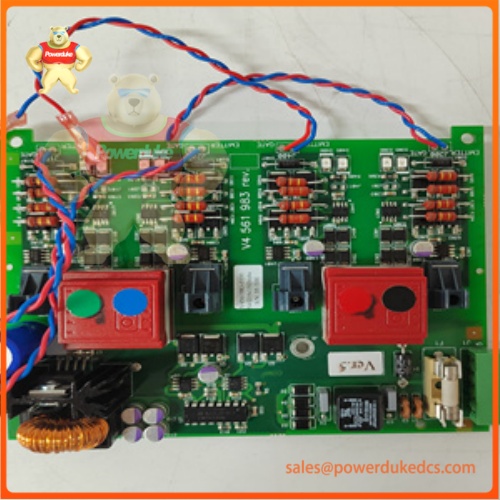
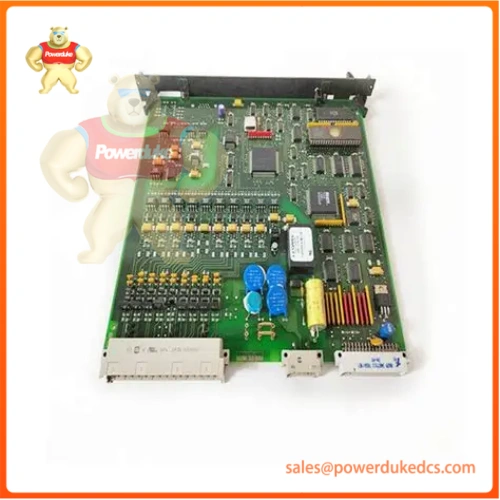
The Alstom PIB102 is a dedicated communication interface module designed for the ALSPA CE (Control Element) and ALSPA 8000 distributed control systems. Its primary function is to act as a gateway between the Alstom central processor and decentralized peripherals via the Profibus DP (Decentralized Peripherals) protocol.
Availability and Procurement
- Condition: Refurbished (Standardized Industrial Testing) or New Original (Legacy Stock)
- Warranty: 12-month technical replacement warranty
- Lead Time: 3–7 business days (Global shipping via DHL/FedEx)
- Pricing: Market-dependent based on firmware revision and hardware vintage. Contact our technical sales desk for a firm, dated quote.
Technical Specifications
The PIB102 provides the physical and data-link layers required to integrate Alstom controllers with third-party devices such as variable speed drives, motor protection relays, and remote I/O stations.
| Parameter | Specification |
| Protocol | Profibus DP (Master/Slave capability) |
| Baud Rate | 9.6 kbit/s up to 12 Mbit/s (Auto-detect supported) |
| Interface | 9-pin Sub-D (Female) RS-485 |
| System Bus | ALSPA 400 Series Backplane compatible |
| Diagnostics | Front-panel LEDs for Status, Bus Fault, and Internal Error |
| Isolation | Opto-isolated communication port |
| Power Consumption | Approx. 5 W (derived from system backplane) |
Engineering Insights: Integration and Performance
As an architect who has managed Alstom ALSPA migrations and maintenance for power generation facilities, I recommend focusing on the following technical constraints:
1. Bus Topology and Termination
The PIB102 utilizes the RS-485 physical layer. In high-speed Profibus networks (12 Mbit/s), the physical cable quality and termination are critical.
- Constraint: Ensure that active termination is applied at both ends of the trunk. I have seen numerous “Bus Fault” (BF) errors caused by technicians using standard serial cables instead of shielded, violet-jacketed Profibus-certified cables (e.g., Belden 3079A).
2. Address Configuration
Profibus addresses for the PIB102 are typically configured via the ALSPA P80 or Centralog engineering tools.
- Warning: Unlike some simpler PLC modules, the PIB102 does not use physical DIP switches for addressing; the address is assigned in the hardware configuration and downloaded to the module. Ensure you have the correct GSD files for all slave devices intended to communicate with this master.
3. Data Consistency and Cycle Times
When configuring the PIB102 to communicate with high-speed drives, be mindful of the “Total Bus Cycle Time.” If the bus is overloaded with too many slaves or a slow baud rate, your control loops in the ALSPA processor may experience jitter.
- Recommendation: Keep the Profibus cycle time at least 4x faster than the application task cycle time in the controller to ensure data freshness.
4. Legacy Compatibility
The PIB102 is often found in older ALSPA P320 systems. If you are replacing a PIB101 or a failed PIB102, check the firmware version (indicated on the side label). Firmware mismatches can lead to the “Internal Error” LED illuminating upon insertion into the rack, as the main CPU may not recognize the newer/older module version.
FAQ
Q: Can the PIB102 act as a Profibus Slave?
A: While primarily used as a Master to control remote I/O, the PIB102 can be configured in the ALSPA engineering environment to act as a slave for data exchange with a “higher-level” PLC (such as a Siemens S7 or Rockwell Logix system).
Q: How do I interpret the “BF” (Bus Fault) LED?
A: A solid red BF LED indicates a total loss of communication on the bus. A flashing BF LED usually indicates that the Master (PIB102) is running, but one or more configured Slaves are missing or have a configuration mismatch.
Q: Is the PIB102 hot-swappable?
A: Generally, no. In most ALSPA 400 series racks, it is best practice to power down the rack before removing or inserting communication modules to prevent bus contention or backplane voltage spikes.