Description
 Meta Description
Technical inventory and procurement breakdown for the ABB PFCL201CD 20KN vertical pillow block load cell. Minimize downtime risks and manage safety stock.
Technical Overview and Field Specifications
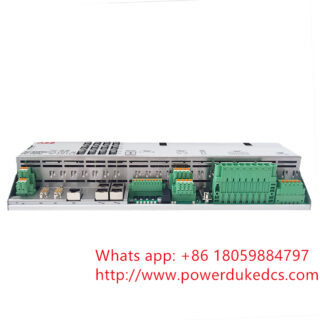
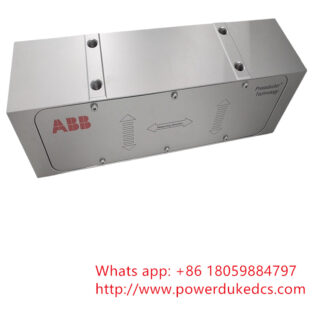
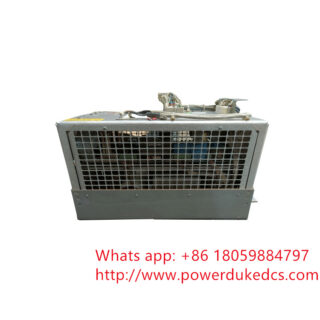
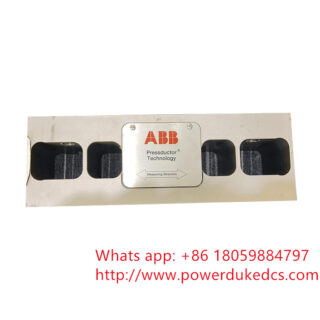
The ABB PFCL201CD 20KN is a vertical-force pillow block load cell designed for web and strip tension measurement in converting lines, paper mills, and continuous processing machinery. Utilizing ABB’s Pressductor magnetoelastic technology, the unit measures force through changes in magnetic fields rather than foil strain gauges. This design yields high mechanical stiffness and exceptional immunity to harsh industrial environments.
| Parameter | Specification / Value |
| Model Series | PFCL201CD 20KN |
| Measurement Principle | Pressductor Technology (Magnetoelastic) |
| Nominal Force Capacity | 20.0 kN (4,500 lbs) |
| Direction of Measurement | Vertical (Bidirectional forces) |
| Permissible Overload | Up to 500% to 1000% of nominal rating without mechanical yield |
| Deflection at Rated Load | < 0.05 mm (High mechanical rigidity) |
| Enclosure / Material | Stainless steel construction, IP65 rated according to IEC 60529 |
| Condition Standards | New Original (Factory Sealed), New Surplus, or Refurbished (tested) |
In high-speed processing lines, these units sit directly beneath the roll bearing housings. A failed sensor corrupts the tension control loop, leading to web tracking faults, edge damage, or immediate line stops.
 [Material Web / Strip]
                            │
                    (Sensing Roll)
                            │
                    [Bearing Housing]
                            │
            ▼───────────────▼───────────────▼
            [ PFCL201CD 20KN Vertical Cell ]
            ▲───────────────▲───────────────▲
                            │
                  [Rigid Frame / Bed]
                            │
                 (PFEA Tension Amplifier)
Inventory Strategy & Stocking Recommendations
Having evaluated spares strategy across dozens of continuous process lines, I view the PFCL201CD 20KN as a vital risk-mitigation asset. The sensor rarely suffers internal electronic failure, but physical crashes, severe fluid ingress, or sheared cabling can instantly take it offline. Factory lead times through primary distribution networks routinely range from 8 to 16 weeks.
 [Unbuffered Strategy: Zero Safety Stock]
 Load Cell Failure ───────────────────────────> Line Down (8-16 Weeks)

       [Buffered Strategy: 1 Unit On-Site]
 Load Cell Failure ──> Mechanical Swap (4 Hours) ──> Line Restored
Categorization: Class A Critical Spare
- Classification: High unit value, zero functional workaround, long factory backorder windows.
- Carrying Cost Target: Keep carrying costs under 12% by maintaining tight inventory thresholds based on active asset count.
- On-Site Recommendation: Maintain 1 unit on-site per production building. If your plant runs 4 or more identical 20 kN sensing rolls, hold 2 units maximum.
- Replenishment Thresholds:
- Min Level: 1 unit (Factory Sealed or Tested Surplus)
- Max Level: 2 units
- Reorder Point (ROP): Set to 1 unit. Trigger a replacement order the day the shelf unit is issued to maintenance.
Lifecycle & Vendor Management
- Cross-Site Sharing: If sister plants operate within a 4-hour trucking distance, consolidate safety stock into a single shared reserve rather than buying duplicate spares for each site.
- Vendor Consolidation: Work with vetted industrial automation suppliers who offer guaranteed emergency delivery windows for Pressductor components.
- Secondary Market Vetting: When acquiring surplus or pre-owned units, mandate coil resistance checks and insulation testing (>100 M\Omega at 500 V DC) prior to accepting the shipment.
Scenario Analysis: Plant Deployment vs. Spares Sourcing
Scenario A: High-Speed Web Converting Line
In converting lines running 20 kN vertical load cell blocks, two sensors monitor differential roll force to balance left/right web tension.
- Field Action: If a bearing locks up and damages the sensor junction box, the tension controller loses feedback.
- Stocking Need: Having an on-site unit allows the shift technician to unbolt the bearing housing, swap the load cell, and recalibrate zero/gain within a standard maintenance window.
Scenario B: Emergency Secondary Sourcing
When an unbuffered failure occurs and the warehouse shelf is empty, OEM factory lead times threaten multi-week production losses.
- Field Action: Procurement must shift focus from factory channels to authorized surplus stock.
- Stocking Need: Because passive magnetoelastic coils do not degrade like active semiconductor microchips, properly stored “New Surplus” units offer identical reliability to factory-fresh units at a lower cost.
Trade-offs and Limitations
Strengths
- Extreme Mechanical Overload Resilience: Solid steel construction absorbs heavy dynamic shock loads without zero-point shift.
- Virtually Zero Deflection: Micro-deflection design eliminates roll tilt and mechanical binding during load surges.
- High Signal Integrity: High-voltage, low-impedance AC coil signals resist plant electromagnetic interference (EMI).
Limitations & Caveats
- Vertical Axis Only: The PFCL201CD measures vertical force vectors. If your web geometry exerts force primarily in the horizontal plane, use the PFTL series instead.
- Strict Base Flatness Specs: The mounting plate surface must be ground flat and clean. Any twist or uneven bolting torque introduces structural stress, leading to false offset readings.
- Not Recommended For: Ultra-light web tension applications where the total force resting on the sensor remains under 5% of the 20 kN nominal rating.
Decision Matrix: Sourcing & Replacement Options
| Sourcing Route | Lead Time | Cost Index | Risk Profile | Best Scenario Application |
| OEM Direct (New) | 8–16 Weeks | 100% | Negligible | Scheduled greenfield builds, planned line revamps |
| Authorized Surplus (New Sealed) | 1–3 Days | 65–80% | Low | Emergency replacements, safety stock replenishment |
| Certified Refurbished / Tested | 24–48 Hours | 40–55% | Low to Moderate | Backup lines, temporary emergency spares |
Quick Conclusions
- Keep 1 spare unit on the shelf for every plant running 20 kN vertical Pressductor frames.
- Verify baseplate flatness and mounting surface cleanliness before torquing down a replacement module.
- Test coil insulation resistance on stored warehouse inventory every two years.
- Request certified coil test sheets before accepting surplus load cells into active inventory.
Frequently Asked Questions
What insulation resistance should a functional PFCL201CD 20KN load cell show?
Using a 500 V DC insulation tester (megohmmeter), the resistance between any coil terminal and the stainless steel body must exceed 100 M\Omega. A reading below 10 M\Omega indicates internal moisture ingress or wire insulation damage, requiring reconditioning or replacement.
Can I mix a PFCL201CD with a PFCL201C or PFCL201CE variant on the same roll?
Mechanically and electrically, the sensing coils operate on identical Pressductor principles. However, you must verify structural mounting dimensions, connector hood orientations, and CE compliance ratings on the machine drawing before mixing model variants across the same roll assembly.
How should spare Pressductor load cells be stored for long shelf life?
Store units in indoor, climate-controlled environments with relative humidity below 85% (non-condensing). Keep the sensor in its original sealed anti-corrosion packaging with desiccant packs. Under these conditions, the shelf life is essentially unlimited.
Channel Adaptation Notes
Internal Procurement & Maintenance Portal
- Cross-reference part number PFCL201CD 20KN with internal machinery asset codes to avoid accidental orders of incorrect force ratings (e.g., 10 kN or 50 kN versions).
- Flag lead time warnings over 8 weeks to automatically highlight pre-approved surplus channels inside the procurement queue.
System Integrator & Field Maintenance Guides
- Include exact bolt torque specs from the hardware manual directly on the maintenance work order.
- Remind technicians that any shims placed beneath bearing housings must fully cover the top surface area of the load cell plate.