Description
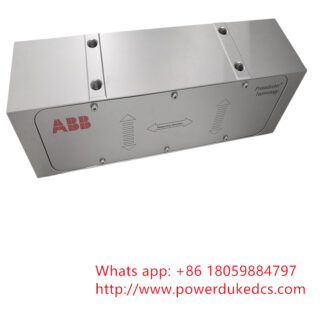
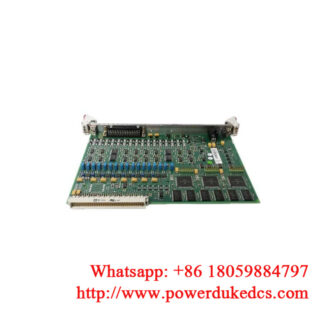
During a recent offshore drilling platform upgrade in the North Sea, the instrumentation team ran into space issues when trying to mount external galvanic isolation barriers for a series of explosive-zone float switches. Swapping out the standard modules for the ABB DI890 solved the problem instantly. This High Integrity S800 I/O component includes built-in intrinsic safety barriers, allowing you to connect field devices located in Hazardous Area Zone 0, Zone 1, or Zone 2 directly to the module without requiring external DIN-rail isolation blocks.
Are you engineering a burner management loop in a combustible gas environment or maintaining a Safety Instrumented System (SIS)? In-field deployments confirm that this module maintains strict SIL3 safety compliance while running real-time diagnostics on field wiring integrity.
Global Logistics, Availability, and Warranty Terms
Procuring intrinsically safe, high-integrity process components requires precise supply chain tracking to align with planned refinery shutdowns.
- Product Condition: New Original, Factory Sealed with verified intrinsic safety compliance codes.
- Stock Availability: Stocked at specialized regional logistics hubs for immediate international fulfillment.
- Standard Lead Time: Dispatches within 1 to 2 business days via global air express.
- Warranty Support: Covered by a full 12-month industrial replacement warranty starting from the invoice date.
- International Pricing Note: The listed value serves as a spot-market reference point. Final line-item invoicing depends on global supplier pool liquidity, active currency exchange parities, and package volume agreements. Reach out to our trade desk for an official pro forma invoice.
Technical Specifications: ABB DI890
The physical filtering limits, safety ratings, and explosive-zone parameters are dictated by the internal design of the 3BSE040134R1 module. Review these electrical bounds against your sensor loops prior to commissioning.
| Parameter | Value / Specification |
| Safety Certification | Certified up to SIL3 (IEC 61508) within a High Integrity controller configuration |
| Hazardous Area Protection | [Ex ia] IIC (Built-in Intrinsic Safety barriers for Category 1 / Zone 0 devices) |
| Channel Count | 8 independent, isolated channels |
| Input Signal Type | NAMUR switch inputs or dry contacts with external end-of-line resistors |
| Open Circuit Threshold | Input current \le 0.15 mA (Line fault detection) |
| Short Circuit Threshold | Input resistance \le 100 \ \Omega or input current \ge 6.5 mA |
| Nominal Input Voltage | 8.2 V DC (Internal barrier excitation output) |
| Sequence of Events (SOE) | 1 ms resolution tracking across all 8 channels |
| Power Dissipation (Typical) | 3.5 W |
| Current Consumption (5V Modulebus) | Typ. 100 mA, Max 120 mA |
| Environmental Protection | Class G3 Conformal Coating as standard |
Hazardous Area Field Implementation and Line Monitoring
The major design benefit of the DI890 centers on its direct-entry intrinsic safety architecture. The module supplies an 8.2 V DC energy-limited sensing current to each NAMUR field proximity sensor, ensuring that even if a field cable is severed or shorted inside a volatile gas atmosphere, the spark energy remains far below the ignition threshold of the surrounding ambient air.
Well, technically the module supports both standard NAMUR sensors and basic dry contacts, but its line monitoring features depend entirely on how you set up your field loops. If you choose to connect standard mechanical micro-switches, you must wire an external 1 k\Omega series resistor and a 10 k\Omega parallel shunt resistor directly into the field switch enclosure. Without these end-of-line components, the module’s diagnostic loop cannot differentiate between a legitimate open contact and a snapped field wire, which will trigger a permanent “Line Fault” error bit on that specific channel tag. For physical mounting, this module must sit on an extended TU890 or TU891 Module Termination Unit (MTU), which establishes the physical distance separation needed between intrinsically safe field lines and standard non-hazardous control panels.
Cross-Border Shipping and Customs Compliance
Moving intrinsically safe industrial safety components through international customs points requires absolute precision in documentation to satisfy border regulatory agencies.
Export Regulations and Commodity Classification
Because this asset features specialized intrinsic safety circuitry and SIL3 automation compliance, it is subject to global dual-use export control tracking. It carries an Export Control Classification Number (ECCN) of EAR99 and travels globally under the Harmonized System Tariff Code HS 85389099. Every outbound order passes through automated restricted-entity matching systems prior to carrier pickup.
Freight Framework and Incoterms
For critical process line overrides and emergency forced outages, we route equipment via Priority International Air Freight (via premium tiers of DHL Express, FedEx, or UPS), maintaining a 3 to 5 business day delivery window to manufacturing centers worldwide. Our standard delivery defaults to CIP (Carriage and Insurance Paid to Destination) per Incoterms 2020 definitions.
Import Entry Notice: Country-specific import duties, local value-added taxes (VAT/GST), and local customhouse entry brokerage fees are outside our billing footprint. The receiving facility’s designated customs broker must clear these balances with regional tax authorities during incoming border transit.
Frequently Asked Questions
Can the DI890 module be mixed with standard DI810 cards on the same Modulebus rail?
Yes, you can mix them on the same physical Modulebus rail. However, you must observe strict physical segregation rules. The DI890 must sit on its specialized TU890/TU891 MTU, and a physical separation barrier or blank slot space is often required to keep the intrinsically safe field wiring separated from standard 24 V DC panel lines.
What causes a “Line Fault” error flag to show up on the module’s faceplate?
A “Line Fault” status indicates that the channel’s internal diagnostic loop has detected an input current either dropping below 0.15 mA (indicating a broken field wire) or spiking above 6.5 mA (indicating a direct short circuit in the field wiring).
Is the 1 ms SOE timestamp generated locally on the card or inside the AC 800M processor?
The timestamp is captured directly by the dedicated microprocessor on the DI890 card the exact millisecond the electrical state shift occurs. This timestamped data packet is then transferred up to the AC 800M controller memory, preventing network bus latency from skewing the sequence-of-events log.
What specific hazardous environment certification (such as ATEX, IECEx, or FM) is required for the field instrument loops connecting to this module?
| ABB PDP20-FBP |
| ABB PDP21-FBP |
| ABB PDP22-FBP |
| ABB PCD235B1101-3BHE032025R1101 |
| ABB CP6615 1SAP561510R0001 |