Description
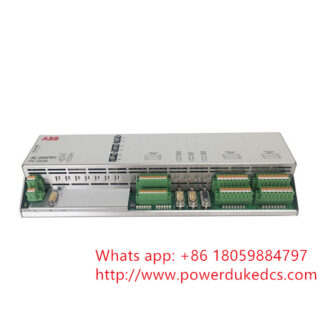
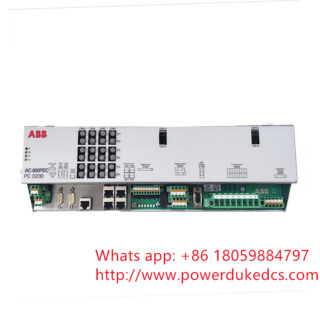
The ABB HUEL412325 is an industrial-grade circuit board assembly used within specialized ABB control topologies, excitation panels, or high-power drive control systems. Engineered for deterministic processing and interface bridging, this board handles localized signal conditioning, logic translation, or communication routing between primary system processors and field-level power electronics or peripheral networks.
Availability, Lead Time, and Warranty
- Condition: Available as New Original (New Surplus) or Refurbished (Fully Tested and Certified)
- Availability: In Stock / Subject to prior sale
- Estimated Lead Time: 1–3 business days via priority international express shipping (DHL, FedEx, or UPS)
- Warranty Period: 12-Month Comprehensive Warranty
- Pricing Note: Price is highly dependent on stock cycles and global component availability. Contact our sales engineering department for a formal, binding quote.
Technical Specifications
| Parameter | Value / Specification |
| Model Number | HUEL412325 |
| Manufacturer | ABB |
| Component Type | Processor Board / Signal Interface Module |
| Logic Supply Voltage | 5 V DC / 24 V DC (distributed via system backplane) |
| Form Factor | Proprietary plug-in printed circuit board (PCB) assembly |
| Mounting Architecture | Rack or subrack chassis deployment |
| Cooling | Convection cooled within specified cabinet airflow limits |
| Operating Temperature | 0 to +55°C (+32 to +131°F) |
| Storage Temperature | −25 to +70°C (−13 to +158°F) |
| Relative Humidity | 5% to 95% non-condensing |
Field Implementation & Compatibility Notes
Circuit Revision and Hardware Matching
Industrial electronic assemblies of this nature are subject to iterative component upgrades during their production lifecycles. When replacing a damaged board in an operational system, locate the revision suffix (e.g., Rev A, Rev B, or a specific version code) stamped on the PCB layout or the component label. Installing a mismatched hardware revision can alter signal timing parameters or initialization handshakes on the rack backplane.
ESD Safety and Electrostatic Discharge Safeguards
The HUEL412325 contains highly sensitive, high-density CMOS components vulnerable to electrostatic discharge (ESD). Prior to removing the unit from its anti-static shielding or attempting installation into the chassis, field engineers must connect a verified, grounded ESD wrist strap. Never touch the exposed gold edge-connector pins or component traces with bare hands.
System Interlocking and Live Insertion Risks
Unless specifically designated by the host system’s primary technical manual, this board does not support live insertion or “hot-swapping.” Isolating the main system power supply rack prior to extraction or insertion is mandatory. Attempting a hot-swap can create an electrical arc across the backplane pins, which risks corrupting adjacent processing nodes or burning out the logic layers on the replacement module.
Frequently Asked Questions
Q: Does this board require a firmware download before it can function in the rack?
A: Depending on the specific system configuration, this board may rely on firmware stored in onboard EPROM/Flash memory or it may dynamically receive its configuration map from the primary rack controller during boot-up. If your system requires matched firmware levels, verify that the chip markings on the replacement board match those on your failed unit, or check compatibility using the original system datasheet before commissioning.
Q: What diagnostic steps are conducted during the refurbishment process for this part?
A: Every refurbished HUEL412325 assembly goes through a rigorous quality control lifecycle. This includes full parametric component testing, inspection for physical traces or trace degradation, thermal stress testing under load conditions, and communication loopback simulation to confirm that all processing lanes function exactly to original design specifications.
Q: What is the primary cause of field failure for these legacy logic boards?
A: In field environments, failure modes are typically driven by prolonged exposure to high ambient cabinet temperatures, leading to thermal stress on legacy filtering capacitors, or localized voltage spikes coming from poorly conditioned external power rails. Maintaining clean cabinet filtration and tracking cooling fan lifecycles will extend the operating life of the replacement unit.