

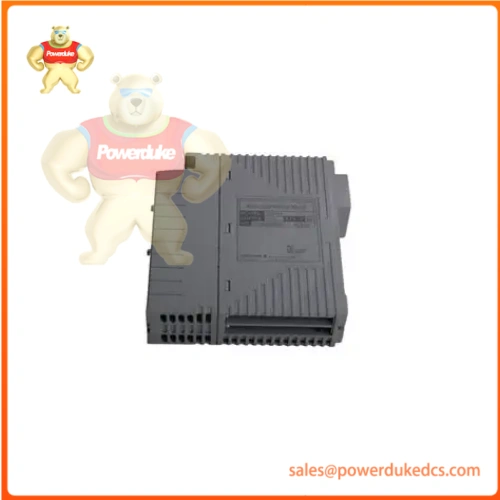
Description
 1. Unboxing & Physical Snapshot
- Model & Brand: Yokogawa — EC401-50 S3 (ESB Bus Coupler Module)
- Physical Dimensions: Approximately 22 mm x 124 mm x 126 mm (standard modular plug-in card layout format).
- Estimated Shipping Weight: 0.3 kg (0.66 lbs) packed with heavy anti-static bubble shielding and structural cardboard inserts.
- What’s in the Box: EC401-50 S3 module unit, factory inspection sign-off tag, ESD warning insert, and protective pin cover strip (note: backplane chassis racks and node connection cables are ordered separately).
2. Product Introduction
High-availability distributed control architecture requires reliable bus communication links to bridge field control units with remote node units without latency or packet loss. Operating inside Yokogawa CENTUM VP and FIO systems, this specialized bus coupler module manages high-speed data transmission across Extended Serial Backplane (ESB) networks (—which is critical for maintaining deterministic loop execution across complex industrial processing lines).
Engineered with high-frequency transceiver circuits, the 1-port module handles high-bandwidth data payloads between controllers and distributed I/O racks. Plant systems engineers rely on dual-redundant configurations of this hardware card to eliminate single points of failure across continuous chemical and power generation facilities.
3. Core Technical Specifications
| Parameter | Value |
| Module Type | ESB Bus Coupler Module (1-Port, for N-IO / FIO) |
| System Compatibility | Yokogawa CENTUM VP Distributed Control System (DCS) |
| Transmission Speed | 128 Mbps (I/O module data transmission) |
| Maximum Distance | Up to 10 meters between node connections |
| Current Consumption | 0.5 A nominal backplane draw |
| Slot Assignment | Typically installed in dedicated controller backplane slots (Slots 7 and 8 for redundancy) |
| Operating Temperature | 0^\circC to +55^\circC (32^\circF to 131^\circF) |
| Storage Temperature | -20^\circC to +70^\circC (-4^\circF to 158^\circF) |
| Enclosure Rating | IP20 open-type rack module |
4. Global Compliance & Industry Certifications
Regulatory audits penalize facilities that install uncertified communication hardware on safety-instrumented or primary control backplanes.
- Certifications: CE Mark, cULus Listed industrial control equipment, and RoHS environmental compliance directives.
- Safety Relevance: The cULus industrial control standard guarantees that internal power regulation circuits safely handle electrical transients, preventing surges from jumping across node communication barriers.
- Audit Note: Verify specific lot compliance certificates against local statutory electrical codes prior to final system safety sign-off.
5. Long-Term Storage & Asset Preservation Guide
Spare communication cards stored in warehouse stockrooms face environmental degradation and connector tarnish over extended periods (—requiring strict inventory management to protect capital assets). Preserve your inventory by executing these procedures:
- Maintain warehouse climate control where ambient storage temperatures stay between -10^\circC and +50^\circC while keeping relative humidity strictly below 60% to prevent micro-corrosion on the gold-plated card-edge pins.
- Keep the module sealed inside its original factory anti-static moisture-barrier bag alongside active desiccant pouches until the exact maintenance installation window.
- Inspect the card-edge contacts and front-panel connector ports annually for dust accumulation, brushing surfaces lightly with clean, dry compressed air if needed.
6. Physical Installation Prerequisites
Proper mechanical alignment and slot assignment inside the control node cage guarantee stable high-frequency data transmission.
- Clearance Space: Leave at least 50 mm of unobstructed vertical space above and below the card cage slots to permit convective thermal dissipation across the circuit traces.
- Redundancy Setup: When configuring a dual-redundant ESB bus layout, ensure matching EC401 modules are inserted securely into both designated controller slots.
- Insertion Protocol: Align board edges carefully with the metal card guides, pushing straight back until the locking extraction levers snap securely into the backplane headers.
7. Buyer’s FAQ (Logistics & Compliance Focus)
Q: What Harmonized System (HS) Tariff Code applies to this Yokogawa bus coupler for international shipping?
A: Industrial network routing and interface modules typically classify under HS code 8517.62.0050 (Machines for reception, conversion and transmission or regeneration of voice, images or other data). Always check with your licensed customs broker.
Q: Does this ESB module require pre-installation firmware flashing?
A: No, the module operates directly via hardwired system logic and backplane communication protocols, though node addressing must match your CENTUM VP software project configuration.
Q: What is the Country of Origin (COO) for trade compliance record-keeping?
A: This hardware is manufactured in Japan, requiring precise country declarations on commercial import paperwork to satisfy regional trade regulations.
Q: Is specialized transit insurance required for international cargo delivery?
A: Yes, because high-speed communication chips and card-edge pins are sensitive to drop impacts, full-value freight insurance is strongly recommended.
Yokogawa NFPW444 – I/O Module for Yokogawa CENTUM VP Control Systems YOKOGAWA CP471-00 – CENTUM VP Processor Module Yokogawa CP451-51 – Field Control Unit (FCU) Processor Module






