

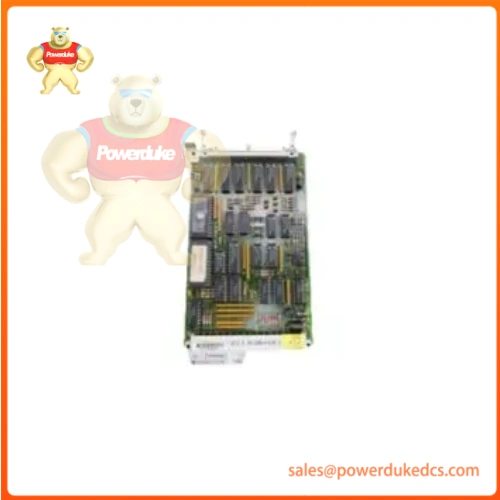
Description
 1. Unboxing & Physical Snapshot
- Model & Brand: 6DS1311‑8AE, Siemens TELEPERM‑M legacy DCS interface Eurocard (discontinued gateway board establishing bidirectional data exchange between TELEPERM‑M DCS and SIMATIC‑S5 PLC platforms, for AS‑series subracks)
- Physical Dimensions (Approximate W × H × D): 220 mm × 233 mm × 25 mm, standard double‑height DIN41612 Eurocard form‑factor for TELEPERM‑M rack slots
- Estimated Shipping Weight: 1.21 lb (0.55 kg net module weight; includes main PCB assembly, front ejector lever set, dual rear DIN41612 backplane connectors, front‑panel diagnostic LED bank, OEM printed installation datasheet, static‑shield bag, foam‑reinforced export carton)
- What’s in the Box: Complete 6DS1311‑8AE gateway Eurocard, front‑panel ejector hardware; TELEPERM‑M host subrack, S5 system extension cables sold separately (validate hardware revision and EPROM firmware version against existing installed unit prior to procurement. Mismatched firmware corrupts cross‑platform telegram handling, risking loss of interlocking signals in power‑generation, chemical‑process and water‑treatment legacy installations)
2. Product Introduction (Structure B – Architecture hook)
This 6DS1311‑8AE TELEPERM‑M plug‑in gateway Eurocard facilitates bidirectional data translation between the TELEPERM‑M DCS backplane bus and external SIMATIC S5 PLC controllers over RS‑422 physical links. It maps process variables, alarm flags and safety interlock telegrams across dissimilar automation domains while managing address offset translation and telegram buffering. Poor module insertion, bent rear pins, or firmware incompatibility trigger frozen tag values, missing alarm propagation and silent interlock‑signal corruption that mimic CPU or cable faults within high‑availability continuous‑process production strategies
Reliability teams must validate full part‑number and hardware‑firmware revision prior to spare rotation. Other TELEPERM‑M Eurocard variants share identical mechanical footprint but implement different external‑bus physical layers and protocol logic. A dimensionally‑compatible mismatched board fits the rack slot yet cannot properly translate cross‑platform telegrams, leading to total DCS‑PLC communication collapse. No software‑parameter adjustment can compensate for hardware‑firmware protocol mismatch.
3. Core Technical Specifications
| Parameter | Value |
|---|---|
| Module Type | TELEPERM‑M to SIMATIC‑S5 gateway interface Eurocard |
| Backplane Interface | Dual DIN41612 male connectors for TELEPERM‑M subrack bus |
| External System Interface | Dual RS‑422 channels for SIMATIC‑S5 connection, max 500 m cable length |
| Status Indication | Front‑panel RUN / ERR / COM diagnostic LED indicators |
| On‑board Memory | EPROM for gateway firmware; RAM for telegram buffering |
| Rack Supply | 24 VDC powered via subrack backplane; 470‑580 mA typical consumption. |
| Mounting | Eurocard slide‑in for TELEPERM‑M standard subrack slots |
| Operating Ambient Temperature | 0 °C to +55 °C (cabinet ambient air, non‑condensing) |
| Storage Temperature Range | −40 °C to +70 °C, non‑condensing |
| Form Factor | Double‑height Eurocard; IP00 (cabinet‑rack‑mount‑only installation) |
| Conformal Coating | Standard non‑coated OEM construction |
4. Global Compliance & Industry Certifications
- CE Mark aligned with EMC and low‑voltage equipment directives
- UL/cUL Listed for legacy industrial DCS rack‑mount hardware
- CSA certification for North American cabinet deployments
- ATEX / IECEx Zone 2 qualification for eligible production lots
UL listing validates surge‑withstand and noise‑immunity performance for electrically noisy power‑plant and chemical‑plant environments. Verify specific‑lot certifications against OEM hardware documentation. Gateway spare parts must retain full date‑code traceability for periodic plant compliance audits.
5. Long‑Term Storage & Asset Preservation Guide
Store this TELEPERM‑M gateway board sealed inside its original ESD‑shield bag for warehouse shelf storage. Open static pouch exclusively at a properly‑grounded ESD workstation. Unprotected fingertip contact leaves ionic residues accelerating PCB trace and gold‑plated backplane‑pin corrosion.
Maintain storage‑vault relative humidity below 60 %, non‑condensing. Sustained high‑humidity exposure degrades on‑board electrolytic capacitors and RS‑422 driver signal circuitry. Extended shelf‑life storage requires bench burn‑in and cross‑system bus‑simulation testing before field deployment to uncover aged‑component degradation.
This assembly contains no user‑serviceable lithium backup battery; gateway firmware resides in soldered‑on EPROM devices. Every 18‑months inspect rear DIN41612 connector pins for oxidation or mechanical bending; deformed pins produce partial‑contact, intermittent cross‑system communication faults.
6. Physical Installation Prerequisites
Execute lock‑out‑tag‑out procedures; fully de‑energize the complete TELEPERM‑M DCS subrack and all connected SIMATIC‑S5 controller power supplies. Operate front ejector levers to extract the old module from rack slot. Align replacement 6DS1311‑8AE with slot guide rails; apply even pressure and close both ejector levers firmly to guarantee full rear‑connector pin engagement. Terminate RS‑422 communication cables strictly per OEM pin‑out specifications; mismatched wiring is a leading root‑cause of silent telegram corruption.
Maintain minimum 40 mm clearance behind subrack cabinet for convection cooling. Restricted airflow elevates component junction temperatures and may induce intermittent bus‑telegram corruption.
Connect cabinet protective‑earth to facility plant ground bus. Separate DCS‑S5 communication cabling physically from high‑power motor and switch‑gear wiring to minimise EMI coupling. After hardware replacement, power‑on subrack, confirm module status indicators, download DCS‑S5 cross‑mapping project configuration, validate bidirectional process‑value exchange, alarm propagation and interlock‑signal hand‑off before returning the coupled DCS‑PLC environment to live production duty. Hot‑swap module insertion‑removal is not supported.
7. Buyer’s FAQ
Q: What Harmonized System tariff code applies to 6DS1311‑8AE for cross‑border shipments?
A: This legacy Siemens TELEPERM‑M gateway board maps to HS 85389091 for industrial‑control electronic sub‑assemblies. Customs inspectors commonly require full part‑number plus hardware‑revision documentation. Confirm classification cooperating with your import broker before tendering freight.
Q: How does Country of Origin impact audit acceptance for this end‑of‑life TELEPERM‑M spare?
A: Plant audit checklists cross‑reference nameplate Country‑of‑Origin markings against site‑approved asset registers. Parallel‑sourced spares carrying mismatched COO markings trigger formal audit observations, even when bench cross‑system‑simulator testing appears satisfactory.
Q: Should supplementary shipping insurance be purchased for this obsolete 6DS1311‑8AE gateway‑board spare?
A: Yes. Transit shock may bend delicate DIN41612 rear pins or induce unseen PCB micro‑cracks. Many internal defects are not visible via superficial visual inspection. Secure full‑value all‑risk coverage; standard carrier cargo terms exclude hidden damage to legacy Eurocard‑form‑factor electronic hardware.
Q: Does the delivered 6DS1311‑8AE ship pre‑loaded with site‑specific DCS‑S5 cross‑mapping parameters?
A: Factory‑sealed OEM units carry base gateway firmware only. All site‑specific address‑translation tables, telegram‑filter rules and handshake‑timeout values reside within the TELEPERM‑M host‑system project and are not stored on this gateway board. After replacement, download full cross‑mapping project configuration and validate end‑to‑end bidirectional signal flow before placing spare hardware into live‑process duty.






