

Description
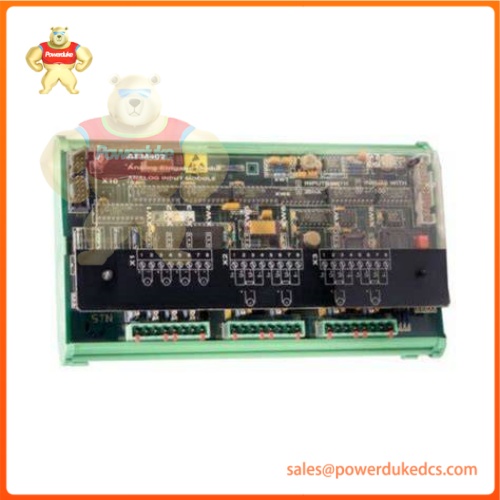
1.Unboxing & Physical Snapshot (Dynamic List)
- Brand & Model: Lyngsö Marine / SAM Electronics / Kongsberg Legacy Automation Series — AEM402 Analog Input Module (Type Number: 962.004.200)
- Physical Dimensions: Standard modular marine rack-mounting profile (approx. 125.4 mm x 216.0 mm x 58.0 mm)
- Estimated Shipping Weight: 0.65 kg (1.43 lbs) (Packaged within high-density antistatic foam and rigid industrial corrugated casing)
- What’s in the Box: Printed circuit board assembly mounted on a dedicated carrier frame, 3 integrated pluggable terminal strips, onboard diagnostic indicators, and factory compliance certification tags. (Note: Subrack backplanes and interface cables are ordered separately).
2.Product Introduction
Marine automation systems, engine control monitoring, and vessel power management architectures rely on precision analog input modules to acquire critical process variables such as temperature, pressure, and fluid levels. Marine engineers and automation technicians mount this 8-channel differential input module directly into subrack interface cabinets, utilizing its multi-range voltage, current, and Pt100 resistance processing capabilities to feed reliable sensor metrics into centralized bridge and engine control networks.
System reliability mandates utilizing authentic OEM Lyngsö Marine / SAM Electronics hardware rather than unverified third-party refurbished cards. Deploying this exact AEM402 module ensures proper signal conversion accuracy, noise immunity in harsh marine electrical environments, and seamless integration with legacy vessel management systems.
3.Core Technical Specifications
| Parameter | Value |
|---|---|
| Manufacturer / Product Line | Lyngsö Marine / SAM Electronics Marine Automation Architecture |
| Catalog Model / Type Number | AEM402 (Type Number: 962.004.200) |
| Module Function | 8-Channel Differential Analog Input Module |
| Input Signal Ranges | \pm10 V, 4 to 20 mA current loops, and Pt100 / resistance inputs (selectable per channel) |
| Analog-to-Digital Conversion | 12-bit A/D converter with dynamic gain control (1 to 256) |
| Power Supply Requirements | Standard marine rack DC power rails (\pm15 V / +5 V internal system bus) |
| Operating Temperature | -15°C to +55°C marine engine room / control room threshold |
| Enclosure Protection | IP20 open module card assembly (Cabinet-mounted installation) |
| Approximate Unit Weight | 0.65 kg (1.43 lbs) |
- Global Compliance & Classification Standards
Marine classification societies, vessel flag-state inspectors, and port authorities require rigorous documentation verifying that automation hardware satisfies international maritime safety specifications. This input module aligns with major marine benchmarks, carrying expected type-approval compliance designations from leading maritime classification bodies (such as DNV, Lloyds Register, or equivalent marine authorities) along with CE Mark conformity for European directives.
A verified marine type-approval ensures that internal isolation barriers and galvanic decoupling circuits will withstand severe power surges and vibration profiles typical of seagoing vessels, protecting critical engine safety systems from spurious trips. Verify specific lot certificates with OEM.
5.Long-Term Storage & Asset Preservation Guide (E-E-A-T Goldmine)
Marine automation modules sitting dormant in facility or vessel stockrooms require strict environmental discipline to prevent terminal strip oxidation and electrostatic discharge (ESD) degradation of sensitive integrated measurement circuits. Keep the module hermetically sealed inside its original factory anti-static moisture-barrier bag complete with silica gel packs until the exact minute of panel installation. Maintain stockroom climate controls with ambient temperatures stable between 15°C and 25°C and relative humidity strictly below 50 percent to protect multi-layer printed circuit boards from salt-air micro-corrosion. If this card remains unpowered in stock beyond three years, maintenance technicians should inspect the gold-plated connector fingers for tarnishing before deploying the unit to active vessel service.
- Physical Installation Prerequisites
Insert the module carefully into the designated subrack card slots, ensuring upper and lower mechanical guides align correctly before pressing firmly to engage the rear terminal connections. Ensure the alarm and control cabinet maintains a low-impedance connection to the vessel hull earth ground grid, and route all analog sensor signal cables through shielded metallic trays separate from high-power marine propulsion cabling to suppress electromagnetic interference.
- Buyer’s FAQ (Logistics & Compliance Focus)
- What Harmonized System (HS) tariff code governs international shipments of this analog input module? Marine electronic control apparatus and modular input/output units typically fall under HS code 8538.90 (parts suitable for use solely with electric control apparatus), though customs brokers should verify local classifications.
- Does the module require software configuration or jumper settings? The hardware features channel-specific input configurations; technicians must verify internal jumper selections or software scaling parameters to match connected voltage, current, or Pt100 resistance transmitters during commissioning.
- How does the Country of Origin (COO) documentation affect trade compliance? Official manufacturing country declarations must match commercial export invoices precisely to clear customs inspections smoothly without secondary tariff reviews or border delays.
- What level of freight insurance is advised during transit? Full-value commercial cargo insurance coupled with shock-impact indicator labels is mandatory to protect sensitive legacy marine electronics against rough transit handling.






