Description
 Omron Delta Tau ACC-24E2A: Maintaining Precision in Ultra-High-Speed Analog Servo Loops
Field Observation: The Trap of Stray Ground Currents in High-Resolution DACs
Why do commissioning engineers spend days tuning proportional-integral-derivative (PID) filters in software while completely overlooking microvolt shifts on the physical analog common rail? During a recovery intervention on an ultra-precision diamond-turning CNC lathe running an Omron Delta Tau Universal Motion and Automation Controller (UMAC) architecture, the tool head began suffering from subtle, time-delayed positioning drift. The issue wasn’t a corrupt application variable or a damaged motor stator line. It was traced to a subtle ground-loop voltage potential creeping across the analog command shield. The target hardware platform was a Delta Tau ACC-24E2A 2-Axis Analog Interface Module, carrying the specific factory identifier 3-3398A-00-1000-B100.
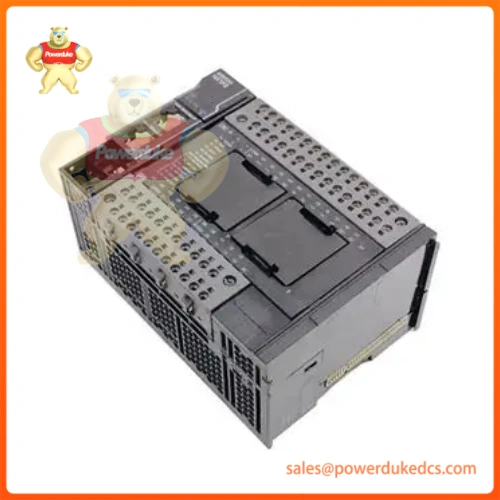
The ACC-24E2A is a high-density, slot-mounted 3U rack accessory designed to act as the raw musculature interface for legacy PMAC2-style processing buses. This specific configuration utilizes a highly integrated PMAC2 Servo IC to yield 2 independent axes of isolated, ultra-smooth \pm 10V DC analog command output.
Because this board functions without an onboard standalone processor, it relies entirely on high-frequency, unbuffered backplane data transfers. If your installation technician terminates the differential analog shields to a noisy digital power common instead of a dedicated, unpainted earth grounding bracket, high-frequency switching noise will corrupt the 18-bit Digital-to-Analog Converters (DACs). This corruption creates a false command offset that mimics real axis drift.
[UMAC Turbo Central CPU] ───(High-Speed Backplane Bus)───> [ACC-24E2A Servo IC Base]
                                                                     │
                                                         (Onboard 18-Bit Dual DAC)
                                                                     ▼
[External Multi-Axis Servo Drive] <───(±10V Differential Command)────┴─── [3-3398A-00-1000-B100 Output]
                                                                     │
                                                          (Isolated Shield Rule)
                                                                     ▼
                                                    [Dedicated Clean Earth Ground Bar]
Technical Specification Baseline
| Parameter | Value | Field Implication |
| Primary OEM | Omron Industrial / Delta Tau Data Systems | Enterprise-grade ultra-high-speed motion control architecture. |
| Module Designation | ACC-24E2A (Axis Interface Series) | Delivers specialized analog servo control loops to raw racks. |
| Exact Part Code | 3-3398A-00-1000-B100 | Decodes to a baseline 2-Axis analog configuration model. |
| Control Signal Layer | \pm 10V DC Velocity or Torque Commands | Configurable for specialized sinusoidal phase current loops. |
| Converter Depth | 18-Bit Dual DAC Architecture | Delivers exceptionally smooth micro-positioning transitions. |
| Form Factor Profile | 3U Industrial Eurocard Format | Engineered exclusively to plug into standard UMAC backplanes. |
| I/O Connectivity | Integrated Breakout Header Array | Direct terminations for differential encoders and flag limits. |
ABC Classification & Stocking Recommendations
Managing complex, timing-sensitive multi-axis cards like the ACC-24E2A requires a warehouse stocking framework centered on drop-in mechanical cross-compatibility.
Class B Spares: Critical Axis Bottleneck, Demanding Hardware Options
The Omron Delta Tau 3-3398A-00-1000-B100 module sits within Class B inventory parameters. While the card holds no active software macros or machine coordinate setups, it serves as the physical bridge to your multi-axis servo drives. Because Delta Tau hardware utilizes unique backplane timings and specific tracking pin arrays, you cannot substitute this card with a generic analog output module during an emergency line failure.
- Stocking Recommendation: Maintain a strict minimum safety stock of 1 verified module for every 4 active units running across critical facility skids.
- The Option Stack Trap: Be highly precise when auditing backup cards. The
3-3398A-00-1000-B100is native to the 2-axis configuration. If your active system rack runs a layered mezzanine setup (such as Option 1/1A to expand up to 4 total axes), a standard 2-axis backup card will leave your 3rd and 4th axes entirely disconnected. Always stock an exact match for your largest axis deployment. - Lead-Time Realities: Because this platform generation is highly mature and now operates under legacy/surplus support streams, direct OEM procurement lead times can extend significantly, sometimes up to 26 weeks. Sourcing clean, certified refurbished units from specialty asset brokers is often the fastest route to secure your plant.
Not Recommended For
Do not deploy the ACC-24E2A card as a standalone general-purpose PLC analog expansion card. The hardware features no independent internal micro-controller layer; it is optimized specifically for high-speed synchronization loops running alongside a UMAC Turbo or Power PMAC master processor.
Lifecycle Tracking & Vendor Management
Minimizing Total Cost of Ownership (TCO) across aging high-speed motion setups requires rigorous anti-static rules and specialized loop testing steps for incoming hardware assets.
Overcoming Long-Term Storage Pitfalls
Because the 3-3398A-00-1000-B100 utilizes high-speed CMOS Servo ICs and high-resolution operational amplifiers, the board is exceptionally vulnerable to Electrostatic Discharge (ESD) damage during warehouse handling. A subtle static shock from an ungrounded warehouse technician won’t necessarily burn out a trace immediately. Instead, it can create latent micro-fractures in the silicon, leading to random signal dropouts months after the board is placed into active service.
To safeguard your safety stock, store all spare ACC-24E2A boards inside factory-sealed, static-shielding moisture bags with active desiccant packs. Never unpack a backup board unless you are standing at an approved ESD-safe workstation with a grounded wrist strap attached.
Vendor Verification Protocols
Because replacement components must be sourced from independent surplus and industrial refurbishment channels, you must enforce a rigid incoming quality validation protocol.
When contracting with independent industrial hardware brokers, mandate a comprehensive functional testing certificate. Never accept a basic “powers on” or “chassis connection healthy” statement. Require your supplier to hook the board up to an active UMAC test backplane and execute a dynamic loop verification across both analog channels. This test must confirm consistent \pm 10V output tracking, accurate differential quadrature encoder decoding up to their rated frequency limits, and stable flag logic response before the board is accepted into your active safety stock.
Quick Conclusions
- Keep at least 1 verified 2-Axis module locally in stock to ensure your electrical technicians can resolve a positioning loop failure within minutes.
- Isolate and ground all analog differential shields cleanly to prevent stray ground-loop currents from distorting the 18-bit DAC outputs.
- Confirm your axis counts before ordering replacements; the
3-3398A-00-1000-B100code denotes the base 2-axis layout, not the 4-axis option stack. - Require a complete dynamic backplane loop test certificate from independent brokers before accepting a surplus unit into your inventory.
FAQ
1. Can the ACC-24E2A card be hot-swapped while the main UMAC rack power is turned on?
Absolutely not. The ACC-24E2A card does not possess active bus-isolation switches. Removing or inserting this card while the 3U backplane is energized will generate a high-voltage electrical arc across the data pins, risking catastrophic damage to both the Servo IC on the card and the master UMAC Turbo CPU processor board.
2. How can a field technician identify an internal 18-bit DAC failure on this card?
Disconnect the analog command cable from your external drive and use a high-precision digital multimeter to monitor the command pins directly. Program your motion controller to output a steady 0V balance command. If the physical output pins measure a shifting voltage offset greater than \pm 20mV, or if the voltage jitters erratically while the axis is commanded to a full stop, the internal analog amplifier or DAC chip has broken down.
3. What is the fundamental difference between the ACC-24E2A and the older ACC-24E2 cards?
The inclusion of the A suffix represents a critical hardware evolution to an 18-bit dual DAC output framework, providing significantly higher velocity loop smoothness compared to older revisions. Well, technically they can sometimes occupy similar card cages, but changing versions requires updates to your master controller’s internal motor scaling parameters (Ixx11) to accurately calibrate the voltage command steps.
4. What is the correct jumper configuration setup for adjusting backplane base addressing?
The base address mapping for the card’s internal Servo IC is handled via mechanical hardwire jumpers located directly on the main circuit board. You must carefully match the jumper positions on your replacement board to match the exact settings of the failed unit. Failing to configure these addressing jumpers correctly will cause the master CPU to lose track of the card’s register layout, triggering a hard board-handshake error upon startup.
Channel Adaptation Notes
B2B Product Page Blueprint
- Title Construction: Use
Omron Delta Tau ACC-24E2A 3-3398A-00-1000-B100 Motion Interface Module. - Technical Callouts: Highlight its baseline 2-axis analog configuration, high-resolution 18-bit dual DAC assembly, 3U Eurocard size, and compatibility with the UMAC Turbo chassis line in bold text near the top of your technical specs table to capture precise engineering search queries.
- Condition Declaration: Use clear marketplace condition tags such as “Legacy Component — Refurbished (Dynamic Rack Loop Certified with Test Logs)” or “New Surplus (In Factory Sealed Anti-Static Shielding Bag)” to streamline corporate technical procurement validation.
Industrial Network Social Strategy
- Topic Focus: Focus on eliminating hidden motion drift and maintaining legacy CNC/robotics system uptime. Discuss how tracking core axis-interface cards like the
Omron Delta Tau 3-3398A-00-1000-B100protects high-precision machineries from sudden, long-lead production stoppages. - Tone Structure: Write directly to motion control engineers, CNC specialists, and plant automation managers. Keep the copy professional and technical; skip the marketing fluff and focus on operational realities like ground loop noise, address jumper mapping, and rigid ESD storage practices.