

Description
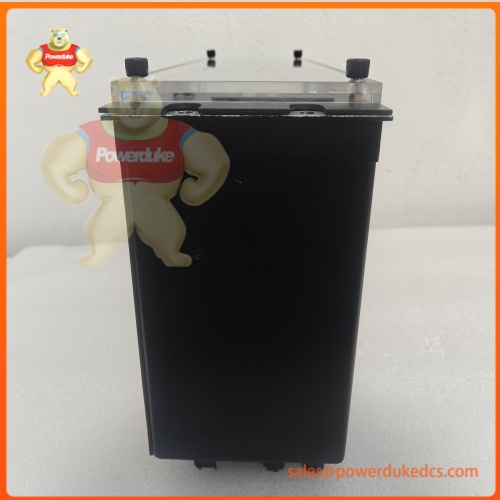
1.Unboxing & Physical Snapshot (Dynamic List)
- Model & Brand: Beckwith Electric M-3425A Comprehensive Generator Protection Relay
- Physical Dimensions (Approximate W x H x D): Standard 19-inch rack format, 19.0 in x 5.21 in x 10.2 in (48.3 cm x 13.2 cm x 25.9 cm)
- Estimated Shipping Weight: 25.0 lbs (11.3 kg) packaged in heavy-duty foam-lined transit containers (net unit weight is approximately 17.0 lbs / 7.7 kg)
- What’s in the Box: M-3425A relay chassis, rear terminal block interface covers, metal extraction handles, phoenix-style communication connectors, and hardcopy factory test certification sheets (does not include external auxiliary tripping voltage modules or customized panel cut-out adapter plates).
2.Product Introduction (Randomized Structural Hook)
Mounting directly into standard 19-inch relay swing-frames or vertical switchgear compartments, this digital protection package anchors the safety architecture of mid-to-large utility generators. The heavy steel enclosure houses multi-processor boards designed to ingest raw transformer-isolated voltage and current inputs, executing complex phase-distance and differential logic under intense substation electromagnetic fields.
Panel builders secure the heavy chassis using four front-panel mounting screws while routing high-density wiring harnesses to the rear barrier terminal blocks. Instrument technicians must interface with the front RS-232/RS-485 communication ports or optical interface windows to pull event logs, ensuring the internal volatile memory battery remains healthy during configuration downloads.
3.Core Technical Specifications
| Parameter | Value |
|---|---|
| Enclosure Form Factor | EIA RS-310C and DIN 41494 Part 5 rack-mount chassis |
| AC Current Inputs (CT) | 1 A or 5 A nominal rating (field configurable via internal jumpers) |
| AC Voltage Inputs (PT) | 60 to 140 VAC, 50/60 Hz nominal |
| Control Power Supply | Universal range (85–260 VDC / 85–264 VAC) |
| Phase Distance Characteristics | Three-zone mho circle diameter (0.1 to 100.0 ohms) |
| Frequency Protection Range | 40.00 to 67.00 Hz (programmable step accuracy of 0.01 Hz) |
| Operating Temperature Range | -20°C to 70°C (-4°F to 158°F) ambient cabinet conditions |
| Communication Interfaces | Front panel RS-232, rear RS-485 / fiber optic options |
| Output Contact Rating | Trip and alarm contacts rated for 30 A breaking / 250 V max |
4.Global Compliance & Industry Certifications
Utility substations require strict validation reports to satisfy North American NERC compliance mandates and international safety standards. This relay complies with relevant IEC and IEEE type-test specifications for surge withstand capability, high-voltage dielectric strength, and electromagnetic emissions (CE Mark / UL Listed classifications).
The heavy-duty design meets stringent seismic and vibration resistance criteria to survive turbine trip shockwaves without spurious tripping. Verify specific lot certifications and firmware revision sheets with the factory or certified service centers prior to deploying in nuclear or critical utility intertie applications.
5.Long-Term Storage & Asset Preservation Guide (E-E-A-T Goldmine)
Warehouse managers must handle complex microprocessor relays with care to protect internal real-time clock batteries and delicate surface-mount integrated circuits. Store the unpowered unit inside its original packaging in a climate-controlled environment where relative humidity stays strictly below 50% to prevent corrosion on the rear barrier strip screws.
Inspect the internal lithium coin-cell battery every three years; if shelf storage exceeds the manufacturer’s operational threshold, replace the battery to avoid losing programmed setting files stored in static RAM. Keep the unit away from strong magnetic induction fields or variable-frequency drive storage zones to protect internal analog-to-digital converter calibration matrices from corruption.
6.Physical Installation Prerequisites
Verify that the switchgear cutout or swing-frame provides a minimum depth clearance of 12 inches to accommodate rear wiring leads and communication cables without tight bends. Connect the dedicated chassis copper ground stud directly to the substation ground mesh using a minimum 12 AWG stranded conductor before wiring any potential transformers. Ensure adequate vertical spacing between adjacent high-heat relays to maintain natural thermal convection flow through the ventilated top and bottom chassis covers.
7.Buyer’s FAQ (Logistics & Compliance Focus)
- What Harmonized System (HS) code governs international import customs for this protective relay?
Classify under HS code 8536.49 (Electrical relays for a voltage exceeding 60 V but not exceeding 1,000 V). Consult your customs broker for country-specific preference classifications.
- Does the Country of Origin (COO) declaration affect utility audit compliance?
Yes, public utilities must archive the exact Certificate of Origin provided with the physical shipping documentation to satisfy domestic manufacturing preference and supply chain transparency mandates.
- Is specialized air-ride freight transit recommended for international dispatch?
Always specify shock-indicating container labels and professional freight insurance when shipping solid-state relay hardware overseas to safeguard internal crystal oscillators from heavy drop impact damage.
- Does this replacement unit ship with pre-loaded protection settings or factory defaults?
The hardware ships loaded with standard factory default configuration files; protection engineers must upload site-specific logic settings using the vendor software suite before placing the machine online.






