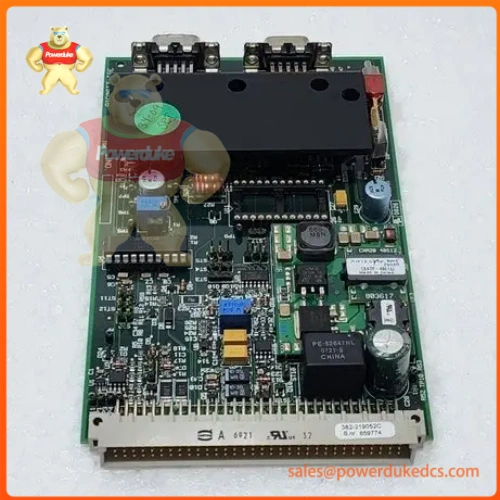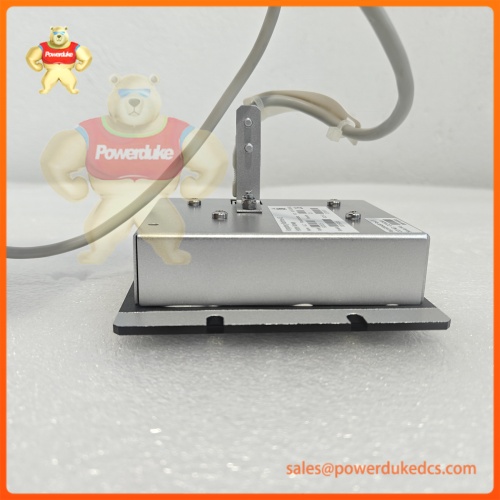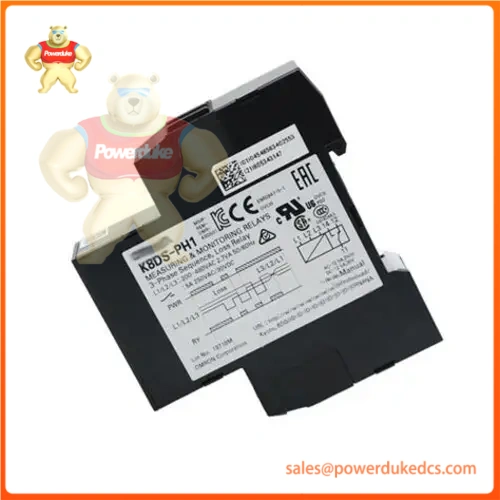
Description
1. Unboxing & Physical Snapshot
- Model & Brand: Kongsberg Maritime (RIO200 Module Family) — Serial Line Communication / Field Interface Module — Part Number: RSER200-4 (Manufacturer Order Code: 603444)
- Physical Dimensions: Standard Kongsberg RIO200 rack-mount electronic card profile designed for subrack chassis backplane insertion (Approx. 263 mm × 58 mm × 28 mm; Net weight: ~0.4 kg to 0.5 kg)
- Estimated Shipping Weight: Approximately 1.1 kg net (Packaged securely in multi-layer anti-static shielding containment, high-density molded protective foam, and heavy corrugated export carton)
- What’s in the Box: Kongsberg RSER200-4 communication module unit, front-panel access door assembly, pluggable terminal interface blocks, and manufacturer conformance/test documentation.
2. Product Introduction
Structure B (Architecture hook): Engineered for demanding marine automation, offshore platforms, and dynamic positioning networks, the Kongsberg RSER200-4 (Part Number 603444) functions as a high-performance serial line communication and field interface module within the RIO200 module family. Designed to manage multi-channel serial communications, 3rd-party device integration, and instrument data routing across vessel management systems, this module ensures reliable, deterministic data exchange under severe maritime environmental conditions.
Housed in a ruggedized, corrosion-resistant modular card format built to withstand continuous shipboard vibration, thermal stress, and electromagnetic interference (EMI), the internal circuitry supports flexible communication standards (including RS232, RS422, RS485, and NMEA 0183) alongside a dedicated service USB port.
3. Core Technical Specifications
| Parameter | Value |
| Component Type | Serial Line Communication / Field Interface Module |
| Product Family | Kongsberg RIO200 Modular Remote I/O System |
| Part Number Designation | RSER200-4 (Catalog / Order Code: 603444) |
| Field Channel Configuration | 4 configurable field channels and 3 link channel interfaces |
| Supported Protocols | RS232, RS422, RS485, NMEA 0183, Modbus, and proprietary maritime standards |
| Service Interface | Integrated USB interface port for testing, diagnostics, and service access |
| System Architecture | Designed for Kongsberg RCU/RIO subrack backplane integration |
| Power Supply Input | Redundant low-voltage DC rails sourced via system rack backplane |
| Mounting Format | DIN-rail / subrack slot-mount profile |
| Operating Temperature Range | -15°C to +70°C continuous marine industrial threshold |
| Storage Temperature Range | -40°C to +85°C |
| Enclosure Protection Class | IP20 card module format for cabinet/chassis integration |
| Physical Net Weight | Approximately 0.4 kg to 0.5 kg |
4. Global Compliance & Industry Certifications
Type-test verification and strict marine classification standards compliance are mandatory for hardware modules deployed within vessel command and safety networks.
- Expected Certifications: Marine Type Approval from major classification societies (DNV, ABS, Lloyds Register), CE Mark, and Ex Zone 2 hazardous location compliance ratings.
- Safety Relevance: Galvanic isolation on serial lines and robust watchdog mechanisms prevent communication loops or external transceiver faults from disrupting core vessel automation and control loops.
- Audit Note: Verify that module hardware revision levels, channel jumpers, and communication protocol configurations align with your vessel’s node engineering specifications prior to active rack insertion.
5. Long-Term Storage & Asset Preservation Guide
Veteran Maintenance Note: Storing precision marine communication modules in unconditioned warehouses requires strict electrostatic discharge (ESD) protection and relative humidity control to prevent micro-corrosion on gold-plated backplane edge contacts.
- ESD Protection: Keep the communication module permanently sealed inside its original metallized anti-static shielding bag to safeguard sensitive internal microprocessors and transceiver ICs from static strikes.
- Climate Baseline: Store the inventory in a clean, dry location maintaining relative humidity strictly below 50% non-condensing, and ambient storage temperatures between -20°C and +40°C.
- Physical Preservation: Store modules flat on dedicated anti-static shelving trays; never stack heavy cargo directly on top of the card enclosure to avoid front-door damage or connector pin distortion.
6. Physical Installation Prerequisites
- Ensure that proper vessel change management protocols are observed and that system power rails are safely disabled before handling or installing rack-mounted modules.
- Inspect the subrack slot backplane for cleanliness, ensuring no foreign debris or moisture is present on the interface pins.
- Hook the RSER200-4 module onto the lower DIN rail at an angle, rotate it smoothly into position, and secure the latching mechanisms to guarantee full backplane seating and chassis ground continuity.
7. Buyer’s FAQ (Logistics & Compliance Focus)
- What Harmonized System (HS) code governs international customs clearance?The standard global export classification for this marine communication module is 8517.62.0050 (Machines for the reception, conversion and transmission or regeneration of voice, images or other data, including switching and routing apparatus).
- How does Country of Origin (COO) verification impact marine spares auditing?Accurate origin tagging on commercial shipping documents ensures compliance with international trade frameworks and regional marine import regulations (typically European manufacturing origin).
- Does this serial communication module require software configuration?Yes, channel baud rates, protocol mapping, and port parameters must be configured via Kongsberg engineering tools and network configuration software during commissioning.
- What level of transit insurance should be specified?Always mandate fully declared-value, tracked international air cargo insurance to protect delicate printed circuit boards and interface connectors against drop impacts during transit.