Description
1. Unboxing & Physical Snapshot
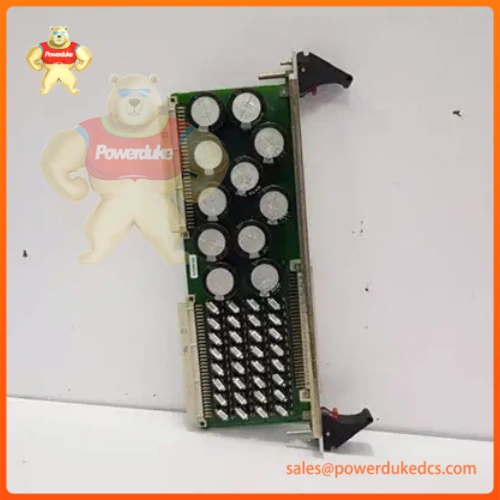
- Model & Brand: Kongsberg Maritime — TRX32 Filter and Signal Conditioning Module, Part Number 303088.
- Physical Dimensions: Standard VME-style plug-in printed circuit board assembly format (approx. 230 mm x 160 mm x 30 mm).
- Estimated Shipping Weight: 0.55 kg (Including anti-static cushioning and custom reinforced shipping carton).
- What’s in the Box: TRX32 printed circuit board assembly featuring front-edge extraction handles, gold-plated backplane interface connectors, multi-channel processing circuitry, and factory inspection tags.
2. Product Introduction
Engineered specifically for high-precision acoustic positioning environments, this plug-in module functions as a front-end signal conditioner for underwater sonar transceivers. It actively strips out severe marine background noise and grid frequency interference before echo returns hit the main processing core.
Deployed inside offshore vessel topside cabinets, the hardware handles multi-channel band-pass filtering to optimize signal-to-noise ratios. (Marine electronic technicians depend on this specific filter card layout to maintain sub-degree tracking accuracy for subsea transponders and dynamic positioning operations.)
3. Core Technical Specifications
| Parameter | Value |
| Module Type | Hot-swap plug-in filter & signal conditioning PCB |
| System Compatibility | Kongsberg HiPAP (High Precision Acoustic Positioning) series |
| Channel Architecture | Multi-channel parallel analog/digital filtering paths |
| Backplane Interface | VME-style multi-pin DIN connector layout |
| Power Consumption | Low-voltage DC rail feeds derived from rack power distribution |
| Operating Temperature | -10°C to +55°C (14°F to +131°F) designed for marine cabinets |
| Cooling Method | Convection / Chassis rack airflow |
| Enclosure Style | Open-board Eurocard module with front faceplate and handles |
4. Global Compliance & Industry Certifications
Marine auditors and vessel classification societies mandate stringent environmental and electrical standards for bridge and positioning electronics.
- Expected Certifications: CE Mark, Marine Equipment Directive (MED) compliance alignment, and compliance with major classification society rules (such as DNV or Lloyds Register standards for bridge control hardware).
- Safety Relevance: Rigorous electromagnetic compatibility (EMC) standards compliance ensures that high-power acoustic transmission pulses do not bleed into neighboring vessel communication or safety-critical navigation networks.
- Audit Directive: Verify specific lot certifications with OEM. Manufacturing date codes and hardware revision identifiers must match vessel survey compliance logs.
5. Long-Term Storage & Asset Preservation Guide
Complex marine electronic cards kept in harsh shipboard or onshore warehouses degrade silently if storage conditions are left unmanaged.
- ESD Protection Integrity: Keep the circuit board sealed inside its original metallized anti-static shielding bag to protect sensitive surface-mount microcircuits from electrostatic damage.
- Humidity Control: Maintain storage spaces below 60% non-condensing relative humidity to prevent salt-air moisture accumulation and galvanic corrosion on gold edge connectors.
- Component Lifecycle Care: If held in inventory for extended durations, check electrolytic capacitors periodically for physical leakage or degradation before deploying the card into active offshore rack slots.
6. Physical Installation Prerequisites
Proper mechanical handling and thermal discipline prevent backplane pin damage and card-slot faults during offshore maintenance windows.
- Chassis Clearance: Maintain sufficient cabinet clearance above and below the card rack to guarantee proper convective airflow across the faceplate.
- Static Discharge Precaution: Technicians must secure an approved ESD wrist strap to the designated rack grounding point before handling or inserting the module.
- Backplane Engagement: Align the board smoothly along the internal card guides, applying balanced forward pressure until the rear multi-pin DIN connectors lock securely into position.
7. Buyer’s FAQ (Logistics & Compliance Focus)
Q: What Harmonized System (HS) Tariff Code applies to global shipments of this acoustic module?
A: Marine navigational and acoustic positioning electronic cards typically clear under HS Code 9014.80 (Other navigational instruments and appliances) or 8538.90. Confirm final codes with your customs broker based on regional schedules.
Q: Does importing this legacy spare part require a Certificate of Origin (COO)?
A: Yes. Procuring a formal Certificate of Origin ensures frictionless customs clearance and helps verify that the part matches authentic manufacturing specifications.
Q: Are these replacement modules shipped with pre-configured filter parameters?
A: Modules are shipped as standard hardware assemblies. Marine engineers must verify jumper configurations and software routing profiles inside the HiPAP system rack to match specific transducer arrays prior to sea trials.