

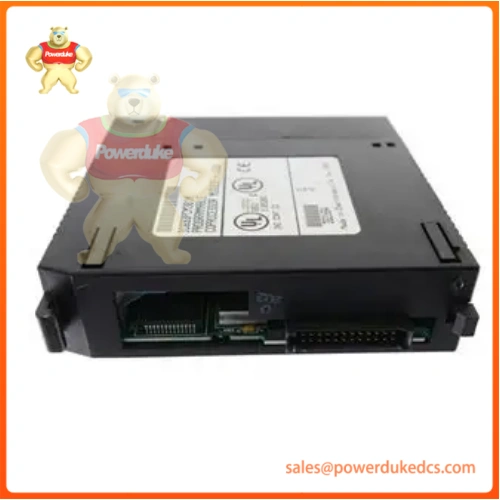
Description
1. Unboxing & Physical Snapshot
- Model & Brand: GE Fanuc / Emerson Series 90-30 Programmable Coprocessor Module (PCM) — Part Number: IC693PCM301
- Physical Dimensions: Standard Series 90-30 single-slot module footprint (Approximately 145 mm H × 35 mm W × 125 mm D)
- Estimated Shipping Weight: Approximately 0.60 kg (Packaged in industrial anti-static bubble containment and rugged corrugated transport boxing)
- What’s in the Box: IC693PCM301 coprocessor module card, internal lithium battery backup unit (pre-installed/disconnected for transit), faceplate status indicators, and manufacturer technical specification sheet.
2. Product Introduction
Structure B (Architecture hook): Engineered to offload complex communication tasks and data manipulation algorithms from the main CPU, this high-performance Programmable Coprocessor Module (PCM) mounts directly into any standard CPU baseplate slot (excluding Slot 1) of a Series 90-30 PLC system. Within automated industrial plants, it merges advanced computing capabilities with legacy device integration, handling custom protocols and high-speed data exchanges smoothly.
Housed in a durable industrial polymer and metal-shielded casing, the internal microcomputer architecture runs independent custom routines written in MegaBasic or C. Its dual-port serial connectivity via a single 25-pin D-shell interface enables seamless dialogue with third-party peripherals like barcode scanners, weighing scales, printers, and operator terminals without burdening the primary ladder-logic scan cycle.
3. Core Technical Specifications
| Parameter | Value |
| Module Type | Programmable Coprocessor Module (PCM) |
| Product Series | GE Fanuc / Emerson Series 90-30 PLC |
| Total Memory Capacity | 192 Kbytes Battery-Backed RAM |
| MegaBasic User Memory | 47 Kbytes allocated workspace |
| Supported Programming Languages | MegaBasic, C Language |
| Communication Protocols | Modbus RTU, GE Fanuc CCM (Computer Communications Method) |
| Physical Interface Ports | Two (2) internal ports accessed via one (1) 25-pin D-shell connector |
| Internal Power Consumption | 425 mA at 5 VDC (sourced from baseplate backplane) |
| Slot Requirement | Single slot (CPU baseplate only) |
| Operating Temperature Range | 0°C to +60°C (32°F to 140°F) |
4. Global Compliance & Industry Certifications
Compliance auditors reviewing legacy or ongoing PLC infrastructures demand rigorous documentation packages verifying electrical safety and interference limits.
- Expected Certifications: CE Mark (EMC and Low Voltage Directives), UL/cUL Listed Industrial Control Equipment, and RoHS material compliance.
- Safety Relevance: Rigorous type-testing ensures that internal high-frequency switching and serial communication lines will not emit electromagnetic interference capable of corrupting sensitive low-level analog inputs on adjacent I/O cards.
- Audit Note: Cross-verify module firmware revisions and battery replacement logs against your facility’s safety instrumented maintenance records during annual audits.
5. Long-Term Storage & Asset Preservation Guide
Veteran Maintenance Note: Storing legacy processor and coprocessor cards for extended periods requires strict battery management to protect volatile RAM contents and prevent terminal acid damage.
- Battery Management: Ensure the internal lithium backup battery (Cat. No. IC693ACC301) is disconnected if the module is placed in long-term warehouse storage to avoid deep discharge leakage.
- ESD Protection: Keep the module sealed inside its original metallized anti-static shielding bag to protect sensitive internal microprocessors from electrostatic discharge.
- Climate Control: Maintain warehouse storage relative humidity strictly below 50% non-condensing to prevent atmospheric oxidation on the backplane connector fingers.
6. Physical Installation Prerequisites
- Ensure the Series 90-30 rack backplane power is powered down before inserting or extracting the module to prevent electrical arcing across edge pins.
- Align the card carefully with the top and bottom rack guide slots, pressing firmly until the rear connector seats completely into the bus.
- Reconnect the internal lithium battery lead securely if retaining RAM user programs and variable data across power cycles.
7. Buyer’s FAQ (Logistics & Compliance Focus)
- What Harmonized System (HS) code governs international customs clearance?The standard global export classification for this programmable controller module is 8537.10.9170 (Programmable controllers and electrical apparatus for switching or protecting electrical circuits).
- How does Country of Origin (COO) verification impact trade compliance?Accurate origin tagging on commercial export paperwork ensures compliance with international trade frameworks; verify the manufacturing origin stamp (typically United States or European manufacturing hubs) on the original product label.
- Does this surplus hardware require special software tools for setup?Yes, configuration of the PCM requires legacy programming tools such as Logicmaster 90-30 or Control Software to establish communication parameters and load MegaBasic/C scripts.
- What level of transit insurance should be specified for shipping?Always mandate fully declared-value, tracked air cargo insurance to protect delicate printed circuit boards and onboard components against heavy drop impacts during transport.






