Description
 Meta Description
Mitigate generation downtime before purchasing an ABB SCYC55830SN1170020EL Unitrol excitation control board. Evaluate thermal constraints, gate-driver parameters, and TCO risk mitigations.
Technical Performance and Inventory Evaluation
Product Overview
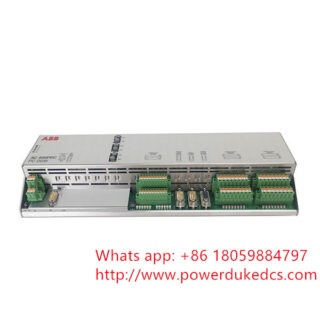
The ABB SCYC55830SN1170020EL is a specialized microprocessor-based regulation and control board utilized within the Unitrol 1000 series Automatic Voltage Regulator (AVR) ecosystems. This high-precision module monitors and controls the exciter field current of synchronous generators and motors, directly stabilizing grid voltage. Because this board handles both sensitive micro-processing and high-power gate-firing signals, it represents a critical infrastructure component where asset availability directly dictates plant uptime.
Core Specifications
Sourcing identical model designations protects systems from phase-matching failures. Verify that the replacement board matches these operational limits before integration:
| Parameter | Value |
| Brand & Model | ABB SCYC55830SN1170020EL (Unitrol Series) |
| Function | AVR Main Control & Power Rectifier Driver Board |
| Input Supply Voltage | 90 to 250 V AC / 120 to 300 V DC |
| Nominal Output Current | Continuous 3 A to 10 A DC (application-dependent) |
| Excitation Frequency | 50 Hz / 60 Hz nominal |
| Regulation Accuracy | < ±0.5% of nominal generator voltage |
| Analog Interfaces | Integrated PT/CT sensing loops, ±10 V / 4–20 mA inputs |
| Digital Communications | Modbus RTU / Profibus DP (via expansion card) |
| Operating Temperature | −20 to +55 °C (−4 to +131 °F) |
Condition Classification
Given the extreme thermal environments where excitation boards operate, procurement teams must enforce strict hardware pool guidelines:
- New Original (New Surplus): Factory-sealed packaging, unpowered electrolytic capacitors, zero hours of thermal fatigue.
- Factory Sealed: Original ABB production box containing factory test certificates and configuration parameters.
- Refurbished (Tested): Pre-owned controller run through comprehensive dynamometer-simulated load profiles, component level ESR capacitor testing, and updated firmware tracking.
Scenario-Based Field Analysis
Deploying the SCYC55830SN1170020EL inside a co-generation facility reveals why AVR inventory management requires deep engineering focus. During an emergency restart after a localized grid separation, the Unitrol system must execute rapid field boosting to stabilize generator terminal voltage. If the onboard gate-driver circuitry degrades from prolonged exposure to high ambient heat, the module will fail to pulse the thyristor bridge—well, technically it attempts to pulse, but the gate voltage drops below the trigger threshold, causing a failure-to-excite trip that leaves the turbine dead in the water.
[Generator Terminals] ---> [PT/CT Sensing Feedback] ---> [SCYC55830SN1170020EL Board]
                                                                    |
                                                      (Gate Firing Control Pulse)
                                                                    v
[Excitation Power Source] -----------------------------> [Thyristor Bridge Circuit] ---> [Field Winding]
For applications requiring continuous excitation currents exceeding 10 A, do not run this module standalone without external auxiliary cooling or an external power stage. Forcing the integrated power transistors to run continuously at their maximum current limit in unventilated enclosures will cause premature thermal breakdown. In high-current industrial settings, adding forced-air cooling or routing the SCYC board to an external booster panel is required to prevent early hardware failure.
Inventory Management and Stocking Strategy
Spare Parts Stocking Matrix
Eliminating stock-out incidents on critical generator assets requires setting a strict ABC analysis strategy based on total financial impact.
| Part Classification | Criticality Level | Buffer Stock (Min/Max) | Replenishment Strategy |
| A (SCYC55830SN1170020EL Board) | High (Total Generation Loss) | Min: 1 / Max: 2 | Insurance policy; keep 1 tested unit on-site |
| B (Measurement Transformers) | Medium (Loss of Redundancy) | Min: 1 / Max: 2 | Vendor consolidation or frame agreements |
| C (Fuses & Varistors) | Low (Component Level) | Min: 5 / Max: 10 | Just-In-Time (JIT) replenishment |
Total Cost of Ownership (TCO) Factors
Carrying a precision AVR card like the SCYC55830SN1170020EL in inventory carries an annual warehouse penalty of about 24% of its purchase price. This expense reflects the specialized storage required: keeping the unit dry and shielded from vibrations that could fracture solder joints.
To mitigate these carrying costs, utilities running identical turbine configurations across a territory should deploy cross-site sharing. Centralizing a single, pre-configured surplus module at a shared regional hub protects multiple generating units, dropping total capital ties and preventing obsolescence write-offs when turbines are eventually decommissioned.
Lifecycle Management and Strategic Sourcing
Because excitation control platforms remain in service for decades, tracking ABB’s official component lifecycle status is essential. When these specific boards shift toward restricted support phases, transition immediately away from JIT procurement for critical spares. Allocate capital for strategic hoarding from reputable industrial suppliers to lock in availability before components face long lead times or steep market price hikes.
Technical Comparison: AVR Internal vs. External Power Bridges
Understanding the physical boundaries of the SCYC55830SN1170020EL prevents incorrect application sizing.
- Internal Power Stages: The internal configuration simplifies your panel footprint by driving smaller synchronous machines directly from the board’s onboard circuits. External setups isolate the control board, using it only to send firing pulses to a large, separate silicon-controlled rectifier (SCR) bank.
- Thermal Dissipation: Internal drive configurations concentrate heat directly on the SCYC card’s circuit trace lines. External configurations transfer that thermal stress away to heavy-duty heatsinks, keeping the control electronics cooler.
- Maintenance Complexity: Internal setups require a full board replacement if an output transistor shorts. External setups allow you to swap separate SCR modules individually without touching the calibrated control board.
Quick Conclusions
- Maintain 1 unit on-site as an emergency insurance policy to avoid multi-day generation outages.
- Verify capacitor manufacturing dates on long-stored surplus boards to avoid startup surge failures.
- Utilize cross-site sharing across regional generating stations to minimize your annual inventory carrying costs.
- Never exceed the 10 A current limit without installing auxiliary cooling inside the enclosure.
Real-World Search FAQs
Does the SCYC55830SN1170020EL board ship with application parameters pre-loaded?
No, it does not. The module arrives with generic factory firmware. You must download the parameter set from your existing machine profile using ABB’s configuration tool (such as CMT1000) and flash the values to the replacement board before connecting it to a live generator.
Why do electrolytic capacitors on these stored boards require testing?
When any high-voltage excitation card sits unpowered for multiple years, the internal electrolyte paste in the smoothing capacitors can degrade. Testing these components or choosing a supplier that runs periodic power conditioning on their surplus stock prevents capacitor failure when the board is energized.
Can this card directly replace older SCYC models without rewiring?
While many Unitrol boards share a similar form factor, you must check the specific terminal suffix blocks. The SN1170020EL variant features a specific pin arrangement for PT/CT inputs—though your mileage may vary depending on whether your original panel used an external conversion harness. Always cross-check the schematic diagram before powering the system.
Channel Adaptation Notes
LinkedIn Technical Post
Managing risk on critical generator assets requires looking beyond typical PLC modules. When an automatic voltage regulator board like the ABB SCYC55830SN1170020EL fails, generation stops immediately—costing thousands of dollars in downtime for every hour the line sits idle.

To manage this, our facility treats these AVR cards as high-priority insurance stock. We maintain a single, environment-controlled spare locally, but we pool our broader replacement parts across our regional facilities using a cross-site sharing framework. This approach balances our holding costs while protecting our runtime metrics.

Are you holding dedicated backup boards for your excitation systems, or are you moving toward vendor-managed support contracts? Let's discuss below.
B2B Marketplace Q&A
- Question: We have a generator down due to an excitation board fault. Do you have an ABB SCYC55830SN1170020EL in stock, and how fast can it ship to Houston?
- Answer: We have this specific SCYC55830SN1170020EL module available in our inventory as New Surplus (fully tested). Because an asset shutdown on a generator line is a high-priority event, we can process and dispatch this module via same-day expedited air freight. The unit is stored in a climate-controlled warehouse and includes its full factory validation certificate along with a 12-month performance warranty. Please share your account details or request a quote to finalize the carrier pick-up schedule.