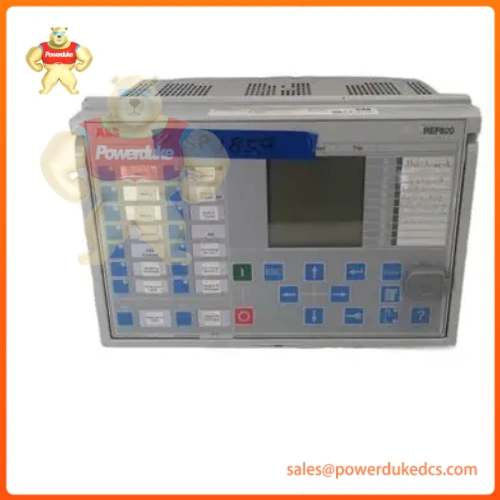
Description
1. Unboxing & Physical Snapshot
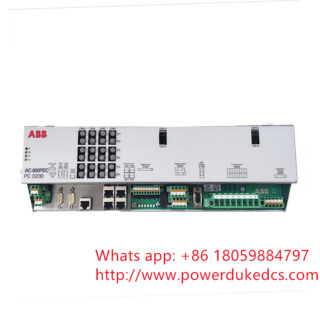
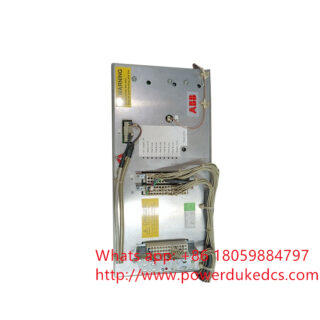
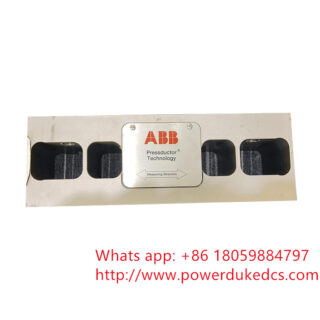
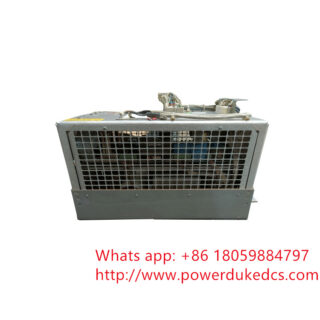
- Model & Brand: ABB (Relion 620 Series Product Family) Feeder Protection and Control IED — Catalog/Order Code: REF620E_F NBFNAAAANDC1BNN1XF
- Physical Dimensions: Standard 620-series flush-mounting enclosure format with integrated graphical LCD Human-Machine Interface (HMI) and pluggable modular backplane terminal blocks.
- Estimated Shipping Weight: Approximately 3.5 kg net (Packaged securely in multi-layer anti-static shielding containment, high-density molded foam, and heavy corrugated export carton)
- What’s in the Box: ABB REF620 numerical protection relay unit, pluggable optical/screw terminal blocks, mounting brackets, optical communication interface cables/plugs, and factory test conformity certificates.
2. Product Introduction
Structure B (Architecture hook): Engineered for comprehensive protection, control, measurement, and supervision of overhead lines and cable feeders in utility substations and industrial power distribution systems, the ABB REF620 (REF620E_F NBFNAAAANDC1BNN1XF) functions as an advanced numerical protection relay. Part of the esteemed Relion product family, it provides robust, selective protection for radial, looped, and meshed distribution networks.
Housed in a ruggedized flush-mount metal enclosure, the internal modular architecture supports conventional instrument transformers (CTs/VTs) or advanced low-power instrument sensors. Featuring native support for the IEC 61850 standard (including Ed. 1 and Ed. 2, GOOSE messaging, and redundancy protocols like HSR/PRP), the relay ensures high-speed, deterministic peer-to-peer communication across digital substation automation networks.
3. Core Technical Specifications
| Parameter | Value |
| Component Type | Numerical Feeder Protection and Control IED (Relay) |
| Product Family | ABB Relion 620 Series (REF620) |
| Order Code / Configuration String | REF620E_F NBFNAAAANDC1BNN1XF |
| Primary Protection Applications | Overcurrent, earth-fault, phase-discrepancy, thermal overload, and voltage protection |
| Communication Protocols | IEC 61850 (Ed. 1/Ed. 2), Modbus, DNP3, and IEC 60870-5-103 |
| Ethernet Redundancy Support | Seamless High-availability Supervisory Redundancy (HSR) and Parallel Redundancy Protocol (PRP) |
| Auxiliary Power Supply | Wide-range universal industrial DC/AC auxiliary control voltage supply |
| Mounting Format | Flush panel-mount case with withdrawal/pluggable unit design |
| Operating Temperature Range | -25°C to +55°C continuous industrial substation threshold |
| Storage Temperature Range | -40°C to +85°C |
| Enclosure Protection Class | IP54 front faceplate / IP20 rear terminal blocks |
| Physical Net Weight | Approximately 2.8 kg to 3.2 kg |
4. Global Compliance & Industry Certifications
Type-test verification and rigid international electrical standards compliance are mandatory for protection relays deployed within critical power transmission and distribution grids.
- Expected Certifications: CE Mark (EMC and Low Voltage Directives), UL/cUL Listed Industrial Control Equipment ratings, Type Test conformity per IEC 60255, and RoHS material compliance.
- Safety Relevance: High-dielectric isolation barriers, galvanic input separation, and robust watchdog self-monitoring circuitry prevent nuisance tripping while ensuring absolute reliability during high-voltage system faults.
- Audit Note: Cross-verify the complete order code configuration string and communication protocol licenses against your substation automation design sheet before parameterizing the device.
5. Long-Term Storage & Asset Preservation Guide
Veteran Maintenance Note: Storing microprocessor-based protection relays in unconditioned warehouses requires stringent humidity control to prevent internal printed circuit board condensation and battery drain.
- ESD & Moisture Protection: Keep the relay permanently sealed inside its original anti-static moisture-barrier bag containing active desiccant packs to protect internal microprocessors and communication chips.
- Climate Baseline: Store the unit in a clean, dry environment maintaining relative humidity strictly below 50% non-condensing and ambient storage temperatures between -20°C and +40°C.
- Physical Preservation: Store units flat on dedicated shelving; never stack heavy inventory directly on top of the relay housing to avoid damaging the front HMI display panel or rear terminal pins.
6. Physical Installation Prerequisites
- Ensure that all secondary CT circuits are safely short-circuited and DC auxiliary control power is locked out (LOTO) before mounting or extracting the relay chassis.
- Mount the relay case securely into the switchgear cutout panel, utilizing the supplied mounting brackets and ensuring solid low-impedance bonding to the station earth ground bus.
- Inspect all plug-in rear connectors and fiber optic/copper communication patch cables for correct seating and secure strain relief prior to system energization.
7. Buyer’s FAQ (Logistics & Compliance Focus)
- What Harmonized System (HS) code governs international customs clearance?The standard global export classification for this digital protection relay is 8536.49.0030 (Relays for a voltage exceeding 60 V but not exceeding 1,000 V / automatic circuit protection devices).
- How does Country of Origin (COO) verification impact utility supply chains?Accurate origin tagging on shipping documentation ensures compliance with strict international trade laws and regional power infrastructure procurement frameworks.
- Does this exact configuration string include specific communication card options?Yes, the order code sequence
NBFNAAAANDC1BNN1XFdefines the exact hardware module slots, analog input options, binary I/O count, and communication board configurations installed at the factory. - What level of transit insurance should be specified?Always mandate fully declared-value, tracked air cargo insurance to safeguard precision digital electronics and display panels against heavy drop impacts during international shipment.