Description
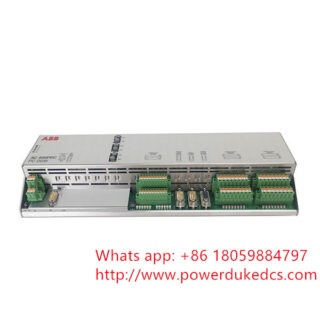
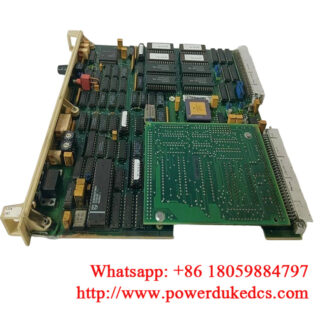
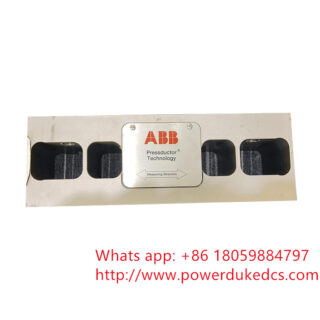
The ABB PM877 (3BDH000777R1) is a high-performance central processing unit designed for the Symphony Plus Melody Rack (S+ MR) series distributed control system (DCS). It serves as a core control processor for large-scale, mission-critical applications such as power generation facilities, chemical processing plants, and water treatment systems. The module executes complex control strategies, manages extensive communication networks, and supports full 1:1 hot-standby redundancy for high-availability process automation.
Technical Specifications
| Parameter | Value / Specification |
| Brand / Manufacturer | ABB |
| Model / Part Number | PM877 (3BDH000777R1) |
| Product Line | Symphony Plus MR Series (Melody Rack) |
| Integrated Communication Interfaces | 1 x Onet, 1 x redundant Cnet (C), 2 x redundant Fnet, 2 x DPV2 (PROFIBUS), 1 x Ethernet |
| Redundancy Interface | Requires Redundancy Link Cable NT 031 |
| Firmware Upgrades | Upgradable or downgradable via USB-Stick or Analyzer |
| PROFIBUS DP Licensing | Release of integrated PROFIBUS DP requires explicit software licensing |
| Depth / Length | 298 mm |
| Height | 400 mm |
| Width | 130 mm |
| Net Weight | 0.95 kg |
| Compliance & Standards | RoHS compliant, EU Directive 2011/65/EU |
Commercial and Availability Logistics
- Product Condition: New Original (New Surplus) in factory-sealed original packaging, or Refurbished (fully tested).
- Warranty: 12-month technical warranty covering mechanical and electronic performance.
- Availability: Ready for international dispatch. Standard lead time is 1 to 3 business days for stock items.
- Pricing Notice: The listed price is indicative and dependent on regional market conditions and active supplier allocations. Contact our procurement team for a firm, written quote.
Engineering Considerations and Field Deployment Notes
Architecture Integration & Legacy Upgrades
The PM877 is engineered primarily for upgrading or maintaining existing Melody Rack architectures within the Symphony Plus framework. It coordinates communications naturally across legacy Fnet networks and newer Ethernet-based architectures. Note that although the core operating system framework shares similarities across ABB execution platforms, this model is built explicitly for S+ MR racks rather than standard DIN-rail AC 800M assemblies.
Redundancy Link Configuration
Achieving full 1:1 bumpless hot-standby redundancy requires two identical PM877 controller modules connected via the dedicated Redundancy Link Cable NT 031. Field tests verify that mismatching firmware baselines on the primary and secondary units will inhibit system synchronization, causing the secondary module to remain in a passive or faulted diagnostic state.
PROFIBUS DP Licensing Constraints
While the module physically features twin DPV2 interfaces, the PROFIBUS DP master functionality is locked by default. Activating these fieldbus ports requires a valid runtime software license from ABB. Verify your configuration requirements in the engineering tool before attempting to download control logic using external PROFIBUS remote I/O drops.
Frequently Asked Questions
Can firmware be modified directly on site without a complex software environment?
Yes, up- and downgrading firmware versions can be achieved directly through a USB-stick interface or by using the specialized Melody Analyzer tool. This simplifies field maintenance during system standardization windows.
What cable is necessary for establishing a redundant tracking pair?
A specialized Redundancy Link Cable (Part Number: NT 031) must be connected to the dedicated synchronization ports on both modules. Standard RJ45 Ethernet cables will not establish the high-speed data mirroring required for dynamic memory synchronization.
Does the module require an internal battery for memory retention?
The manufacturer documentation lists the battery count as zero for the ordering block. The device relies on robust, non-volatile internal storage or architecture power grids to manage application logic persistence during outages; verify specific cold-start procedures with the OEM system manual.
Technical Notice: Hardware placement, interface addressing, and Fnet/Cnet termination procedures must be cross-referenced with the official ABB Symphony Plus hardware manuals and specific system topology diagrams prior to hot-plugging or replacing hardware in production lines.