Description
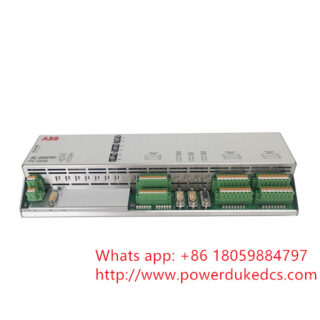
The ABB PM864AK01 (3BSE018161R1) is a central processing unit designed for the AC 800M control system. It executes control logic, manages I/O communications, and provides fault tolerance through hardware redundancy configurations in industrial automation architectures.
Commercial Inventory & Procurement Details
| Logistics Parameter | Value / Terms |
| Hardware Condition | New Original (Factory Sealed Surplus) |
| Warranty Period | 12-month comprehensive warranty |
| Availability | In stock (subject to prior sale) |
| Standard Lead Time | Ships within 1 to 2 business days from order confirmation |
| Commercial Pricing | Price subject to market conditions; contact us for a firm quote |
Technical Specifications
The following parameters detail the physical and electrical constraints of the processor module. Verify exact requirements with the OEM datasheet prior to installation.
| Parameter | Value |
| Module Type | Processor Unit |
| Processor Clock Speed | 96 MHz |
| On-Board RAM | 32 MB |
| Flash Memory Backup | Requires CompactFlash card (e.g., CF810) |
| Power Input Requirement | 24 V DC (typical range 19.2 to 30 V DC) |
| Current Consumption | 160 mA typical at 24 V DC |
| Power Dissipation | 3.8 W maximum |
| Max Redundant Pairs | 1 pairs per controller setup |
| Communication Interfaces | 2 x RS-232C ports (built-in) |
| Operating Temperature | +5 to +55 °C |
| Storage Temperature | −25 to +70 °C |
| Relative Humidity | 5 to 95 % (non-condensing) |
| Protection Rating | IP20 according to IEC 60529 |
Engineering Context & Deployment Considerations
In field deployments of AC 800M systems, the PM864AK01 functions as the core controller executing applications configured via Control Builder M (compliant with IEC 61131-3 programming languages).
Redundancy Architecture
When configuring high-availability process networks, engineers install two PM864AK01 units on a single TP830 baseplate. The primary module synchronizes its internal state, memory tables, and timer variables with the backup unit over a dedicated redundancy cable link. If the primary processor loses power or fails internal diagnostics, the secondary processor assumes control within 10 ms. This switchover speed prevents disruption to continuous processes governed by complex ISA-88 batch or ISA-95 manufacturing execution systems.
Communication Frameworks
The base unit lacks onboard Ethernet or Profibus interfaces. To connect to distributed I/O stations or upper-level SCADA networks, you must add communication interface modules to the left of the processor on the DIN rail:
- CI854A: For Profibus DP V1 integration, supporting up to 125 slave nodes.
- CI867: For Modbus TCP and EtherNet/IP links.
Ensure the system power supply (such as the SD832) provides adequate current headroom, factoring in the 160 mA draw of the processor along with the cumulative draw of all attached expansion communication modules.
Frequently Asked Questions
Can I upgrade a PM861 or PM864 unit to a PM864AK01 without modifying my existing application code?
Yes, the PM864AK01 provides direct backward compatibility with standard PM864 applications. However, you must verify firmware version alignment. The PM864AK01 requires Compact Control Builder or 800xA Systems version 5.0 SP2 or higher. Firmware must be flashed via the serial or Ethernet tool-port before putting the replacement unit into a redundant pair.
What is the distinction between the PM864A and the PM864AK01 kits?
The PM864AK01 is a designated kit that includes the PM864A processor module along with the critical base accessories, including the enclosure components and foundational mounting clips. Always cross-check the specific 3BSE018161R1 part number on your physical bill of materials to confirm accessory inclusion.
How does the module retain its execution application during a complete 24 V DC power failure?
The PM864A utilizes internal static RAM to run active processes. To prevent volatile memory loss during a total power interruption, the module relies on a plug-in battery (SB821) housed in the sub-assembly. Under standard operating conditions at 25 °C, this battery maintains the application data for up to 3 years. Replace the battery during planned annual shutdown schedules to minimize the risk of data loss.