Description
 Meta Description
Technical inventory and risk management analysis for the ABB PFXA401F (3BSE024388R1) Millmate tension controller. Balance safety stock with capital efficiency.
Technical Overview and Field Specifications
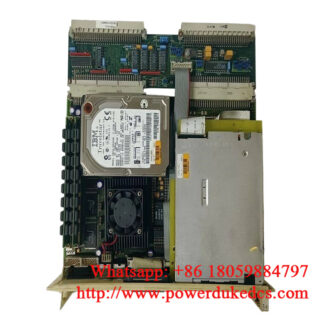
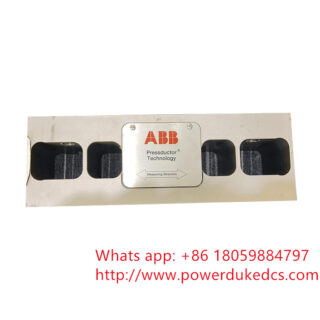
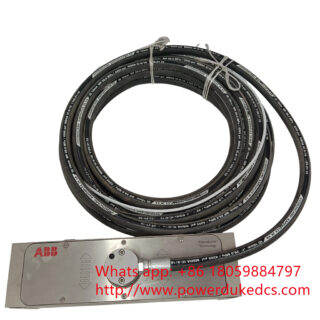
The ABB PFXA401F (ordering code 3BSE024388R1) serves as the first-generation computational core for the Millmate 400 Series Roll Force and Web Tension Measurement arrays. This specific revision processes raw alternating current excitation signals and secondary differential returns from magnetoelastic Pressductor sensors, executing digital filtering, scaling calculations, and zero-point line balancing.
| Parameter | Specification / Value |
| Model Designation | PFXA401F (Revision R1) |
| Ordering Code | 3BSE024388R1 |
| Device Classification | Millmate 400 Series Processing Electronics Unit |
| Excitation Interface | High-frequency AC excitation for Pressductor load cells |
| Data Communication | RS-485 serial fieldbus interfaces, isolated analog outputs |
| Form Factor | Sub-rack chassis slot card installation |
| Condition Standards | New Surplus (Tested), Refurbished (Bench Calibrated) |
In high-tonnage metal rolling stands and continuous paper manufacturing lines, this electronic unit manages rolling force calculations. A failure on an active R1 board immediately knocks out the tension feedback loop—though your mileage may vary depending on ambient cabinet temperature—which forces an emergency line stop to prevent severe metal tearing.
[Pressductor Array] ──(AC Excitation)──> [PFXA401F R1 (3BSE024388R1)] ──(RS-485)──> [DCS / PLC Node]
Inventory Strategy & Stocking Recommendations
Managing inventory for the 3BSE024388R1 board requires mitigating legacy component obsolescence. Because the R1 revision is the earliest hardware generation in this family, direct factory replenishment from primary distribution networks is unavailable, placing it under full obsolescence allocation constraints.
Categorization: Class A Critical Spare
- Classification: High unit value, zero functional workaround, absolute reliance on secondary markets.
- Carrying Cost Target: Hold localized warehouse carrying costs below 12% of asset value by targeting explicit stocking caps.
- On-Site Recommendation: Maintain exactly 1 spare unit per production compound running active R1 configurations.
- Replenishment Thresholds:
- Min Level: 1 unit
- Max Level: 2 units (if managing multiple separate legacy lines)
- Reorder Point (ROP): Set to 1 unit. Generate a replacement purchase requisition via vetted surplus channels the same day the shelf spare is deployed to the production floor.
Scenario Analysis: Plant Deployment vs. Spares Sourcing
Scenario A: Legacy Roll Force Stand Failure
During continuous high-speed strip reduction, an internal power surge destroys the analog input stage of the operational R1 module.
- Field Action: The control loop falls offline instantly. Well, technically the system software will allow a manual override, but only if operators run the stand at 30% speed to prevent strip tracking errors.
- Stocking Need: Having a pre-tested R1 board on the warehouse shelf lets the electrical maintenance team swap the card, match the physical jumper addresses, and restore 100% throughput within a 2-hour window.
Scenario B: Sourcing for Legacy Controls
When the on-site spare is consumed and the factory indicates that this legacy revision is long out of production:
- Field Action: Procurement must immediately pivot to authorized industrial surplus distributors rather than waiting on OEM channels.
- Stocking Need: Because these passive configuration boards do not contain volatile onboard battery cells that lose charge over time, properly stored “New Surplus” units perform identically to fresh factory hardware.
Trade-offs and Limitations
Strengths
- Direct Pressductor Matching: Processes specialized AC signals natively without requiring external conversion transmitters.
- High Thermal Tolerance: Resists the ambient cabinet heat common to control pulpits located near rolling mills.
- Firmware Parity: Avoids the minor configuration updates sometimes required when introducing later R3 or R4 hardware into ancient backplanes.
Limitations & Caveats
- Jumper Configuration Dependency: Station addresses are assigned via physical hardware jumpers. Technicians must match these settings manually before powering up a replacement board.
- Revision Matching Constraints: Replacing an R1 board with an R3 or R4 variant usually works, but it requires checking the existing backplane firmware version first to prevent communication bus faults.
- Not Recommended For: Standard strain-gauge load cells, as the circuitry is explicitly tuned to the electrical impedance of ABB Pressductor coils.
Decision Matrix: Sourcing & Replacement Options
| Sourcing Route | Lead Time | Cost Index | Risk Profile | Best Scenario Application |
| OEM Direct (New) | Obsolete / EOL | N/A | High Risk | Not available; must modernize or use surplus |
| Authorized Surplus (New Sealed) | 1–3 Days | 70–85% | Low | Emergency asset failure, safety stock replenishment |
| Refurbished / Bench Tested | 24–48 Hours | 40–60% | Moderate | Backup machinery lines, offline simulation benches |
Quick Conclusions
- Keep 1 replacement unit on site for every facility running active R1 Millmate processing slots.
- Map physical jumper settings on the spare board before placing it into active inventory storage.
- Store spare modules in anti-static shielding packaging within climate-controlled environments.
- Verify backplane compatibility before attempting to mix R1 and later revision boards in the same sub-rack assembly.
Frequently Asked Questions
What indicates an internal component fault on the 3BSE024388R1 controller board?
Unstable analog outputs, communication timeouts on the network, or a hardware fault LED on the front interface panel typically point to internal voltage regulator drift or flash memory degradation. Check the external 24 V DC power supply rails for clean voltage delivery before replacing the controller card.
Can a 3BSE024388R1 be swapped out for a 3BSE024388R4 module?
In most field applications, yes. The later R4 board serves as a functional replacement path. However, you must verify that the existing backplane firmware version can handle the newer board revision to avoid fieldbus synchronization dropouts.
What is the recommended shelf life for a spare R1 unit?
The shelf life is almost indefinite when stored in its original sealed anti-static packaging within a dry, temperature-controlled environment. Because the main board lacks liquid capacitors or volatile memory batteries, it will not experience significant performance degradation during long-term storage.
Channel Adaptation Notes
Internal Procurement & Maintenance Portal
- Cross-reference part number PFXA401F with ordering code 3BSE024388R1 to ensure compatibility across all internal automated purchasing lines.
- Configure automated workflows to prompt specialized surplus sourcing searches immediately, bypassing standard OEM channel logic.
System Integrator & Field Maintenance Guides
- Include terminal layout and jumper configuration diagrams within the preventative maintenance work order packet.
- Remind engineering teams that changing hardware station numbers requires a complete system reboot to reinitialize the communications interface.