Description
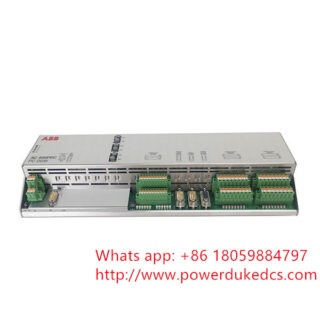
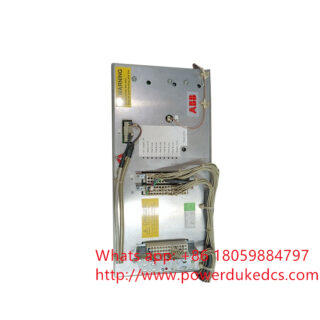
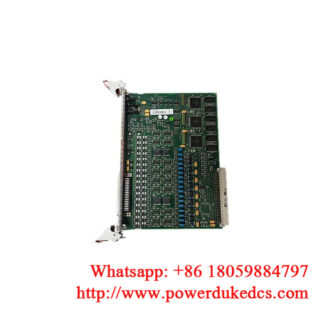
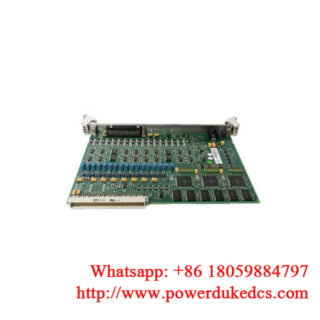
The ABB CI853K01 (3BSE018103R1) is a dual-channel RS-232C asynchronous serial communication interface kit designed for the AC 800M controller line within the System 800xA distributed control system (DCS). This CEX-Bus extension kit provides two independent, isolated serial ports utilized for point-to-point and master/slave multi-drop peripheral interfacing. It allows the host AC 800M processor to communicate directly with third-party subsystems, including programmable logic controllers (PLCs), gas chromatographs, weight scales, variable frequency drives, and legacy RTUs using serial industrial protocols.
Commercial and Availability Status
- Product Condition: New Original (Factory Sealed / New Surplus)
- Kit Component Inclusion: Bundles the CI853 Interface Module alongside the TP853 Module Baseplate (60 mm width).
- Warranty: 12-Month Comprehensive Warranty
- Estimated Lead Time: 1–3 business days (Global express priority dispatch)
- Pricing Note: Price is influenced by current component availability and plant breakdown urgency. Contact our parts team for a formal, firm commercial quotation.
Technical Specifications
| Parameter | Value |
| Model Kit Number | CI853K01 |
| ABB Part Number | 3BSE018103R1 (Alternative manufacturing baseline: 3BSE018103R3) |
| Interface Module Type | CI853 Serial Interface |
| Baseplate Model | TP853 (60 mm width) |
| Communication Channels | 2 independent RS-232C ports |
| Physical Connector Port | RJ45 female (8-pin assignment per port) |
| Transmission Speed | 75 b/s to 19,200 b/s (Configurable per channel) |
| Data Format | Asynchronous, half-duplex or full-depth signaling |
| Maximum Modules per CPU | Up to 12 modules linked via the CEX-Bus rail |
| Power Supply Source | 24 V DC (Drawn directly from the controller’s internal CEX-Bus rail) |
| Current Consumption | 100 mA typical at 24 V DC |
| Hot Swap Support | Yes (Supports Removal and Insertion Under Power) |
| Environmental Protection | G3 Conformal Coating standard (ISA-S71.04 severity level) |
| Enclosure Rating | IP20 (IEC 529 / EN 60529) |
| Dimensions (With Base) | 59 mm (W) × 127.5 mm (D) × 185 mm (H) |
| Net Weight | 0.70 kg (1.50 lbs) |
| Marine Certifications | ABS, BV, DNV-GL, LR, RS, CCS |
Protocol Compatibility & Software Integration
The CI853 hardware layer serves as an executable platform for several industry-standard communication stacks configured through Control Builder M:
- MODBUS RTU: Operates strictly in Master Mode via the CI853 interface ports. Note that native module-level hardware redundancy is not supported under the Modbus RTU firmware stack.
- COMLI (Communication Link): Supports both Master and Slave Modes. This proprietary ABB protocol is optimized for asynchronous data transmission between legacy and active controllers, and natively supports dial-up modem controls managed from the application code.
- Siemens 3964R: Supported via standard RS-232C physical parameters for connection to legacy Siemens processing units.
- Self-Defined Serial Communication (SerialLib): Enables engineers to construct custom ASCII transmit/receive protocols to interface with non-standard specialized field equipment like barcode readers, printers, or legacy flow computers.
Engineering Deployment and Field Constraints
Pinout Mapping and Cabling Limitations
Because the physical ports utilize an RJ45 footprint rather than a standard DB9 layout, custom serial cable fabrication is frequently required in the field. Ensure that the pin configuration maps exactly to the destination device requirements.
Cable Distance Restriction: Standard RS-232C specifications constrain unshielded point-to-point cable lengths to a maximum of 15 meters (50 feet) at 19,200 b/s. For applications where the target subsystem is located further away (extending up to several kilometers), an industrial fiber-optic to RS-232 converter must be inserted into the loop to prevent signal attenuation and eliminate ground-loop current risks.
Hardware Addressing and Slotting
CEX-Bus Allocation Rule: Up to 12 serial communication modules can be attached to a single AC 800M CPU cluster. Each module must be assigned a unique physical position on the CEX-Bus rail. Ensure that the module baseplate (TP853) interlocking pins are fully aligned before clipping the assembly onto the DIN rail to avoid damaging the internal data bus backplane pins.
Frequently Asked Questions
Can I run Modbus RTU Slave mode directly on the CI853 ports?
No. The firmware architecture inside the CI853 module restricts Modbus RTU execution strictly to Master Mode. If your System 800xA topology requires the AC 800M controller to act as a Modbus RTU Slave to an upstream SCADA system, you must utilize the built-in COM3 port located directly on the CPU module (e.g., PM864/PM866), or migrate to a Modbus TCP network via a CI867 CEX module.
Is the CI853K01 suitable for High Integrity (Safety) controller applications?
Yes. The CI853 module is approved for deployment alongside AC 800M High Integrity (HI) controllers. However, it can only be utilized for non-safety critical control, data acquisition, and diagnostic tracking. It cannot execute safety-critical peer-to-peer interlocks or SIL-rated signaling loops.
What should I check if the module status LED turns solid red during hot-swap maintenance?
A solid red Fault LED immediately following insertion indicates either a configuration mismatch or an initialization failure. Verify that the unit’s position on the physical CEX-Bus rail matches the slot layout defined in your Control Builder M hardware tree, and ensure that the module’s firmware version is compatible with the controller’s active firmware baseline.