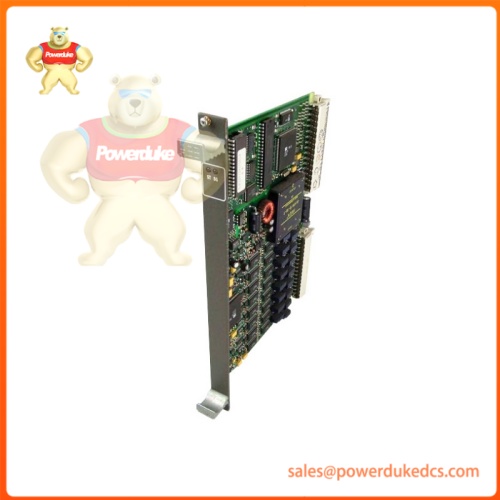
Description

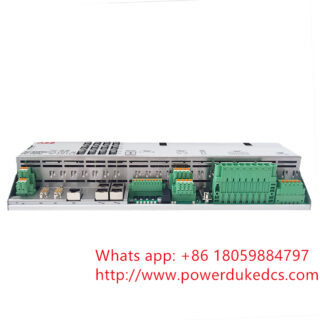
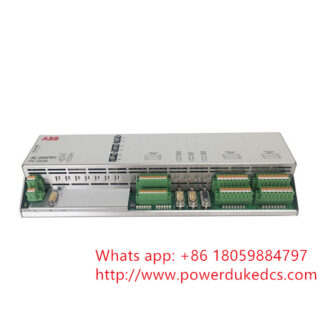
- Model & Brand: ABB / Distributed Control & Industrial Automation Systems (Catalog No. 83SR04C-E)
- Physical Dimensions: Compact modular industrial electronic circuit board layout (Approx. 100 mm × 50 mm × 20 mm profile) designed for dedicated control rack slots or system enclosures
- Estimated Shipping Weight: 0.25 kg (Packaged in multi-layer anti-static ESD shielding, moisture-barrier bagging, and structural foam crating)
- What’s in the Box: 83SR04C-E control module unit, interface connector adapters, hardware identification tag, and factory inspection test report.
Critical industrial process environments, power generation facilities, and automated manufacturing systems running ABB control architectures require versatile signal acquisition and processing hardware to handle field telemetry. System engineers integrate the ABB 83SR04C-E Universal Control Module directly into control racks (such as AC 800M and Advant/800xA ecosystems) to process multi-channel inputs and interface with various field sensors (—which is vital for maintaining high measurement accuracy, supporting robust control loop performance, and preventing signal distortion across demanding industrial operations).
Instrumentation and electrical technicians must enforce strict electrostatic discharge (ESD) handling protocols and verify loop wiring configurations prior to energizing circuits to prevent signal distortion or component damage.
| Parameter | Value |
| System Platform | ABB Industrial Distributed Control Systems (DCS) / AC 800M & 800xA Architecture |
| Module Type | Universal Control / Analog Input Processing Module |
| Core Function | Multi-channel signal acquisition, analog-to-digital conversion, and telemetry routing |
| Channel Configuration | Configurable multi-channel analog input layout (4 to 8 channel variants) |
| Mounting Type | Rack-plug-in installation layout inside industrial control cabinets |
| Operating Temperature Range | -20°C to +70°C (-4°F to +158°F) standard industrial window |
| Environmental Protection | IP20 cabinet-protected internal electronic assembly |
Auditors inspecting industrial control rooms, safety interlock panels, and process automation architectures require rigorous documentation verifying electrical safety, signal isolation integrity, and regulatory compliance.
- CE Mark: Confirms conformity with European Union directives covering electromagnetic compatibility (EMC) and low-voltage electrical safety.
- Industrial Standards: Complies with international specifications for industrial control equipment, electronic subassemblies, and process measurement devices.
- RoHS Compliance: Restricts hazardous chemical substances in electronic component manufacturing.
Compliance Note: Compliance with rigorous industrial electrical safety guidelines ensures that universal control and input cards maintain galvanic channel isolation and high-frequency noise rejection in heavy industrial electrical environments. Verify specific loop diagrams prior to plant audits.
Dormant electronic process control modules stored in warehouse stockroom bins face terminal oxidation on edge-connector fingers, micro-corrosion on solder joints, and component aging if environmental parameters escape strict control limits.
Keep the module sealed tightly inside its original anti-static (ESD) moisture-barrier bag to safeguard sensitive microcircuits and precision components from static discharge and airborne contamination. Maintain warehouse storage temperatures between -40°C and +85°C with relative humidity kept strictly below 95% non-condensing to prevent trace corrosion on gold-plated contacts. Ensure the hardware remains protected from heavy physical drop forces that could fracture the multi-layer printed circuit board or warp backplane connection pins.
Rack slot alignment, clean backplane interfaces, and ESD wrist-strap protocols dictate physical installation success. Ensure all control cabinet power feeds are completely locked out (LOTO) and verify zero energy state before handling internal electronics. Slide the 83SR04C-E module smoothly into its designated rack slot, secure any retaining screws or locking mechanisms, and verify module diagnostic health status and channel scaling via the control system engineering workstation.
- What is the correct HS Tariff Code for international customs clearance?
Industrial process control cards, electrical automatic regulators, and modular input parts classify under harmonized code 8538.90 or 9032.89, though exact regional rulings should be verified with your broker.
- Does this control module require software configuration after replacement?
Yes, channel type assignments, scaling parameters, and operational profiles must be verified or downloaded through the system configuration database following module replacement.
- How does the Country of Origin (COO) impact global trade compliance?
The verified COO (commonly Sweden) dictates trade agreement qualification and must match commercial shipping paperwork to eliminate border customs clearance delays.
- Why is comprehensive transit insurance mandatory for this component?
Precision analog-to-digital circuitry, multi-layer circuit boards, and delicate backplane interface pins can suffer structural micro-cracks or solder joint fatigue under severe drop impacts during freight transit.