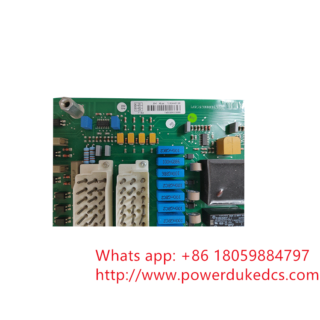
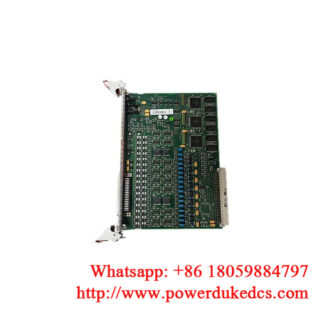
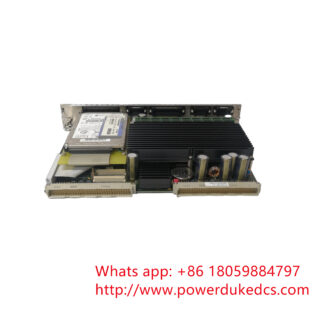
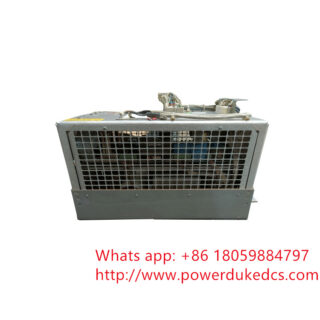
Description
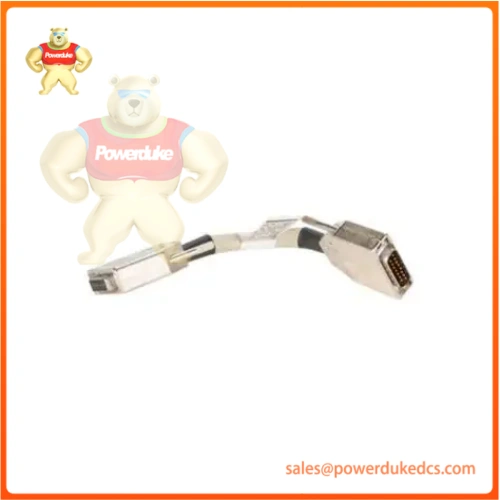
- Model & Brand: ABB Robotics / S4C+ & IRC5 Controller Series (Catalog No. 3HAC5518-1 / Internal Bus & Signal Cable Assembly)
- Physical Dimensions: Custom-engineered multi-conductor shielded cable configuration featuring precision industrial connector ends optimized for internal controller rack and backplane routing
- Estimated Shipping Weight: 0.60 kg (Packaged in multi-layer protective anti-static wrapping, moisture-barrier bagging, and structural crating)
- What’s in the Box: 3HAC5518-1 cable assembly harness, pre-terminated connector hoods, hardware identification tag, and factory inspection conformance report.
Advanced automated manufacturing cells, multi-axis robotic welding lines, and heavy industrial production systems powered by ABB S4C+ and IRC5 robot controllers require robust, low-loss internal signal pathways to ensure seamless communication between the main computer, axis drive modules, and I/O backplanes. System engineers and robotic technicians integrate the ABB 3HAC5518-1 Bus Cable directly inside the controller cabinet (routing between internal node processors, power supplies, or interface boards) to transmit critical control telemetry and synchronization data (—which is vital for preventing data packet corruption, eliminating axis command jitter, and ensuring high-reliability operational coordination across industrial workcells).
Robotics and electrical technicians must enforce strict lockout/tagout (LOTO) protocols and handle connector backshells carefully to avoid pin bending or shield grounding degradation during replacement.
| Parameter | Value |
| System Platform | ABB S4C+ / IRC5 Industrial Robot Controller Architectures |
| Component Type | Internal Bus / Signal Cable Harness Assembly |
| Core Function | High-speed data communication, controller node interconnection, and telemetry routing |
| Shielding | Comprehensive 360-degree EMI/RFI braid shielding for noise suppression |
| Mounting Type | Internal cabinet routing and secured plug-in backplane connection |
| Operating Temperature Range | +5°C to +45°C (+41°F to +113°F) standard controller cabinet window |
| Environmental Protection | IP20 cabinet-protected internal cabling assembly |
Auditors inspecting industrial robotics cells, automated production lines, and legacy controller cabinets require rigorous documentation verifying electrical safety, data bus shielding continuity, and regulatory compliance.
- CE Mark: Confirms conformity with European Union directives covering electromagnetic compatibility (EMC) and low-voltage electrical safety.
- Industrial Standards: Complies with international specifications for industrial robot controllers, wiring harnesses, and electrical enclosures.
- RoHS Compliance: Restricts hazardous chemical substances in electronic and electrical component manufacturing.
Compliance Note: Compliance with rigorous industrial EMC standards ensures that internal bus cables reject high-frequency noise generated by neighboring power inverters and motor drives. Verify specific robot controller wiring diagrams prior to facility audits.
Dormant electronic cables and harnesses stored in warehouse stockroom bins face terminal oxidation on connector pins, micro-cracking in outer insulating jackets, and shielding braid corrosion if environmental parameters escape strict control limits.
Keep the cable assembly tightly coiled or spooled, sealed inside its original anti-static moisture-barrier bag to safeguard multi-pin connectors and sensitive shielding from airborne moisture and contamination. Maintain warehouse storage temperatures between -25°C and +55°C with relative humidity kept strictly below 80% non-condensing. Ensure the unit remains protected from heavy physical crushing forces or sharp object impacts that could distort connector housings or damage internal copper conductors.
Connector alignment, secure thumb-screw or latch engagement, and safety lockout protocols dictate physical installation success. Ensure all controller cabinet power feeds are completely locked out (LOTO) and verify zero energy state before handling internal cabling. Route the 3HAC5518-1 harness carefully along factory cable trays, secure with approved cable ties to prevent chafing against sharp metal edges, tighten connector screws firmly, and verify system communication status via the FlexPendant.
- What is the correct HS Tariff Code for international customs clearance?
Insulated electrical wire, fitted cable harnesses, and industrial robot parts classify under harmonized code 8544.42 or 8479.90, though exact regional rulings should be verified with your broker.
- Does this cable assembly require software configuration after replacement?
No, as a passive physical data transmission harness, it routes signals automatically upon correct connection without requiring programmable software configuration.
- How does the Country of Origin (COO) impact global trade compliance?
The verified COO dictates trade agreement qualification and must match commercial shipping paperwork to eliminate border customs clearance delays.
- Why is comprehensive transit insurance mandatory for this component?
Precision multi-pin connectors and delicate internal conductor configurations can suffer pin bending, housing distortion, or crush damage under severe drop impacts during freight transit.