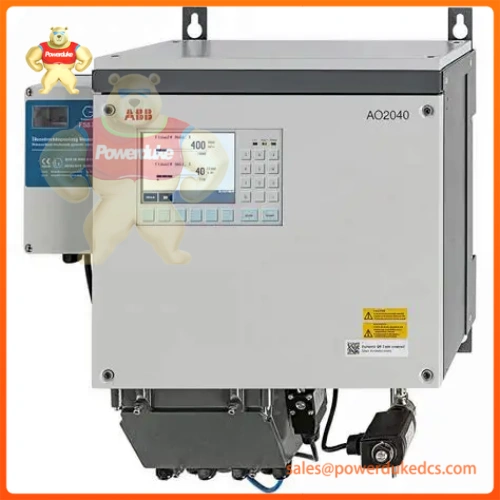
Description
- Unboxing & Physical Snapshot (Dynamic List)
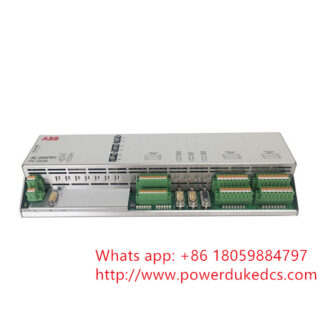
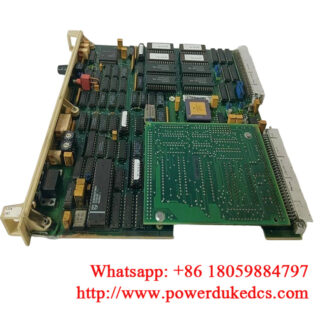
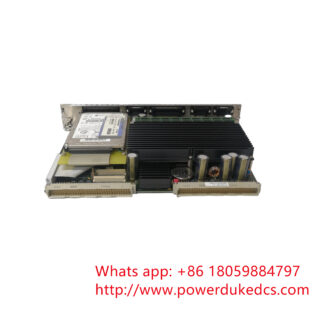
- Brand & Model: ABB / Advance Optima AO2000 Series Modular Continuous Gas Analyzer — AO2040 Wall-Mount/Rack-Mount Enclosure with Uras14 Infrared Photometer Module
- Physical Dimensions: Standard AO2040 wall-mount/cabinet enclosure profile (approx. 483 mm x 412 mm x 177 mm or variant specific housing architecture)
- Estimated Shipping Weight: 18.5 kg (40.78 lbs) (Packaged within heavy-duty custom shock-absorbing foam and reinforced industrial wooden/corrugated crating)
- What’s in the Box: AO2040 control/analyzer housing unit, integrated Uras14 NDIR photometer measurement module, front display and control panel, pluggable electrical terminal blocks, gas connection fittings, and factory compliance identification documentation. (Note: External sample conditioning hardware, calibration gas cylinders, and sample lines are ordered separately).
 2.Product Introduction
Industrial emissions monitoring, chemical processing plants, and combustion optimization processes rely on high-precision continuous gas analyzers to track trace components like CO, CO_2, NO, SO_2, and other infrared-active gases accurately. Plant instrumentation engineers mount this Advance Optima AO2040 analyzer system securely onto analytical shelter walls or rack panels, utilizing its non-dispersive infrared (NDIR) Uras14 photometer technology to perform reliable, multi-component gas concentration analysis under demanding industrial conditions.
System reliability mandates utilizing authentic OEM ABB analytical hardware rather than unverified third-party refurbished units. Deploying this exact AO2040-URAS14 configuration ensures proper optical bench alignment, stable calibration curves, and seamless integration with plant Distributed Control Systems (DCS) via standard communication protocols.
3.Core Technical Specifications
| Parameter | Value |
|---|---|
| Manufacturer / Product Family | ABB Measurement & Analytics / Advance Optima AO2000 Series |
| Catalog Model / System ID | AO2040-URAS14 (Enclosure housing combined with Uras14 NDIR module) |
| Measurement Principle | Non-Dispersive Infrared (NDIR) photometry |
| Analytical Capabilities | Multi-component gas measurement (CO, CO_2, NO, SO_2, etc. per factory calibration) |
| Central Control Architecture | Modular electronic control unit with digital display and keypad interface |
| Power Supply Input | 100 to 240 VAC nominal (50/60 Hz industrial supply lines) |
| Operating Temperature | +5°C to +45°C analytical shelter / control room threshold |
| Enclosure Protection | IP54 / Wall-mount or rack enclosure profile |
| Approximate Unit Weight | 18.5 kg (40.78 lbs) |
- Global Compliance & Industry CertificationsAuditors and environmental compliance officers require comprehensive documentation verifying that analytical instrumentation satisfies international emissions monitoring and electrical safety standards. This gas analyzer aligns with major industrial benchmarks, carrying expected designations such as the CE Mark for European conformity, TÜV suitability certifications for emission monitoring (where applicable by configuration), and rigorous Electromagnetic Compatibility (EMC) standards.
A verified compliance rating guarantees that internal power filtering and optical isolation barriers will withstand heavy industrial electromagnetic interference, protecting analytical data integrity during continuous environmental monitoring operations. Verify specific lot certifications with OEM.
5.Long-Term Storage & Asset Preservation Guide (E-E-A-T Goldmine)
Precision gas analyzers and optical photometer modules sitting dormant in facility stockrooms require strict environmental discipline to prevent optical cell contamination, sensor drift, and electronic component degradation. Keep the analyzer hermetically sealed inside its original factory anti-static moisture-barrier packaging with all gas inlet and outlet ports securely blanked off using protective plugs. Maintain stockroom climate controls with ambient temperatures stable between 15°C and 25°C and relative humidity strictly below 50 percent to protect internal electronics and optical components from micro-corrosion. If this unit remains unpowered in stock beyond two years, maintenance technicians should perform a comprehensive optical alignment and zero/span calibration check prior to field deployment.
- Physical Installation PrerequisitesMount the heavy analytical enclosure securely onto a vibration-free wall surface or 19-inch rack frame using proper structural fasteners, ensuring adequate clearance around ventilation slots and gas port connectors. Verify that sample gas conditioning systems (coolers, filters, and pumps) are correctly configured to deliver clean, dry, pressure-regulated sample gas to the analyzer inlets, and connect the protective earth (PE) grounding conductor securely to the chassis ground stud.
- Buyer’s FAQ (Logistics & Compliance Focus)
- What Harmonized System (HS) tariff code governs international shipments of this gas analyzer system? Instruments and apparatus for physical or chemical analysis (such as gas or smoke analysis apparatus) generally fall under HS code 9027.10 (gas or smoke analysis apparatus), though customs brokers should verify local classifications.
- Does the analyzer ship pre-calibrated for specific gas matrices? While the hardware includes the baseline Uras14 optical bench, factory calibration is tailored to specific gas ranges specified at order placement; field engineers must perform zero and span calibration using certified test gases during startup.
- How does the Country of Origin (COO) documentation affect trade compliance? Official manufacturing country declarations must match commercial export invoices precisely to clear customs inspections smoothly without secondary tariff reviews or border delays.
- What level of freight insurance is advised during transit? Full-value commercial cargo insurance paired with shock-impact indicator labels and tilt sensors is mandatory given the delicate optical alignment and heavy weight of industrial analytical hardware.