Description
 Meta Description
Sourcing genuine ABB 3BHE016113R0110 (QUINT-PS/1AC/24DC/10) industrial power supplies. View technical ratings, excitation/inverter application notes, and critical spares advice.
Product Overview
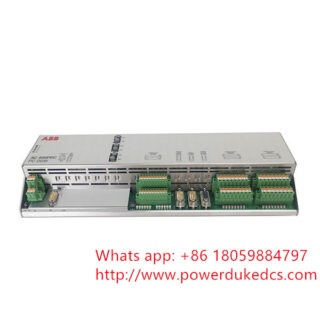
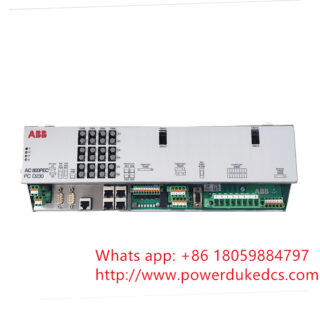
Maintaining structural logic power integrity within massive energy conversion systems requires highly stabilized, surge-resistant power delivery components. The ABB 3BHE016113R0110 is a heavy-duty, single-phase industrial power supply module—cross-designated under the type code QUINT-PS/1AC/24DC/10. It is tailored to provide a reliable 24 V DC auxiliary rail to critical control architectures, such as the AC 800PEC controller framework and the PCS6000 medium-voltage inverter lines. We supply this item as New Original (New Surplus) inside its factory sealed box, paired with a full 12-month commercial replacement warranty.
Technical Specifications
- Parameter: Value
- Brand: ABB / Phoenix Contact OEM
- Global Material ID: 3BHE016113R0110
- ABB Type Designation: QUINT-PS/1AC/24DC/10
- Input Phase Layout: Single-phase (1AC) wide-range input (100–240 V AC)
- Output Parameters: 24 V DC (\pm 1\%) regulated nominal loop
- Continuous Output Current: 10 A nominal continuous rating
- Application Scope: PCS6000 Inverter Stack & AC 800PEC Control Processors
- Gross Weight: 1.45 kg
- Customs Tariff / HS Code: 85044083
Scenario-Based Field Analysis
Deploying high-power conversion hardware in harsh spaces like heavy wind power installations or grid-scale energy storage plants exposes auxiliary sub-components to extreme grid harmonics and ambient thermal variations. In field deployments of PCS6000 high-power modules, we observe that auxiliary power supplies are often the first layer of defense against line transients. When an inbound utility switching surge hits, the 3BHE016113R0110 absorbs the electrical impact to protect the delicate, downstream fiber-optic gate drivers and processing logic. When replacing this module, ensure the intake air gap above and below the DIN rail chassis is entirely free of obstruction to prevent localized thermal throttling during maximum current draws.
Strengths & Limitations
On the positive side, the built-in dynamic power boost capability allows this unit to reliably start up inductive loads without dropping the 24 V rail or inducing control board resets. However, phase balance rules apply. This is a single-phase (1AC) input module. If your system blueprint calls for a three-phase balancing layout to handle higher capacity margins, you must utilize the 3-phase sibling unit cataloged under code 3BHE016113R0400 (QUINT-PS/3AC/24DC/10).
Stocking & Purchase Advice
- Not recommended for: Low-voltage plant instrumentation paths that only pull minimal fractional currents. Installing a high-capacity, rugged industrial supply for simple field transmitter logic is an inefficient use of maintenance capital.
- For active high-power conversion fleets: Treat this hardware as an absolute priority spare. A failure on a 24 V control bus takes down your master AC 800PEC processor instantly, leaving multi-megawatt systems non-operational until a drop-in replacement is sourced.
- Procurement safety: Mitigate unpredictable global shipping delays by securing components from asset recovery suppliers who hold physically verified warehouse inventory.
Quick Conclusions
- Delivers a regulated 24 V DC / 10 A feed to high-power control systems.
- Acts as a vital system component for ABB PCS6000 and AC 800PEC architectures.
- Shipped as premium, factory sealed new surplus with a 1-year commercial warranty.
- Features a universal input window to handle variable regional line voltages.
FAQ
- Why does the 3BHE016113R0110 module look exactly like a standard Phoenix Contact unit?
ABB directly integrates this specific specialized hardware revision from Phoenix Contact into their large-scale industrial drive and excitation system designs to guarantee industrial-grade reliability.
- Can I wire two of these power supplies in parallel for true N+1 redundancy?
Yes, you can configure them in parallel for redundancy or capacity boosting. For standard high-reliability setups, pairing the power supplies with an ABB 3BHE016113R0140 redundancy module is highly recommended to cleanly isolate the DC paths.
- Does the unit require manual adjustments to match 110 V AC versus 230 V AC mains?
No. The unit features an automatic wide-range input stage that detects and self-adjusts to incoming line configurations effortlessly.