

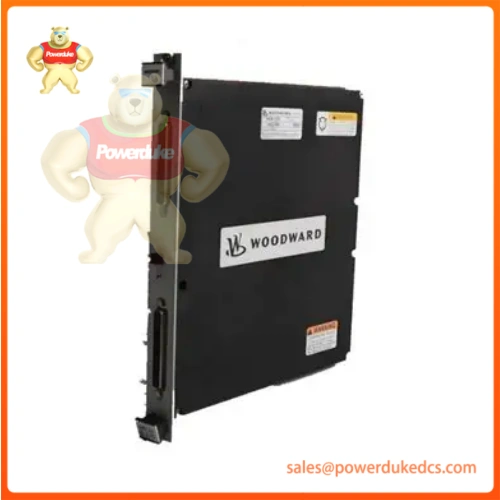
Description
 1. Unboxing & Physical Snapshot
- Model & Brand: Woodward — 5466-257 (High-Density Analog I/O Module)
- Physical Dimensions: Approximately 15.2 cm x 5.1 cm x 20.3 cm (6.0 in x 2.0 in x 8.0 in card layout format).
- Estimated Shipping Weight: 0.7 kg (1.6 lbs) packed with anti-static bubble shielding and structural cardboard bracing.
- What’s in the Box: 5466-257 module unit, factory inspection sticker tag, ESD warning insert, and protective pin cover strips (note: backplane chassis racks and terminal termination blocks are sold separately).
2. Product Introduction
Architectural integration inside the central rack cage dictates how this printed circuit card ties into the broader turbine control ecosystem. Sliding directly into designated multi-slot backplane enclosures, the hardware connects through gold-plated card-edge fingers to handle dense signals flowing between heavy industrial field sensors and internal processing cores (—which is vital for maintaining precise loop control on high-speed gas compressors).
Specialized analog conversion circuitry processes multichannel inputs and outputs simultaneously, translating continuous physical variables into digital register values. Field technicians depend on this exact hardware configuration to sustain dependable monitoring across complex power generation skids without unexpected signal attenuation.
3. Core Technical Specifications
| Parameter | Value |
| Module Type | High-Density Analog Input/Output (I/O) Module |
| System Compatibility | Woodward MicroNet and TMR control platforms |
| Input Channels | Configurable multi-channel analog signal inputs |
| Output Channels | High-precision analog control loops |
| Operating Voltage | Nominal 24 VDC backplane power supply |
| Power Consumption | 8.5 Watts maximum operational draw |
| Signal Isolation | Optically isolated channel architecture |
| Operating Temperature | 0^\circC to +60^\circC (32^\circF to 140^\circF) |
| Storage Temperature | -40^\circC to +85^\circC |
| Mounting Interface | Standard modular card slot with locking extraction levers |
4. Global Compliance & Industry Certifications
Auditors demand rigorous proof of compliance when inspecting critical turbo-machinery safety hardware.
- Certifications: CE Mark, UL/cUL Listed industrial control equipment, CSA hazardous location approvals, and RoHS compliance directives.
- Safety Relevance: The UL and CSA hazardous location ratings ensure that internal electronic switching cannot ignite explosive ambient gases present in upstream petroleum and chemical processing environments.
- Audit Note: Verify specific lot compliance tags against regional electrical codes prior to final system commissioning.
5. Long-Term Storage & Asset Preservation Guide
Spare electronic modules sitting in warehouse stockroom bins suffer from component degradation over time (—requiring strict inventory maintenance to prevent premature field failure). Protect your capital investment by adhering to these shop-floor protocols:
- Maintain indoor warehouse climates where ambient temperatures stay between -20^\circC and +55^\circC while keeping relative humidity strictly below 60% to prevent micro-corrosion on the gold-plated contact fingers.
- Keep the module sealed inside its original factory anti-static moisture-barrier bag alongside active desiccant pouches until the exact maintenance outage window.
- Inspect the printed circuit traces and onboard connector headers annually for dust accumulation, brushing surfaces lightly with clean, dry compressed air if necessary.
6. Physical Installation Prerequisites
Proper mechanical alignment inside the card rack prevents backplane pin damage and signal interference.
- Clearance Space: Leave at least 50 mm of unobstructed vertical clearance above and below the card cage slots to permit convective thermal dissipation across the circuit traces.
- Grounding Requirements: Secure the main rack chassis to earth ground using low-impedance braided copper straps to eliminate common-mode electrical noise on sensitive analog channels.
- Insertion Protocol: Align board edges carefully with the metal card guides, pushing straight back until the locking levers snap securely into place.
7. Buyer’s FAQ (Logistics & Compliance Focus)
Q: What Harmonized System (HS) Tariff Code applies to this Woodward module for global customs clearance?
A: Industrial control system interface cards typically classify under HS code 8538.90.8180 (Parts suitable for use solely or principally with control apparatus). Always verify final classifications with your licensed broker.
Q: Does this module require factory firmware programming prior to field insertion?
A: No, signal translation is handled via dedicated onboard hardware logic, though configuration parameters must match your specific turbine application during software startup.
Q: What are the trade compliance implications of the Country of Origin (COO)?
A: This hardware is manufactured in the United States, requiring formal documentation on commercial shipping invoices to satisfy export regulations and trade agreements.
Q: Is specialized transit insurance required for international cargo delivery?
A: Yes, because precision surface-mounted microprocessors are vulnerable to drop shocks, comprehensive freight insurance is strongly recommended.






