

Description
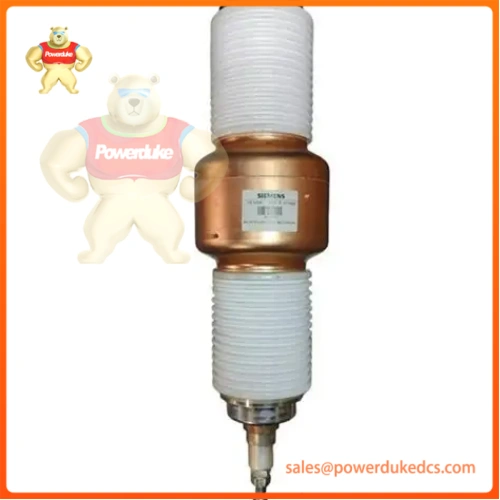
- Model & Brand: Siemens 3AY1715-6L (VS30041 Assembly)
- Physical Dimensions: 320 mm x 150 mm x 150 mm (Approximate cylindrical envelope W x H x D)
- Estimated Shipping Weight: 4.5 kg (Packaged within heavy industrial wooden-reinforced crating)
- What’s in the Box: Ceramic vacuum interrupter cylinder, copper terminal mounting stems, flexible shunt strap, and factory alignment specification sheet.
High-voltage distribution switchgear operates under severe electrical arcing and intense mechanical stress during fault clearing cycles. Protecting medium-voltage distribution infrastructure demands replacement vacuum interrupters built to withstand rapid dielectric recovery demands (—which is critical for preventing catastrophic bus bar flashovers).
Technicians integrate this assembly directly into the primary 3AH4 breaker pole column, aligning the moving contact stem precisely with the operating linkage mechanism. Maintain clean assembly protocols during installation to prevent particulate contamination from compromising internal high-vacuum integrity.
| Parameter | Value |
| Device Type | Vacuum Interrupter Pole Assembly |
| Compatible Series | Siemens 3AH4 Medium Voltage Circuit Breakers |
| Rated Insulation Voltage | 12 kV to 24 kV class systems |
| Contact Stroke Length | 12 mm nominal travel distance |
| Opening Speed | 1.8 m/s average contact separation speed |
| Mechanical Endurance | 30,000 full operating cycles |
| Housing Material | High-density technical alumina ceramic |
| Operating Temperature | -25°C to +55°C ambient air range |
| Weight (Bare Unit) | 3.8 kg |
Auditors require stringent material traceability and type-test verification for high-voltage switching subassemblies. This hardware tier complies with international utility standards.
- IEC 62271-100: Governs alternating current circuit breakers for high-voltage operational safety.
- IEEE C37.09: Validates standard test procedures for AC high-voltage circuit breakers.
- CE Mark: Confirms adherence to European Union low-voltage safety directives.
- ISO 9001 Factory Traceability: Ensures strict manufacturing quality control over vacuum seal integrity.
Compliance Note: Compliance with IEC standards ensures the ceramic envelope maintains dielectric isolation under extreme switching surges. Verify specific lot conformity documents with the OEM prior to plant safety audits.
Ceramic vacuum envelopes and copper contact stems degrade if warehouse storage exposes them to moisture and mechanical impact forces. Asset managers must enforce strict preservation protocols.
Keep the interrupter sealed inside its original moisture-barrier packaging to protect the ceramic surface from airborne conductive dust accumulation. Maintain warehouse storage temperatures between 10°C and 35°C with relative humidity kept strictly below 50% to prevent oxidation on the silver-plated terminal pads. Store the unit flat on high-density foam cushioning, shielding it from physical shocks that could fracture the ceramic-to-metal vacuum brazing joints.
Pole alignment dictates operational longevity for medium-voltage vacuum interrupters. Leave adequate clearance around the breaker pole assembly to prevent phase-to-phase tracking within the enclosed cubicle. Verify that contact wipe and over-travel dimensions match factory maintenance manuals precisely before pinning the operating linkage rods.
- What is the correct HS Tariff Code for international customs clearance?Medium-voltage circuit breaker parts classify under harmonized code 8535.90.8000, though verify exact regional rulings with your broker.
- Does this replacement interrupter require factory firmware configuration?Hardware assembly 3AY1715-6L functions as a pure electromechanical power switching subassembly requiring no software configuration.
- How does the Country of Origin (COO) impact global trade compliance?The verified COO dictates regional trade agreement eligibility and must match commercial shipping paperwork to eliminate border customs holds.
- Why is heavy-duty shock-absorbent transit insurance mandatory?Internal ceramic vacuum envelopes can suffer microscopic seal fractures under severe mechanical drop impacts during global freight transit.






