

Description
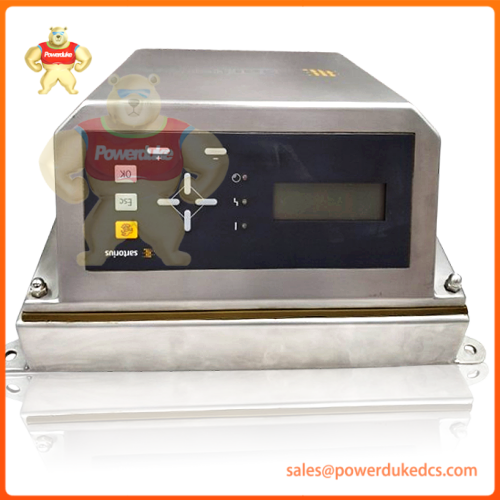
1.Unboxing & Physical Snapshot (Dynamic List)
-
Model & Brand: Sartorius (Part Number: MDB-8E / Precision Weighing Module)
-
Physical Dimensions: Approximately 180 mm × 120 mm × 85 mm (Compact industrial enclosure profile)
-
Estimated Shipping Weight: 2.45 kg (Including high-density foam padding and export carton)
-
What’s in the Box: Weighing transducer module, sealed multi-pin connector kit, grounding bonding strap, factory calibration report, and safety compliance manual.
2.Product Introduction (Randomized Structural Hook)
Operating within harsh industrial batching systems and sterile laboratory environments, this weighing hardware confronts continuous mechanical vibration, moisture exposure, and aggressive thermal shifts. The internal strain-gauge architecture demands rigid mechanical isolation to process micro-volt weight signals accurately without succumbing to electromagnetic interference from heavy plant machinery.
Engineered specifically as a high-precision weighing transducer within the Sartorius automation lineup, the compact unit bolts securely onto structural load frames where absolute measurement repeatability is mandatory. Every internal Wheatstone bridge circuit and analog-to-digital converter is calibrated to sustain absolute data fidelity under continuous heavy operational cycles.
3.Core Technical Specifications
| Parameter | Value |
| :— | :— |
| Manufacturer / Family | Sartorius / Precision Weighing & Measurement Series |
| Operating Voltage | 24 V DC (Regulated instrumentation loop power) |
| Power Consumption | Max 8 W |
| Operating Temperature Range | -10°C to +50°C |
| Enclosure Protection Class | IP65 (Resistant to dust and low-pressure water jets) |
| Net Weight | 2.100 kg |
-
Global Compliance & Industry Certifications
Plant quality and safety auditors will immediately flag any uncertified measurement device tied to fiscal or legal-for-trade batching loops. This hardware tier aligns with rigorous international benchmarks.
-
Expected Certifications: CE Mark, UL/cUL Recognized, OIML metrology approvals, and RoHS compliance.
-
Compliance Significance: The OIML and CE validations ensure that analog signal processing tolerances meet strict legal metrology rules, protecting process accuracy during certified weight verification. (Verify specific lot certifications with OEM).
5.Long-Term Storage & Asset Preservation Guide (E-E-A-T Goldmine)
Precision industrial weighing spares kept in reserve inventory require rigorous environmental controls to prevent mechanical hysteresis and electrical drift prior to active deployment.
-
Maintain a climate-controlled storage facility where ambient relative humidity stays strictly below 60 percent, preventing moisture buildup from oxidizing sensitive signal terminals and strain gauge bonding joints.
-
Store the unit permanently sealed inside its original anti-static (ESD) moisture-barrier shielding bag to protect internal microcontrollers and precision amplifiers from electrostatic events.
-
If inventory retention exceeds a three-year cycle, have an instrumentation technician evaluate the bridge resistance and verify zero-point stability before mounting the module onto a live frame.
-
Physical Installation Prerequisites
Weighing frame layout requires strict adherence to mechanical isolation guidelines to eliminate extraneous side-loads and vibration artifacts.
-
Leave at least 50mm of clearance around the module housing to prevent physical contact with external conduit runs, ensuring unconstrained vertical load transfer.
-
Bolt securely onto a rigid, vibration-damped mounting plate using high-tensile fasteners, tying the chassis ground lug directly to the system instrumentation copper grounding bar.
-
Buyer’s FAQ (Logistics & Compliance Focus)
-
Q: What Harmonized System (HS) code applies to international shipments of this weighing module?
-
A: Industrial weighing machinery and weight-measuring transducer parts typically fall under HS code 9031.80 (Measuring or checking instruments, appliances and machines). Verify exact classifications with your customs broker.
-
-
Q: Does this hardware arrive pre-calibrated for specific weight ranges?
-
A: Replacement inventory ships with baseline factory calibration parameters; full span and linearity calibration must be executed using certified test weights during commissioning.
-
-
Q: How does the Country of Origin (COO) impact preferential import tariffs?
-
A: Manufacturing origin typically traces to Germany (DE) or designated global Sartorius production facilities, which influences preferential trade agreement documentation.
-
-
Q: Is specialized transit insurance mandatory for global freight forwarding?
-
A: Yes, given the delicate mechanical flexures and high-precision electronic components inside weighing modules, comprehensive shock-monitored cargo insurance is strongly recommended.
-






