

Description
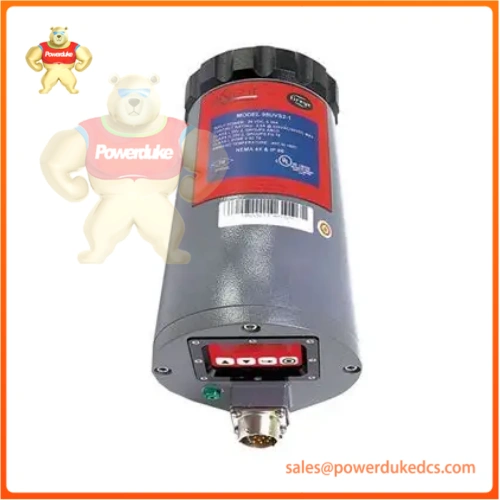 1. Unboxing & Physical Snapshot
- Model & Brand: Fireye — InSight Series Integrated Ultraviolet (UV) Flame Scanner (
SC2L-95UVS1E-1CEX). - Physical Dimensions: Approximately 110mm x 110mm x 300mm (heavy-duty cylindrical explosion-proof housing format).
- Estimated Shipping Weight: 2.1 kg (robust cast aluminum housing incorporating an integrated optical lens assembly, internal microprocessors, and internal terminal blocks).
- What’s in the Box: Integrated flame scanner unit, CENELEC Exd housing cover, internal terminal block connection layout, optical sight tube alignment flange, and factory calibration inspection document.
2. Product Introduction
Architecture hook: Mounting directly onto burner frontplates or observation ports of industrial boilers and furnaces, this microprocessor-based flame scanner monitors ultraviolet radiation flicker to verify combustion integrity. The rugged, explosion-proof enclosure protects internal solid-state sensors and signal processors against extreme ambient temperatures and intense burner vibration.
Operating within critical thermal power and process plant burner management systems (BMS), the unit provides precise discrimination between burner flames and background furnace radiation. Plant reliability engineers depend on its advanced flicker-frequency tuning and internal self-checking algorithms to execute rapid, fail-safe burner trip maneuvers during combustion failure events, preventing catastrophic fuel accumulation.
3. Core Technical Specifications
| Parameter | Value |
| Sensor Technology | Ultraviolet (UV) solid-state photodiode sensor (95UVS1E) |
| Configuration Mode | Manual frequency selection model (S1 manual gain and flicker setup) |
| Enclosure & Mounting | CENELEC Exd IIC T6 hazardous housing with pipe mount and internal terminals (-1CEX) |
| User Interface | Onboard 8-character alpha-numeric LED display with 4 push-buttons |
| Outputs | Integrated flame relay, fault relay, and isolated 4-20mA analog output |
| Approximate Net Weight | 2.1 kg |
4. Global Compliance & Industry Certifications
- Regulatory Approvals: CE Mark, CENELEC / ATEX Exd IIC T6 hazardous location compliance, and SIL 3 functional safety capability ratings.
- Safety Directives: Conforms to rigorous international standards for burner management systems and explosive atmosphere electrical apparatus.
- Compliance Significance: The ATEX Exd IIC T6 certification guarantees that the heavy-duty housing safely contains any internal electrical spark or explosive gas ignition event, protecting volatile industrial environments.
- Audit Note: Verify specific hazardous area classification tags and local code compliance with OEM documentation prior to final burner frontplate installation.
5. Long-Term Storage & Asset Preservation Guide
When storing sophisticated optical flame detectors in warehouse inventory, prioritize optical lens preservation and moisture control. Ensure the quartz viewing window remains protected with its factory cap to prevent scratches or accumulation of dust and grease on the optical path.
Keep the unit hermetically sealed inside an anti-static moisture-barrier bag together with active silica gel desiccant packs. Maintain warehouse storage room relative humidity strictly below 60% to prevent micro-oxidation on the internal terminal blocks and electronic connectors.
6. Physical Installation Prerequisites
- Optical Sight Alignment: Ensure the scanner’s line of sight is aimed precisely at the primary combustion zone root, avoiding cool background refractory areas to optimize flame signal discrimination.
- Purge Air Connection: Connect a continuous, regulated clean instrument air purge supply to the scanner’s cooling/purge port to prevent optical lens fouling from combustion soot and fly ash.
- Electrical Shielding: Route sensor wiring and analog output cables through dedicated metallic conduits, separating them completely from high-voltage igniter or motor power lines to eliminate electromagnetic interference (EMI).
7. Buyer’s FAQ (Logistics & Compliance Focus)
- Q: What Harmonized System (HS) Tariff Code governs global customs entries for this flame scanner?
- A: Generally classified under HS code 9031.80 (Measuring or checking instruments, appliances, and machines, not specified elsewhere); verify exact schedules with your custom broker.
- Q: Does this specific model feature automatic or manual frequency setup?
- A: The
S1designation indicates manual selection of sensor gain and flicker modulation frequency via the onboard push-buttons and LED display.
- A: The
- Q: How does the Country of Origin (COO) documentation impact regional import tariffs?
- A: Manufactured primarily in certified Western industrial facilities, the official COO document establishes eligibility for preferential trade agreements; request paperwork prior to freight dispatch.
- Q: What specialized transport insurance protects this optical electronic hardware asset?
- A: Secure comprehensive “All-Risk” logistics insurance accompanied by shock-watch and tilt indicator labels affixed to the exterior shipping container.






