

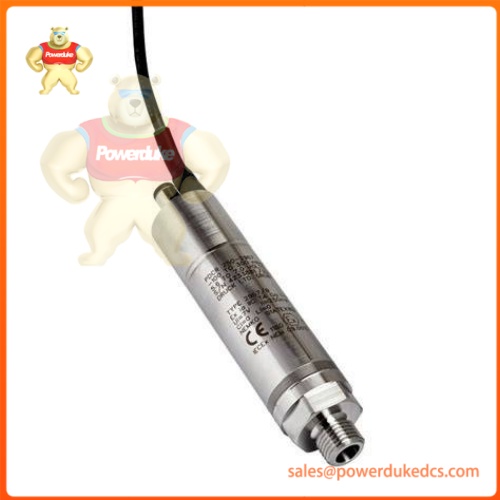
Description
 1. Unboxing & Physical Snapshot
- Model & Brand: Druck / Baker Hughes (Measurement & Sensing Division) — PDCR 250-2967 (Type 2967/B Vapour Pressure Sensor)
- Physical Dimensions: Compact, heavy-duty marine-grade cylindrical stainless steel housing engineered for direct tank-top or manifold installation.
- Estimated Shipping Weight: 0.45 kg (1.0 lbs) packed inside industrial anti-static protection, high-density shock-absorbing foam, and a reinforced export carton.
- What’s in the Box: PDCR 250-2967 pressure sensor assembly, integrated cable tail or connector fitting, factory calibration compliance certificate, and safety insert (note: mounting brackets and process flanges are ordered separately).
2. Product Introduction
Monitoring vapor pressure accurately within cargo tanks on oil, chemical, and product tankers is critical to prevent overpressurization and comply with strict marine environmental protection regulations. Operating as a high-integrity vapour pressure measurement asset, the Druck PDCR 250-2967 (Type 2967/B) is engineered specifically for marine tank gauging and shipboard vapor emission control systems.
Built with an intrinsically safe circuit design, low-range gauge pressure sensitivity, and seamless compatibility with major marine automation platforms (such as Saab TankRadar and Rosemount systems), this sensor delivers dependable data in harsh offshore environments. Marine engineers, instrumentation specialists, and vessel superintendents rely on this OEM pressure transducer to maintain safety compliance, safeguard cargo containment boundaries, and ensure reliable round-the-clock operations at sea.
3. Core Technical Specifications
| Parameter | Value |
| Product Series | Druck PDCR 250 Marine Pressure Sensor Family |
| Model / Part Number | PDCR 250-2967 (Type Designation: 2967/B) |
| Sensor Type | Intrinsically Safe Vapour Pressure Transducer |
| Pressure Range | -100 mbar to +300 mbar gauge (-10 kPa to +30 kPa) |
| Output Signal | 5.6 V to 7.0 V DC stable voltage output |
| Entity Parameters | U_i = 7 V, I_i = 250 mA, P_i = 1 W, C_i = 0, L_i = 0 |
| Operating Temperature | -40^\circC to +80^\circC (-40^\circF to +176^\circF) ambient/media |
| Storage Temperature | -40^\circC to +85^\circC (-40^\circF to +185^\circF) |
| Ingress Protection | IP68 marine submersible / rugged weather-resistant enclosure |
4. Global Compliance & Industry Certifications
Pressure sensors deployed in hazardous marine tank atmospheres require strict international safety and explosion-protection certifications.
- Certifications: ATEX (NEMKO 01ATEX162), IECEx intrinsically safe compliance, CE Conformity, and major marine classification society compatibility (e.g., DNV-GL, Lloyds Register).
- Safety Relevance: The Ex ia IIC T4 Ga hazardous area rating ensures that electrical energy within the device is restricted below ignition thresholds, preventing explosions in explosive gas atmospheres (Zone 0/1/2).
- Audit Note: Keep calibration test certificates, safety barrier loop drawings, and class survey records accessible in your vessel’s safety management system (SMS) to satisfy port state control and annual safety audits.
5. Long-Term Storage & Asset Preservation Guide
Spare marine pressure sensors stored in ship storerooms or onshore warehouses face moisture ingress and cable insulation aging over extended storage cycles (—requiring precise environmental control to maintain readiness). Preserve your asset by executing these procedures:
- Maintain indoor warehouse or ship-locker climates where storage temperatures stay between +10^\circC and +30^\circC while keeping relative humidity strictly below 60% non-condensing.
- Keep the sensor permanently sealed inside its original factory anti-static packaging alongside active desiccant packs until the exact installation window.
- Protect the delicate process diaphragm using its original thread/face protector cap to avoid mechanical dents, scratches, or calibration offset during handling.
6. Physical Installation Prerequisites
Proper thread/flange sealing, hazardous area barrier matching, and line pressure isolation are mandatory when installing marine tank pressure sensors.
- Clearance Space: Ensure clear physical access around the tank-top tapping point to allow secure wrench tightening and proper routing of armored signal cables.
- Intrinsically Safe Barriers: Verify that the sensor is connected exclusively through certified galvanic isolators or zener barriers whose entity parameters match U_i, I_i, and P_i limits.
- Pressure Isolation: Isolate, vent, and purge cargo tank manifold lines before removing or installing pressure transmitters to prevent toxic vapor exposure or chemical spray.
7. Buyer’s FAQ (Logistics & Compliance Focus)
Q: What Harmonized System (HS) Tariff Code applies to this Druck pressure sensor for international shipments?
A: Instruments and apparatus for measuring or checking pressure (such as industrial/marine pressure transducers) typically classify under HS code 9026.20.4000 or 9026.20.80. Always verify final classifications with your customs broker.
Q: Is the PDCR 250-2967 compatible with Saab TankRadar systems?
A: Yes, this specific variant is engineered to integrate natively with shipboard tank gauging and vapour pressure monitoring architectures like Saab TankRadar and Rosemount systems.
Q: What is the Country of Origin (COO) for trade compliance record-keeping?
A: Druck pressure measurement instruments are manufactured in certified production facilities (primarily in the United Kingdom), requiring accurate origin declarations on commercial import paperwork.
Q: Is specialized shock-resistant transit insurance required for international cargo delivery?
A: Yes, because precision strain-gauge diaphragms and electronic internal micro-circuitry are sensitive to severe drop impacts and transit vibration, full-value freight insurance is strongly recommended.






