

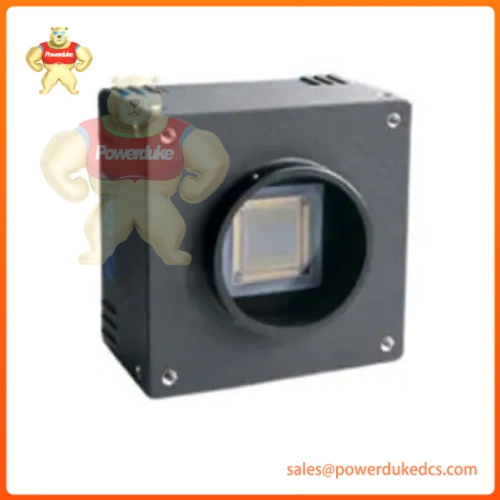
Description
 1. Unboxing & Physical Snapshot
- Model & Brand: Basler — A404KM-RT
- Physical Dimensions: Approximately 62 mm x 62 mm x 75 mm (excluding lens mount and rear connector interfaces).
- Estimated Shipping Weight: 0.45 kg (including ESD protective packaging, dust caps, and compliance inserts).
- What’s in the Box: A404KM-RT digital camera unit, C-mount lens adapter ring (pre-installed), sensor optical protection cap, and multi-pin power/trigger breakout connector plug (note: FireWire/IEEE 1394 interface cables are sold separately).
2. Product Introduction
Environmental resilience within high-speed automated machine lines dictates the integration of this optical sensor. Operating as a robust digital inspection node, the hardware mounts securely onto structural aluminum extrusion frames or machine vision brackets, channeling uncompressed monochromatic pixel arrays straight into industrial frame grabbers or processing PCs.
Internal progressive-scan CCD sensors paired with high-speed digital circuitry translate light photons into precise grayscale matrices. Plant automation engineers utilize this direct conversion to tie high-speed web inspection, surface defect sorting, and robotic guidance systems directly into advanced industrial automation ecosystems.
3. Core Technical Specifications
| Parameter | Value |
| Sensor Type | Progressive Scan CCD (Monochrome) |
| Resolution | 1,024 \times 1,024 pixels (1 Megapixel square grid) |
| Frame Rate | Up to 32 frames per second at full resolution |
| Interface / Data Bus | Dual IEEE 1394 (FireWire) ports for data transfer and daisy-chaining |
| Power Supply / Draw | 8 to 30 VDC via external Hirose connector (approx. 3.5 W power consumption) |
| Lens Mount | Standard C-mount with adjustable back-focus ring |
| Housing Material | Anodized extruded aluminum chassis with thermal dissipation fins |
| Operating Temperature | +0^\circC to +45^\circC (ambient cabinet rating) |
4. Global Compliance & Industry Certifications
Compliance audits fail instantly when machine vision hardware lacks proper electromagnetic interference documentation. This specific industrial camera configuration carries rigorous international compliance credentials.
- Certifications: CE Mark (EMC Directive compliance), FCC Part 15 Class A, and RoHS directive compliance.
- Safety Relevance: The CE and FCC Class A electromagnetic compatibility (EMC) ratings ensure that high-frequency switching inside the camera body does not emit electrical noise that could disrupt nearby programmable logic controllers (PLCs) or safety-rated emergency stop circuits.
- Audit Note: Verify specific lot certificates and environmental test reports with the OEM prior to final machine safety validation.
5. Long-Term Storage & Asset Preservation Guide
Spare precision optics stored in warehouse bins suffer from environmental degradation just as much as running hardware. Protect your capital investment by adhering to these shop-floor protocols:
- Maintain warehouse ambient storage temperatures between -15^\circC and +70^\circC while keeping relative humidity strictly below 80% (non-condensing) to prevent moisture accumulation on internal optical glass and sensor cover slips.
- Leave the camera inside its original factory-sealed anti-static (ESD) moisture-barrier bag with the protective optical dust cap fully threaded onto the C-mount ring until the exact day of physical cell integration.
- Inspect the anodized aluminum heatsink fins and Hirose connector pins annually for oxidation, ensuring pin-bushing grease remains clean and free of airborne conductive dust.
6. Physical Installation Prerequisites
Proper mechanical alignment prevents optical distortion and vibration-induced image blur on high-speed production lines.
- Clearance Space: Ensure a minimum clearance radius of 40 mm around the rear FireWire and power cable entry points to prevent sharp cable bending radii and connector strain.
- Thermal Management: Mount the aluminum chassis directly to metal machine frames or thermal mounting brackets to act as a heat sink, maintaining internal sensor temperatures within operational parameters.
- Grounding Requirements: Ground the camera chassis securely to the machine earth ground stud using a low-impedance braided copper strap to eliminate ground loops and digital noise artifacts in the video stream.
7. Buyer’s FAQ (Logistics & Compliance Focus)
Q: What is the correct Harmonized System (HS) Tariff Code for global customs clearance on this unit?
A: Industrial digital cameras typically fall under HS code 8525.89.5010 (Television cameras, digital cameras and video camera recorders: Other). Always confirm with your customs broker based on local country import guidelines.
Q: Does this unit ship with pre-loaded firmware or programmable logic?
A: The internal FPGA contains baseline factory-burned firmware handling pixel clock synchronization and basic command translation, but application-specific vision algorithms are handled entirely by the host PC software.
Q: What are the trade compliance implications of the Country of Origin (COO)?
A: This unit is manufactured in Germany. Original Equipment Manufacturer (OEM) shipments require clear documentation of Germany as the COO to satisfy European Union customs requirements and international trade compliance checks.
Q: Is specialized shock-resistant packaging required for international transit?
A: Yes. Given the sensitive optical alignment of the CCD sensor array and internal micro-lenses, transit packaging containing high-density foam suspension is essential for cross-border freight forwarding.






