Description

Kollmorgen CP310250: Maintaining Integrity in High-Amperage Power Blocks
Field Observation: The Trap of Inadequate Metal-to-Metal Grounding
Why do commissioning technicians execute flawless software tuning matrices yet completely ignore structural grounding geometry? During an emergency field intervention on a CNC metal-forming line using a multi-axis array, high-frequency electrical noise was bleeding back into the analog measurement path, inducing severe position errors and sporadic tracking aborts. The problem wasn’t a corrupted motion parameter set or a broken feedback encoder cable. It was traced to a fresh layer of non-conductive backpanel paint that isolated the servo frame from the enclosure ground. The hardware footprint was a Kollmorgen SERVOSTAR SP3 Power Block, part number CP310250 (often cross-referenced under factory manufacturing code PRD-P310250Z-55).
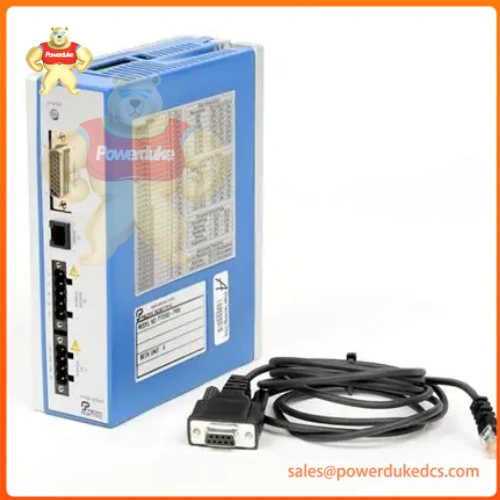
The CP310250 is a digital three-phase AC servo amplifier power block from the legacy SERVOSTAR SP platform. It functions as an integrated power stage, receiving low-voltage control signals and driving high-performance brushless synchronous servo motors at high current thresholds.
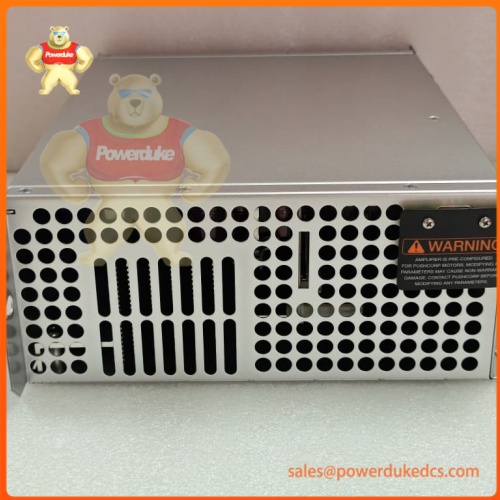
Because this unit features an open-frame layout with prominent exposed bus connections, treating it like a standard enclosed, low-voltage PLC module introduces severe safety and operational risks. Failing to secure clean, unpainted metal-to-metal chassis contact during installation creates a major high-frequency noise loop that can glitch adjacent electronics and break down internal insulation over time.
[3~ AC 115V / 230V Mains Feed] ───> [CP310250 Power Stage Input]
                                               │
                                    (High-Frequency PWM)
                                               ▼
[Synchronous Servo Motor Stator] <─── [Main Bus Output (Ma, Mb, Mc)]
                                               │
                                   (EMI Return Path Check)
                                               ▼
                         [Unpainted Backpanel Chassis Common Ground]
Technical Specification Baseline
| Parameter | Value | Field Implication |
| Primary Brand | Kollmorgen Industrial | High-performance legacy motion control and power conversion platform. |
| Model Configuration | CP310250 (PRD-P310250Z-55) | Three-phase AC servo drive power block assembly. |
| Series Class | SERVOSTAR SP3 Series | Tailored for high-density, centralized cabinet installations. |
| Mains Input Range | 115V to 230V AC Dual Voltage | Accommodates multi-regional standard industrial input feeds. |
| Control Topology | Digital Pulse Width Modulation (PWM) | Direct, high-speed switching response across reactive loads. |
| Output Bus Nodes | Ma, Mb, Mc Terminal Phase Pins | High-current power rails driving the primary motor stator windings. |
| Protection Rating | IP20 Open Chassis Footprint | Demands installation within an unpainted, grounded enclosure. |
| System Weight | Approx. 5.94 lbs (2.69 kg) | Robust internal heatsink framing requiring solid structural mounting. |
ABC Classification & Stocking Recommendations
Managing legacy high-current motion assets like the CP310250 requires a safety stock strategy built around matching mechanical frame constraints.
Class B Spares: Critical Axis Bottleneck, High Rebuild Availability
The Kollmorgen CP310250 fits within Class B inventory parameters. While the drive does not hold the master application PLC program, it acts as the primary muscular execution layer for its assigned axis. Because its trace pin layouts, input/output screw geometry, and specific physical brackets are completely customized to the SERVOSTAR SP3 series, you cannot temporarily retrofit a modern drive into the slot without halting the machine line for a major panel reconstruction.
- Stocking Recommendation: Maintain a minimum backup of 1 factory-verified unit for every 6 active units deployed on critical process lanes.
- Buffer Stock Logic: Because this hardware generation is mature and legacy-retired, standard OEM direct delivery streams are severely restricted. Sourcing verified surplus units or completing component-level rebuilds via specialized diagnostic houses typically carries a 2 to 4-week turnaround. Your local buffer stock must cover this window.
- Mounting Integrity Check: When storing replacement drives, confirm that all terminal insulation blocks and plastic guide columns are entirely intact. Due to the unit’s top-heavy chassis weight, micro-fissures in the plastic body components caused by rough transit handling can lead to phase-to-phase shorts when subjected to high operational current.
Not Recommended For
Do not deploy the CP310250 in unconditioned field areas prone to conductive dust or high ambient moisture. Because it utilizes an IP20 open frame with forced air cooling lanes, metallic flakes or cutting fluid vapors will bridge internal traces, causing destructive arcing across the primary DC bus.
Lifecycle Tracking & Vendor Management
Minimizing Total Cost of Ownership (TCO) across aging servo loops requires strict installation grounding standards and advanced diagnostic procedures for incoming hardware.
Mitigating High-Frequency EMI Interference
If high-frequency electrical noise bleeds into adjacent analog paths or CNC measurement systems after installing a replacement CP310250, use the following engineering dampening steps:
- Wrap the primary motor output leads (Ma, Mb, Mc) through a high-permeability ferrite ring close to the drive’s output terminals.
- Wire specialized armature chokes directly in-line with the motor leads to flatten the sharp dV/dt voltage switching spikes generated by the internal IGBTs.
- Install an HF filter (RC combination of 1\,k\Omega / 10\,nF) directly on the master CNC controller’s analog speed setpoint output terminal blocks to shield signal paths from stray inductive coupling.
Vendor Verification Protocols
Because replacement CP310250 modules are routinely sourced from the industrial surplus or specialized refurbishment marketplace, you must enforce a rigid incoming quality validation protocol.
When contracting with third-party asset brokers, mandate a complete diagnostic testing log. Never accept a basic “powers on” or “stator continuity good” statement as a valid warranty seal. Require the vendor to run the unit under a continuous full-amperage dynamometer load for at least 4 hours. The testing certification must verify stable phase switching current, steady internal heatsink thermal rise profiles, and clean logic-level execution before the component is accepted into your active safety stock pool.
Quick Conclusions
- Keep at least 1 verified CP310250 drive locally in stock to avoid extended downtime during an active axis power stage failure.
- Ensure complete metal-to-metal chassis grounding during installation by scraping away any non-conductive enclosure paint.
- Add inline chokes or ferrite rings on the motor leads if the drive’s high-frequency PWM switching induces noise in adjacent sensors.
- Verify all surplus units via full-load testing certifications before placing them into long-term warehouse storage.
FAQ
1. What is the mandatory discharge waiting time after removing primary power from the CP310250?
You must wait a minimum of 10 minutes after completely disconnecting the main AC power sources before touching any internal terminals or handling wire connections. The internal high-voltage electrolytic smoothing capacitors store a massive electrical charge that remains highly dangerous even when the servo motor is completely stationary.
2. Can the CP310250 be operated on an ungrounded or asymmetrically grounded power grid?
No. The SERVOSTAR SP3 power block amplifiers are engineered exclusively for use on earthed, three-phase industrial mains networks (such as TN or TT systems configured with an earthed neutral point). Operating this hardware on an ungrounded system or an asymmetrical delta loop can damage the internal surge suppression components and compromises basic electrical safety.
3. What is the precise tightening torque for the primary line and bus screw terminals?
The main power line screw connections require a tightening torque of 20 lb-in (2.26 N·m) using a standard M4 hardware interface. The internal DC bus terminal screws require a tightening torque of 12 lb-in (1.35 N·m) on M3.5 hardware. Adhering strictly to these torque limits avoids high-resistance hot spots that cause terminal degradation over continuous operational cycles.
4. How can a field technician test for internal component degradation while the drive is in a warehouse environment?
Perform a static bench-top diode check using a digital multimeter set to its diode test function. Measure the resistance pathways across the primary AC input terminals relative to the positive (+) and negative (-) nodes of the internal DC bus, then check the motor output pins (Ma, Mb, Mc) in the same manner. An open circuit or direct short circuit indicates a blown internal input rectifier bridge or a damaged IGBT output transistor block, meaning the unit is unfit for field deployment.
Channel Adaptation Notes
B2B Product Page Blueprint
- Title Construction: Use
Kollmorgen SERVOSTAR SP3 CP310250 Servo Drive Power Block. - Technical Callouts: Explicitly highlight its dual 115/230V AC input capacity, 3-phase digital control arrangement, IP20 open chassis profile, and cross-reference model code
PRD-P310250Z-55in bold text near the top of the technical specs table to capture exact-match engineering searches. - Condition Declaration: Use clear marketplace condition tags such as “Legacy Component — New Surplus (Open Box)” or “Refurbished (Full-Load Dynamometer Performance Certified with 1-Year Warranty)” to streamline corporate technical procurement validation.
Industrial Network Social Strategy
- Topic Focus: Focus on maintaining legacy motion system stability and managing high-frequency EMI noise mitigation. Discuss how tracking core power-stage hardware like the
Kollmorgen CP310250shields highly cyclic CNC and automation cells from unexpected multi-week axis breakdown periods. - Tone Structure: Write directly to motion control engineers, robotics specialists, and industrial electrical maintenance managers. Skip the sales pitch talk entirely; focus purely on practical operational parameters like chassis grounding criteria, discharge times, and reducing mean time to repair (MTTR).