Description
Kollmorgen CP303250: Power Block Architecture and Thermal Management
Field Observation: The Root Cause of Thermal Stress Failures
Why do engineering teams carefully track software acceleration ramps while completely ignoring the physical cooling environment of the power module housing? During a diagnostic evaluation on a heavy timber-processing line, an axis running a high-amperage servo loop began tripping on localized heatsink overtemperature errors (I^2t thermal faults) within 45 minutes of a cold start. The root cause wasn’t an overloaded motor or a bad parameter profile; it was a clogged internal cooling fan combined with a breakdown of the thermal interface paste between the power module and its primary aluminum heatsink panel. The underlying hardware was a Kollmorgen SERVOSTAR SP3 Power Block, part number CP303250 (often matching manufacturing code sequences like PRD-P303250Z).
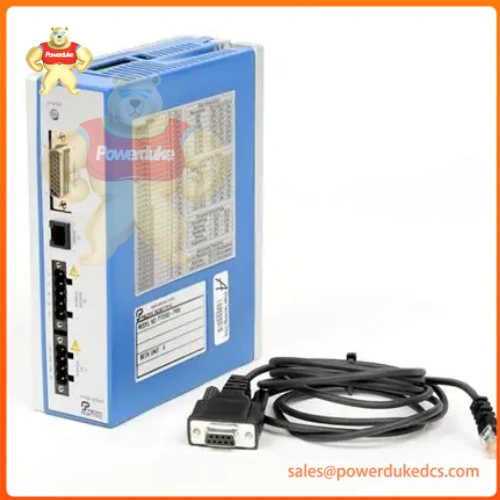
The CP303250 is an open-frame digital three-phase AC servo amplifier power stage within the legacy SERVOSTAR SP platform. This module functions as a heavy-duty current delivery matrix, taking low-voltage pulse-width modulation (PWM) logic commands and driving heavy brushless synchronous servo motors.
Because this hardware handles high current densities across integrated Intelligent Power Modules (IPMs) or IGBT blocks, treating it like a low-power, maintenance-free digital controller leads to sudden hardware failures. If the internal fan fails to maintain high-velocity airflow or if the drive is mounted in a tight enclosure without adequate clearance, the internal silicon switches will rapidly overheat and short-circuit.
[Mains Voltage Input] ───> [CP303250 Internal DC Bus]
                                    │
                         (IGBT Phase Switching)
                                    ▼
[Synchronous Servo Motor] <─── [Output Phase Terminals (Ma, Mb, Mc)]
                                    │
                        (Forced Air Convection)
                                    ▼
                     [Heatsink Thermal Dissipation Panel]
Technical Specification Baseline
| Parameter | Value | Field Implication |
| Primary Brand | Kollmorgen Industrial | High-performance legacy motion control and power conversion platform. |
| Model Configuration | CP303250 (PRD-P303250Z Series) | Three-phase AC servo drive power block assembly. |
| Series Class | SERVOSTAR SP3 Series | Designed for centralized, high-density multi-axis enclosure racks. |
| Mains Input Window | 115V to 230V AC Baseline | Standard industrial input handling for global utility connections. |
| Output Bus Nodes | Ma, Mb, Mc Terminal Phase Pins | Direct high-current paths straight to the primary motor stator. |
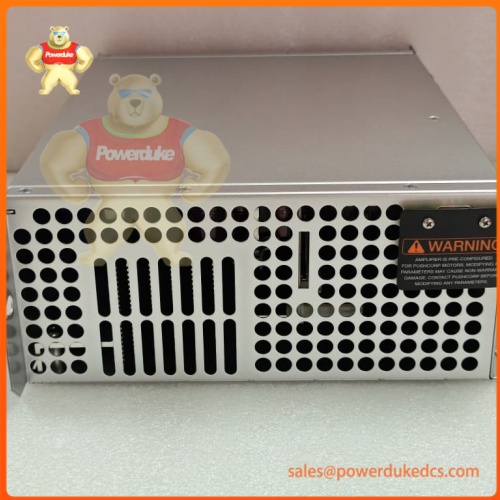
| Cooling Topology | Forced Air / Integrated Fan Assembly | Relies on unobstructed air channels to clear heavy thermal loads. |
| Protection Rating | IP20 Open Chassis Footprint | Demands clean, dust-free enclosure spaces to prevent internal arcs. |
ABC Classification & Stocking Recommendations
Managing vintage high-power motion hardware like the CP303250 requires a safety stock strategy built around matching mechanical frame constraints.
Class B Spares: Critical Axis Bottleneck, Long Rebuild Lead Times
The Kollmorgen CP303250 sits within Class B inventory parameters. While the drive module does not hold the master machine program, it serves as the primary physical driver for its assigned motor axis. Because its exact form factor, pin configurations, and electrical specifications are completely unique to the SERVOSTAR SP3 system, you cannot drop in a generic third-party servo drive without completely rebuilding the electrical panel and re-engineering the control software.
- Stocking Recommendation: Maintain at least 1 verified backup unit for every 5 active units deployed on high-priority production lines.
- Buffer Stock Logic: Because this hardware generation is legacy-retired, obtaining high-quality replacement stock direct from the manufacturer is highly restricted. Sourcing reliable surplus units or completing a component-level rebuild through a specialty repair facility can take anywhere from 3 to 6 weeks. Your local warehouse inventory must completely cover this window.
- Thermal Paste Maintenance: If you keep a refurbished or new-surplus CP303250 module in storage for over 5 years, verify the condition of the internal thermal compound before mounting it. Dried out or cracked thermal paste between the power module and the heatsink will cause a fast thermal failure when power is applied.
Not Recommended For
Do not deploy the CP303250 in harsh field areas prone to metallic dust, cutting fluids, or high humidity. Because the unit uses an open IP20 frame design, conductive materials pulled in by the cooling fan will quickly bridge high-voltage tracks, causing catastrophic phase-to-phase failures across the main DC bus.
Lifecycle Tracking & Vendor Management
Minimizing Total Cost of Ownership (TCO) across aging servo panels requires strict routine cleaning windows and specialized testing steps for incoming hardware assets.
Preventing Sudden Silicon Breakdown
To protect active CP303250 drives from sudden component failure during heavy multi-axis operations, implement the following preventive maintenance routines:
- Quarterly Airflow Inspections: Use clean, dry compressed air (max 2 bar / 30 psi) to blow out accumulated dust from the heatsink cooling fins and verify that the internal fan spins freely.
- Thermal Monitoring: Use a handheld infrared thermal camera during full-load operations to confirm that the surface temperature of the drive’s back panel is consistent with surrounding modules. An isolated hot spot indicates that the internal thermal paste has degraded.
- Screw Terminal Torque Logs: Re-torque the high-current output terminals to factory specifications annually to prevent resistance heating at the wire joints.
Vendor Verification Protocols
Because replacement CP303250 modules are routinely sourced from the independent surplus or specialized refurbishment marketplace, you must enforce a rigid incoming quality validation protocol.
When contracting with independent asset brokers, mandate a complete functional testing certificate. Never accept a basic “powers on” or “visual inspection passed” statement as a valid warranty seal. Require the vendor to run the unit under a continuous full-amperage load on a motor dynamometer for at least 4 hours. The testing certification must verify stable phase switching current, steady internal heatsink thermal rise profiles, and clean logic-level execution before the component is accepted into your active safety stock pool.
Quick Conclusions
- Keep at least 1 verified CP303250 drive locally in stock to ensure your electrical technicians can resolve a power-stage failure within minutes.
- Inspect and clean the cooling paths every three months to protect the internal high-voltage switching transistors from thermal breakdown.
- Never mount this open-frame drive in environments with conductive dust; always house it inside a clean, sealed, and cooled enclosure.
- Require a complete 4-hour dynamometer load certificate from surplus suppliers before accepting a replacement unit into warehouse inventory.
FAQ
1. What is the mandatory discharge waiting time after removing primary power from the CP303250?
You must wait a minimum of 10 minutes after completely disconnecting all AC power sources before touching any internal terminals or handling wire connections. The internal high-voltage electrolytic smoothing capacitors store a massive electrical charge that remains highly dangerous even when the servo motor is completely stationary.
2. What is the difference between the Kollmorgen CP303250 and the CP310250 model lines?
While both parts belong to the same SERVOSTAR SP3 frame family and share an identical mechanical profile, they utilize different internal power semiconductor configurations. Well, technically the internal part number variations indicate variations in current amplification capacities and nominal continuous amperage ceilings. You must match the exact part number to ensure your drive matches your motor’s specific torque and current demands.
3. What is the precise tightening torque for the primary line and bus screw terminals?
The main power line screw connections require a tightening torque of 20 lb-in (2.26 N·m) using a standard M4 hardware interface. The internal DC bus terminal screws require a tightening torque of 12 lb-in (1.35 N·m) on M3.5 hardware. Adhering strictly to these torque limits avoids high-resistance hot spots that cause terminal degradation over continuous operational cycles.
4. How can a field technician test for internal component degradation while the drive is in a warehouse environment?
Perform a static bench-top diode check using a digital multimeter set to its diode test function. Measure the resistance pathways across the primary AC input terminals relative to the positive (+) and negative (-) nodes of the internal DC bus, then check the motor output pins (Ma, Mb, Mc) in the same manner. An open circuit or direct short circuit indicates a blown internal input rectifier bridge or a damaged IGBT output transistor block, meaning the unit is unfit for field deployment.
Channel Adaptation Notes
B2B Product Page Blueprint
- Title Construction: Use
Kollmorgen SERVOSTAR SP3 CP303250 Servo Drive Power Block. - Technical Callouts: Explicitly highlight its 115/230V AC input capacity, 3-phase digital control arrangement, IP20 open chassis profile, and cross-reference model series code
PRD-P303250Zin bold text near the top of the technical specs table to capture exact-match engineering searches. - Condition Declaration: Use clear marketplace condition tags such as “Legacy Component — New Surplus (Open Box)” or “Refurbished (Full-Load Dynamometer Performance Certified with 1-Year Warranty)” to streamline corporate technical procurement validation.
Industrial Network Social Strategy
- Topic Focus: Focus on maintaining legacy motion system stability and managing high-frequency EMI noise mitigation. Discuss how tracking core power-stage hardware like the
Kollmorgen CP303250shields highly cyclic automation cells from unexpected multi-week axis breakdown periods. - Tone Structure: Write directly to motion control engineers, robotics specialists, and industrial electrical maintenance managers. Skip the sales pitch talk entirely; focus purely on practical operational parameters like chassis grounding criteria, discharge times, and reducing mean time to repair (MTTR).
Kollmorgen SERVOSTAR 406A-C Kollmorgen CP303250 Kollmorgen CP310250