


Description
Technical Overview and Field Realities
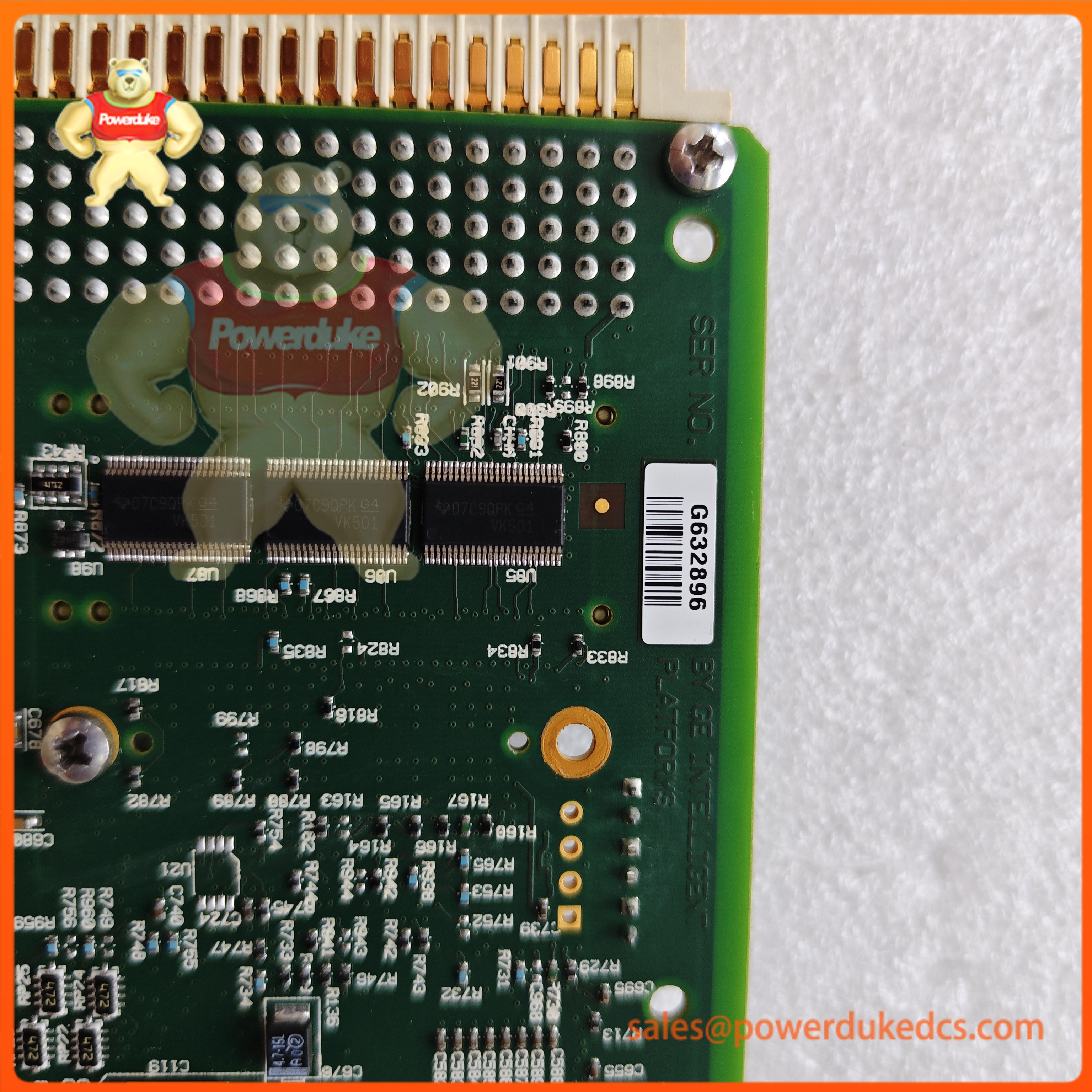
A sudden failure of an embedded processor board halts real-time data acquisition and brings down the entire VMEbus chassis instantly. In military, aerospace, and heavy industrial automation systems utilizing legacy GE Fanuc / Abaco architectures, the GE VME7865RC V7865-23003 (Part Number: 350-9300007865-230003 M) serves as a high-performance Intel Core 2 Duo Single Board Computer (SBC). This board drives deterministic control loops and hosts critical system software across dual Gigabit Ethernet interfaces and PMC/XMC expansion slots.
Field experience shows that these SBC boards face extreme thermal cycles when operated continuously in sealed, non-ventilated enclosures. While the onboard hardware monitors supply voltages and CPU core temperatures, the flash memory chips and onboard tantalum capacitors represent the most common failure points after 50,000 hours of continuous service. If the board fails to clear its Power-On Self-Test (POST), experiences erratic VMEbus arbitration dropouts, or exhibits memory parity errors, component degradation is actively occurring on the multilayer PCB.
Key Technical Specifications
| Parameter | Specification / Value |
| Model Number | VME7865RC (V7865-23003) |
| Part Number | 350-9300007865-230003 M |
| Brand | GE Fanuc / Embedded Systems (Abaco Systems) |
| Condition | New Original (New Surplus) or Refurbished (tested) |
| Processor | Intel Core 2 Duo |
| Bus Interface | VME64 (ANSI/VITA 1-1994) |
| Memory Capacity | System-dependent DDR2 RAM configuration |
| Expansion Options | Dual PMC/XMC slots for I/O modules |
Spare Parts Inventory Strategy
How many functional VME single board computers do you have waiting on your warehouse shelves today? Balancing capital efficiency against the catastrophic costs of a prolonged system outage requires a data-driven stocking policy. Because the VME7865 series represents a highly specialized legacy architecture, standard lead times through traditional supply channels can stretch into months.
ABC Criticality Classification
We classify the VME7865-23003 as an A-Class Critical Spare paired with a C-Class Usage Frequency. It exhibits high reliability over its operational lifecycle, but when a failure occurs, the lack of an immediate replacement on-site introduces catastrophic downtime risks.
Stocking Recommendations (Min/Max Levels)
- Single-Plant Baseline: Min: 1 / Max: 2. Holding a zero-unit buffer stock on a primary host processor exposes your entire operational stack to extreme lead time variability.
- Cross-Site Sharing Protocol: If your organization runs multiple legacy VMEbus systems across separate regional facilities within an 8-hour logistics window, centralize a pool of 2 units at your primary asset hub. This allows you to maintain a local Min level of 0 at satellite facilities, provided a formal cross-site sharing contract is signed and active.
Financial Modeling: Total Cost of Ownership (TCO)
Carrying physical inventory carries real capital costs. Let us calculate the true cost of holding a single VME7865RC processor board using an industry-standard 22% annual holding cost factor.
- Assumed Surplus Purchase Price: $4,500
- Annual Carrying Cost: $990 per year
- Average Cost of System Downtime: $40,000+ per hour
When weighed against a typical market procurement lead time of 4 to 6 weeks for a verified, fully tested “New Surplus” board, spending $990 annually to keep a unit on-site serves as an exceptionally logical insurance policy.
Lifecycle Tracking and Procurement Logic
The VME7865RC platform is deeply entrenched in its legacy lifecycle phase. Consequently, procurement must pivot away from standard factory ordering toward vendor consolidation with certified automation asset brokers and secondary market specialists.
Last-Time-Buy (LTB) and End-of-Life (EOL) Phaseout Handling
The original equipment manufacturer passed all production milestones for this board series years ago. Do not wait for your active boards to drop communication before auditing third-party inventory pools. Secure the specific “-23003 M” configuration block early to prevent firmware version mismatches during an emergency replacement.
Vendor Management Guidelines
- Preferred Suppliers: Partner with specialized B2B industrial electronics brokers who provide comprehensive static-safe packaging and detailed component testing certificates.
- Quality Verification: Require the vendor to supply a diagnostic log showing successful boot cycles, complete VMEbus backplane loopback testing, and verified reading/writing across all flash memory sectors.
- Emergency Contacts: Maintain up-to-date agreements with international aviation couriers and brokers capable of arranging next-day air hot-swaps.
Explicit Restrictions
⚠️ NOT RECOMMENDED FOR: Do not install the VME7865RC into newly developed system architectures or greenfield industrial projects. If your application demands a significant hardware expansion, execute a platform migration to modern VPX or PCIe-based architectures. Well, technically this board can be replaced by newer VME boards, but only if your existing real-time operating system (RTOS) contains the precise driver updates required for the newer processor architectures—verify this with your software engineering team first.
Quick Conclusions
- Stock a minimum of 1 unit on-site if your plant runs critical infrastructure dependent on this exact board model.
- Enforce exact part number verification (350-9300007865-230003 M) during procurement to ensure the memory and clock speed match your active application code.
- Establish cross-site sharing pools to minimize capital tied up in duplicate, slow-moving legacy computing components.
- Insist on exhaustive thermal testing logs from third-party suppliers to minimize the risk of getting dead-on-arrival (DOA) surplus parts.
FAQ
What does the “M” suffix denote at the end of part number 350-9300007865-230003 M?
The “M” suffix typically designates a specific manufacturing revision, conformal coating option, or component modification applied during production. Always cross-reference your original system BOM (Bill of Materials) to ensure your backplane can accept standard boards without specific modification.
Can this board be hot-swapped while the VMEbus chassis is energized?
Absolutely not. The standard VME64 backplane does not natively support live extraction or insertion of host processor boards. Pulling the board under power will trigger a VME bus error (BERR), corrupt volatile RAM data, and likely short out adjacent pin connections on the backplane.
How should the VME7865RC be stored to ensure long-term functionality?
Keep the module in a certified ESD-shielded moisture barrier bag with a fresh desiccant pack. Maintain storage temperatures between −40 and +85°C in a climate-controlled room. Avoid unconditioned warehouses where high relative humidity can degrade the solder joints or cause tin-whisker growth on older circuit paths.
Channel Adaptation Notes
For B2B Marketplace Product Pages (e.g., ThomasNet, Parts Brokers)
- Title Format: GE VME7865RC V7865-23003 Single Board Computer
- Formatting Priority: Display the “Parameter: Value” technical specification table immediately below the intro paragraph. Bold all warranty terms (“2-Year Operational Guarantee”) and condition classifications (“New Surplus / Tested Refurbished”) to maximize conversion metrics.
For Maintenance, Repair, and Operations (MRO) System Wikis
- Asset Code: COMP-GE-VME-7865RC
- Process Change: Configure the computerized maintenance management system (CMMS) to auto-generate an expedited procurement ticket the moment on-site warehouse stock levels fall below 1 unit. Include the specific approved vendor list (AVL) directly within the asset notes.






