

Description
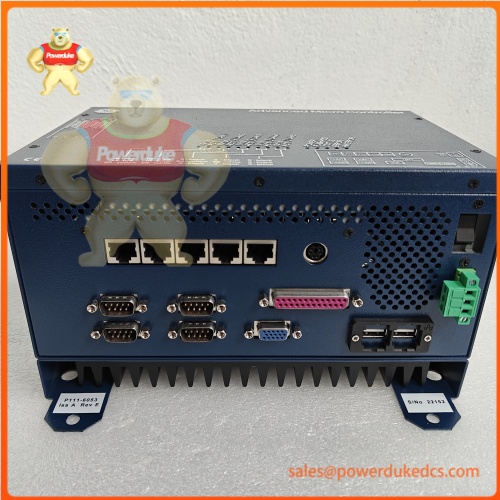
1.Unboxing & Physical Snapshot (Dynamic List)
- Brand & Model: GE Energy / General Electric P111-6053 (Advanced Microcontroller, Revision D / Iss A)
- Physical Dimensions: Approximately 18.0 cm x 10.0 cm x 4.5 cm
- Estimated Shipping Weight: 0.3 kg (Dimensional weight applies for air freight)
- What’s in the Box: Microcontroller module housed in an antistatic ESD shield bag, integrated configuration jumper blocks, and factory compliance certification tags. (Note: Terminal blocks and backplane connectors are sold separately).2.Product Introduction
This hardware drops directly into heavy-duty industrial control cabinets, anchoring complex electrical loops where ambient temperatures and continuous electrical noise test standard silicon. Maintenance technicians secure the printed circuit board assembly onto standard DIN rails, relying on the machined aluminum housing and front-face status LEDs to diagnose node activity instantly.
Operational safety depends heavily on deploying verified OEM hardware rather than unverified third-party clones. Using this exact microcontroller ensures that internal processing speeds, watchdog timers, and memory allocations match site safety documentation, preventing unexpected communication dropouts across plant floor networks.
3.Core Technical Specifications
- Processor Architecture: 32-bit industrial microprocessor
- Power Supply Input: 24V DC nominal industrial bus
- Operating Temperature Range: -20°C to +70°C
- Communication Interfaces: RS-232 / RS-485 serial ports
- Enclosure Mounting: DIN-rail mountable electronic housing
- Memory Structure: Volatile and non-volatile flash configuration storage
- Approximate Heat Dissipation: Low-draw passive convection (< 5W thermal output)
- Signal I/O Compatibility: Discrete digital and analog sensor interfaces4.Global Compliance & Industry Certifications
Auditors require strict traceability on active logic hardware to satisfy property insurers and local electrical inspectors. This component aligns with standard industrial benchmarks, featuring designations such as the CE Mark for European market entry, UL/cUL listing for North American panel safety, and potential hazardous area ratings depending on the specific facility zone.
A proper UL/cUL listing confirms that the internal power circuitry and terminal isolation barriers will contain internal shorts, protecting technicians from electrical shock hazards during live troubleshooting. Verify specific lot certifications with OEM.
5.Long-Term Storage & Asset Preservation Guide (E-E-A-T Goldmine)
Industrial spares often sit idle in climate-uncontrolled warehouses for years before deployment, making proper shelf-life management critical to prevent sudden infant mortality on startup. Leave the module inside its original factory-sealed anti-static (ESD) shielding bag until the exact moment of physical installation to protect the sensitive surface-mount CMOS components from electrostatic discharge and airborne sulfur corrosion. Store the unit on static-safe shelving where ambient relative humidity remains strictly below 60 percent, shielding the conformal coating from moisture-induced breakdown. If this unit features onboard electrolytic capacitors stored past three years, log a bench-power test cycle to reform the dielectric oxide layer before mounting it into a live production rack.
- Physical Installation PrerequisitesMount the enclosure vertically on a grounded metal DIN rail, leaving a minimum vertical clearance of 50mm above and below the housing to permit unobstructed natural convection cooling through the vented side slots. Ensure the panel backplane maintains a low-impedance connection to the main cabinet ground busbar, tightening the chassis bonding screw to eliminate electromagnetic interference (EMI) that can corrupt high-speed serial data packets.
- Buyer’s FAQ (Logistics & Compliance Focus)
- What is the correct Harmonized System (HS) tariff code for global customs clearance? Microcontrollers and processor modules typically fall under HS code 8538.90 (parts suitable for use solely or principally with programmable controllers), though clearing agents should verify local country interpretations.
- Does the module ship with the latest firmware pre-loaded? Units typically arrive with baseline factory firmware matching the hardware revision stamp (Revision D), but field engineering teams must validate version compatibility against their specific project configuration file prior to commissioning.
- How does the Country of Origin (COO) impact documentation? The physical COO tag (typically USA or designated manufacturing partner facilities) must match commercial invoice declarations to prevent customs holds or countervailing duty assessments during international transit.
- What level of transit insurance is recommended for freight? Given the high replacement value and sensitivity of industrial logic hardware, always insure shipments for full replacement cost using a bonded courier service with shock-watch indicator labels attached to the outer carton.






