

Description
 1. Unboxing & Physical Snapshot
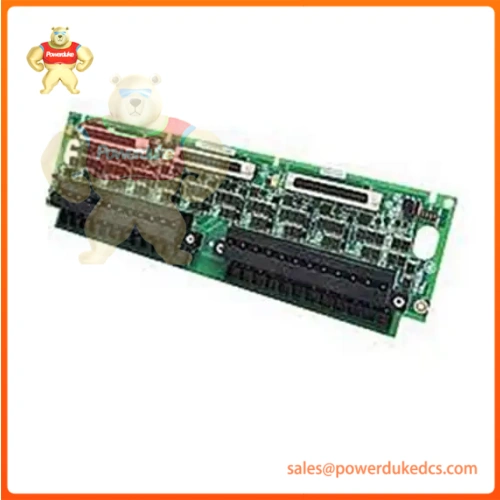
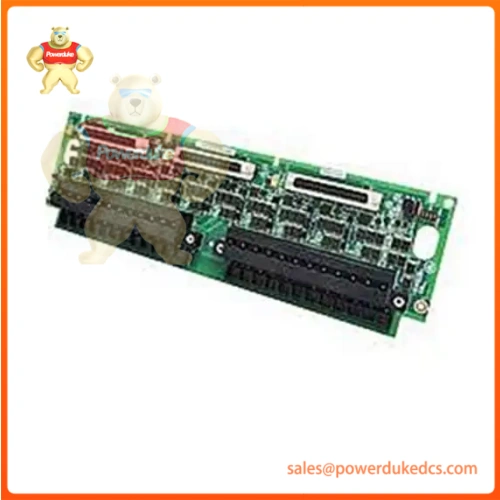
- Model & Brand: General Electric (Speedtronic Mark VI / Mark VIe Control System Series) RTD Terminal Board — Part Number: IS200TRTDH1DCB (Functional Acronym: TRTD)
- Physical Dimensions: Standard Mark VI modular printed circuit board footprint (Approximately 150 mm W × 330 mm L profile with barrier-type terminal blocks)
- Estimated Shipping Weight: Approximately 0.65 kg net (Packaged in multi-layer anti-static bubble containment and corrugated transport box)
- What’s in the Box: IS200TRTDH1DCB terminal board assembly, pluggable barrier terminal blocks, onboard fusing/noise suppression components, and manufacturer conformance label.
2. Product Introduction
Structure B (Architecture hook): Engineered to interface critical temperature sensing loops with heavy-duty industrial gas and steam turbine control architectures, the IS200TRTDH1DCB serves as a specialized Resistance Temperature Detector (RTD) termination board within the GE Mark VI/VIe control ecosystem. Within power generation and heavy industrial plants, the board aggregates thermal data from up to sixteen 3-wire RTD inputs, scaling and routing signals directly to the primary I/O processor modules.
Housed in a rugged open-style industrial circuit board layout treated with a protective conformal coating, the assembly features integrated noise-suppression circuitry designed to block high-frequency electromagnetic interference (EMI) and electrical surges. Its precision barrier-type screw terminals ensure secure physical connections, preserving signal integrity across long-distance cable runs from harsh turbine enclosure zones.
3. Core Technical Specifications
| Parameter | Value |
| Component Type | Resistance Temperature Detector (RTD) Terminal Board |
| Product Series | GE Speedtronic Mark VI / Mark VIe Control System |
| Input Capacity | Up to 16 three-wire RTD inputs via barrier-type terminal blocks |
| Excitation Current | 10 mA DC multiplexed excitation current per RTD channel |
| Maximum Field Distance | Up to 300 meters (984 feet) from the turbine control cabinet |
| Maximum Loop Resistance | 15 ohms maximum two-way cable resistance |
| Signal Sampling Rate | Normal mode: 4 samples/sec; Fast mode: 25 samples/sec |
| Enclosure Protection | IP20 open-style cabinet-mount module (Conformal coated) |
| Physical Net Weight | Approximately 0.45 kg to 0.50 kg |
4. Global Compliance & Industry Certifications
Type-test verification and rigid electrical compliance standards are mandatory for terminal boards deployed within high-consequence power generation and utility assets.
- Expected Certifications: CE Mark (EMC and Low Voltage Directives), UL/cUL Listed Industrial Control Equipment ratings, and RoHS material compliance.
- Safety Relevance: Built-in high-frequency decoupling and surge suppression prevent field-loop electrical transients or lightning-induced noise from migrating into central processor racks and causing spurious turbine trips.
- Audit Note: Cross-verify terminal board hardware revisions and firmware compatibility files against your plant’s software configuration database prior to backplate integration.
5. Long-Term Storage & Asset Preservation Guide
Veteran Maintenance Note: Storing sensitive electronic terminal boards in industrial warehouses requires strict humidity control to prevent barrier block oxidation and surface-mount trace corrosion.
- ESD Protection: Keep the circuit board permanently sealed inside its original metallized anti-static shielding bag to protect sensitive onboard components from electrostatic discharge.
- Climate Baseline: Store the unit in a clean, dry environment maintaining relative humidity strictly below 50% non-condensing and ambient temperatures between -20^\circC and +40^\circC.
- Physical Preservation: Store boards flat or vertically slotted in high-density foam bins; never stack heavy inventory directly on top of the terminal blocks or electronic components.
6. Physical Installation Prerequisites
- Ensure that the local control cabinet power distribution and I/O bus feeds are completely locked out and de-energized before mounting the board.
- Connect the field RTD cable shields securely to the designated ground strip adjacent to each terminal block to maintain continuous electromagnetic shielding.
- Verify that wire gauges up to 12 AWG are properly stripped and torqued into the barrier terminal blocks to prevent intermittent high-resistance connections under turbine vibration.
7. Buyer’s FAQ (Logistics & Compliance Focus)
- What Harmonized System (HS) code governs international customs clearance?The standard global export classification for this industrial control terminal board is 8538.90.8180 (Parts suitable for use solely or principally with electrical control apparatus).
- How does Country of Origin (COO) verification impact project auditing?Accurate origin tagging on commercial shipping documents ensures compliance with international trade frameworks and regional infrastructure procurement mandates; check the factory label (typically United States manufacturing origin).
- Does this hardware require on-board configuration jumpers?No, the IS200TRTDH1DCB relies on software configuration via the Mark VI Toolbox/ToolboxST environment for scaling and linearization across supported RTD types.
- What level of transit insurance should be specified?Always mandate fully declared-value, tracked air cargo insurance to protect delicate printed circuit traces and terminal blocks against shock damage during global transit.






