

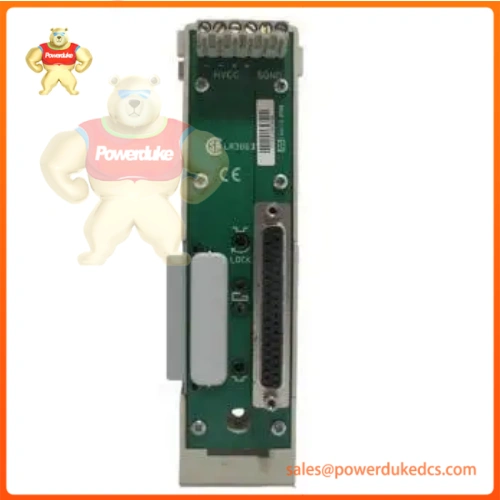
Description
1. Unboxing & Physical Snapshot
- Model & Brand: General Electric (GE) / Associated Industrial Line, 8020-CE-RH
- Physical Dimensions: Approximately 14.0 cm x 9.0 cm x 5.0 cm (Compact industrial sensor form factor)
- Estimated Shipping Weight: 0.6 kg (Boxed with custom antistatic cushioning; Net unit weight: 0.35 kg)
- What’s in the Box: GE industrial flow sensor unit, integrated connection housing, diagnostic terminal interface block, and factory compliance slip (mounting adapters and process fittings sold separately).
2. Product Introduction
Industrial fluid monitoring loops demand dependable sensing hardware capable of maintaining accurate telemetry across continuous operational cycles. The 8020-CE-RH integrates precision internal transduction circuitry within a sealed housing, designed to interface cleanly with standard General Electric control and data acquisition infrastructure.
Harsh process environments frequently expose field instrumentation to severe thermal shifts and vibration. Plant engineers specify this exact component configuration to maintain stable operational logic and loop integrity across demanding industrial fluid management lines.
3. Core Technical Specifications
| Parameter | Value |
| Device Architecture | Precision industrial flow sensing / control component |
| Operating Voltage | Standard industrial control levels (e.g., 12V to 36V DC nominal) |
| Power Consumption | Low-power solid-state signal draw (< 2W) |
| Heat Dissipation | ~6.8 BTU/hr |
| Electrical Connection | Integrated terminal block / plug-in connector layout |
| Enclosure Protection | IP65 / NEMA rated industrial enclosure sealing |
| Operating Temperature | -15°C to 80°C (5°F to 176°F) |
| Mounting Interface | Standard insertion or pipeline process connection spacing |
4. Global Compliance & Industry Certifications
Third-party auditors inspecting fluid automation panels and machinery safety loops require clear traceability and compliance documentation for all installed hardware.
- Expected Compliance Standards: CE Mark, UL/cUL Listed (Industrial Control Equipment), and RoHS compliance directives.
- Safety Significance: The UL and CE designations confirm that internal electrical isolation barriers prevent transient line surges from bridging low-voltage control loops and external power feeds.
- Verify specific lot certifications with General Electric or your regional authorized distributor prior to installation.
5. Long-Term Storage & Asset Preservation Guide
Precision industrial components sitting dormant in warehouse inventories remain vulnerable to seal degradation, terminal oxidation, and environmental humidity.
Keep the unit inside its original factory anti-static (ESD) or moisture-barrier packaging to protect internal contacts and electronic elements from airborne sulfur and dust. Maintain stockroom climate parameters strictly below 60% relative humidity to prevent degradation of internal plastic compounds and elastomer seals. Inspect the unit annually for any signs of physical wear, housing cracking, or terminal corrosion before deploying it to an active plant location.
6. Physical Installation Prerequisites
Proper mechanical alignment and vibration isolation are essential to maximize the operational lifecycle of industrial flow sensors. Ensure the mounting interface is clean and free of burrs to prevent housing distortion when torqueing the mounting fasteners. Maintain adequate clearance around the terminal entry points to prevent mechanical strain on incoming field cabling.
7. Buyer’s FAQ
- What is the proper Harmonized System (HS) tariff code for international shipments of this flow sensor?
- Industrial flow measurement instruments and associated parts typically fall under HS Code 9026.10 or 8538.90 depending on exact functional classification. Confirm exact bindings with your customs broker.
- Does this unit require any pre-installation programming or software configuration?
- No, this hardware part is a hard-configured industrial sensor component and does not utilize programmable software firmware.
- What logistics implications arise from the Country of Origin (COO)?
- Manufacturing origins for this platform trace to authorized global GE production facilities; check the exterior box label for exact traceability data.
- What packaging precautions are mandatory for secure freight transit?
- Ship the unit inside a corrugated carton utilizing high-density foam padding to absorb mechanical drop shocks and protect sensitive housing seals during transit.
- Ship the unit inside a corrugated carton utilizing high-density foam padding to absorb mechanical drop shocks and protect sensitive housing seals during transit.






