

Description
1. Unboxing & Physical Snapshot
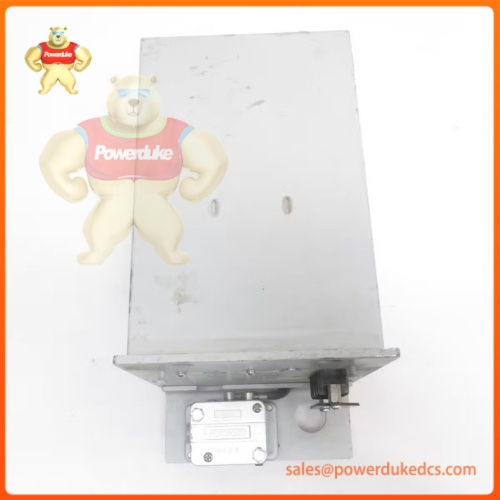
- Model & Brand: Foxboro (Invensys / Schneider Electric), 69TA-2RH (Current-to-Pressure / Current-to-Air Pneumatic Transducer)
- Physical Dimensions: Approximately 26.5 cm x 14.0 cm x 18.0 cm (Rugged industrial cast enclosure)
- Estimated Shipping Weight: 5.5 kg (Boxed with dense industrial foam cushioning; Net unit weight: ~4.5 kg)
- What’s in the Box: Foxboro 69TA-2RH transducer assembly, pneumatic inlet/outlet port fittings, electrical terminal cover block, calibration data sheet, and factory compliance documentation.
2. Product Introduction
Industrial control loops relying on electronic controllers to manipulate heavy pneumatic final control elements require reliable, highly accurate current-to-pressure signal conversion. The 69TA-2RH converts standard analog current control signals into proportional pneumatic output pressures, driving control valves, dampers, and valve positioners with precision.
Process plant environments frequently subject pneumatic instruments to severe vibration, moisture, and variable ambient temperatures. Plant instrumentation engineers rely on this robust Foxboro architecture to maintain linear pressure regulation and loop responsiveness across demanding chemical, oil-and-gas, and power generation units.
3. Core Technical Specifications
| Parameter | Value |
| Device Type | Current-to-Pressure (I/P) / Current-to-Air Pneumatic Transducer |
| Input Signal Range | 4–20 mA DC (or 10–50 mA variants depending on sub-model trim) |
| Output Pressure Range | 3 to 15 PSI (20 to 100 kPa) standard pneumatic span |
| Supply Air Pressure | Nominally 20 PSI (140 kPa) clean, dry instrument air |
| Input Resistance | Typically 170 \Omega to 320 \Omega loop impedance |
| Accuracy / Linearity | \pm 0.5\% of span typical operating tolerance |
| Enclosure Rating | Weatherproof NEMA / IP-rated cast housing for field mounting |
| Operating Temperature | -40°C to +60°C (-40°F to +140°F) |
4. Global Compliance & Industry Certifications
Auditors reviewing process control loops and hazardous area instrumentation circuits require complete documentation regarding pneumatic safety and electrical containment.
- Expected Compliance Standards: CE Mark, CSA / FM hazardous location classifications (Class I, Division 2 options), and PED conformity frameworks.
- Safety Significance: The rugged housing and explosion-proof terminal construction prevent electrical sparking or pneumatic over-pressurization failures from compromising adjacent control infrastructure in classified plant zones.
- Verify specific lot certifications and area classification drawings with Foxboro or your regional compliance officer before plant air supply hookup.
5. Long-Term Storage & Asset Preservation Guide
Pneumatic instrumentation kept in warehouse stock inventories requires strict environmental controls to protect internal flapper-nozzle mechanisms, relay diaphragms, and electrical coils from degradation.
Keep the transducer sealed inside its original moisture-barrier packaging with active desiccant packs to shield internal pneumatic orifices and electrical terminals from airborne moisture and sulfur. Maintain stockroom climate parameters strictly below 60% relative humidity. Inspect the instrument supply ports annually to ensure clean plastic protective plugs remain tightly fitted, preventing dust ingress into the internal restrictors.
6. Physical Installation Prerequisites
Proper structural mounting and clean air supply conditioning are mandatory to prevent erratic pneumatic output and premature mechanical wear. Mount the unit securely to a rigid 2-inch pipe stand or flat structural panel using vibration-isolating brackets. Ensure the supply air is filtered through an instrument-grade coalescing filter to remove all traces of oil, moisture, and particulate matter before connecting to the supply port.
7. Buyer’s FAQ
- What is the proper Harmonized System (HS) tariff code for international customs clearance of this transducer?
- Industrial pneumatic instruments and automatic regulators typically fall under HS Code 9032.89 (Automatic regulating or controlling instruments and apparatus). Confirm exact bindings with your customs broker.
- Does this unit require electronic calibration adjustments after installation?
- Zero and span adjustments can be fine-tuned via internal calibration screws, but loop matching should be verified using a calibrated current source and a precision pressure gauge.
- What logistics implications arise from the Country of Origin (COO)?
- Manufacturing origins for Foxboro 69TA series instruments traditionally trace to the United States or authorized global production hubs; check the exterior shipping box label for exact traceability records.
- What packaging precautions are mandatory for secure freight transport?
- Ship the unit inside a heavy-duty double-walled corrugated box utilizing high-density molded foam to absorb mechanical drop shocks and protect the external pneumatic ports and electrical housing during transit.
- Ship the unit inside a heavy-duty double-walled corrugated box utilizing high-density molded foam to absorb mechanical drop shocks and protect the external pneumatic ports and electrical housing during transit.






