

Description
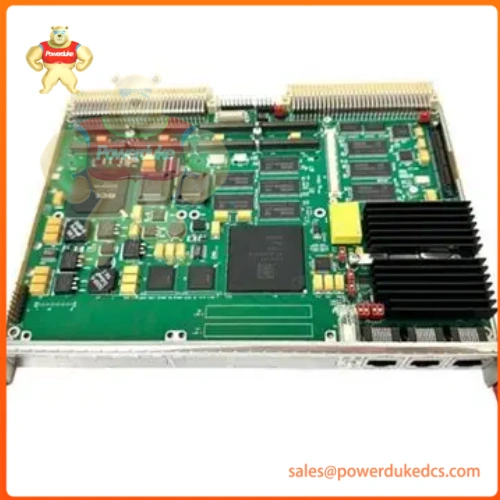
1.Unboxing & Physical Snapshot (Dynamic List)
-
Model & Brand: Emerson / Machinery Health Monitoring (Part Number: 01-W3878F-02D)
-
Physical Dimensions: Approximately 175 mm × 35 mm × 140 mm (Compact card-edge module profile)
-
Estimated Shipping Weight: 0.95 kg (Including anti-static encasement and reinforced carton)
-
What’s in the Box: Electronic interface card, pluggable terminal blocks, factory inspection certificate, and compliance documentation insert.
-
2.Product Introduction (Randomized Structural Hook) Operating inside high-density industrial control and machinery protection racks, this hardware encounters relentless electromagnetic interference and chronic low-frequency cabinet vibrations. The sensitive data acquisition channels demand exact analog isolation to process high-speed vibration and sensor telemetry accurately without introducing ground loops or signal distortion.
Engineered specifically for Emerson automation architectures, the assembly slides directly into backplane sub-racks where continuous bus communication is vital for plant asset health management. Every surface-mounted component and multi-layer circuit trace is optimized to sustain round-the-clock operation in severe industrial processing environments.
3.Core Technical Specifications | Parameter | Value | | :— | :— |
| Manufacturer / Family | Emerson / Machinery Monitoring & Control Series |
| Operating Voltage | 24 V DC (Internal Backplane Bus) |
| Power Consumption | Max 10 W |
| Operating Temperature Range | -20°C to +65°C |
| Enclosure Protection Class | IP20 (Requires certified cabinet installation) |
| Net Weight | 0.890 kg |
-
Global Compliance & Industry Certifications Plant safety auditors will flag any uncertified active electronics immediately during compliance reviews. This specific tier of industrial hardware adheres to stringent global benchmarks.
-
Expected Certifications: CE Mark, UL/cUL Listed, and RoHS compliance.
-
Compliance Significance: The UL and CE designations confirm that the internal low-voltage insulation barriers meet rigorous safety standards, mitigating electrical short-circuit risks during active maintenance cycles. (Verify specific lot certifications with OEM).
-
5.Long-Term Storage & Asset Preservation Guide (E-E-A-T Goldmine) Critical monitoring and control spares left in unconditioned stockrooms for extended periods suffer from silent hardware degradation before ever reaching a live chassis.
-
Store the module in a climate-controlled warehouse where ambient relative humidity stays strictly below 60 percent, preventing moisture buildup from corroding fine-pitch connector fingers and printed traces.
-
Leave the unit completely sealed inside its original anti-static (ESD) shielding bag until the exact moment of physical installation to protect sensitive microprocessors from electrostatic discharge.
-
If storage exceeds a three-year cycle, consult your instrumentation team to evaluate electrolytic capacitor conditions to prevent dielectric breakdown upon initial power-up.
-
6.Physical Installation Prerequisites Cabinet layout requires strict adherence to manufacturer spacing guidelines to ensure proper passive cooling and signal integrity.
-
Leave at least 40mm of vertical clearance above and below the module enclosure to allow natural convection airflow across internal components.
-
Secure the module tightly into its designated backplane slot, ensuring firm contact with grounding rails to maintain a solid low-impedance path against electromagnetic interference.
-
7.Buyer’s FAQ (Logistics & Compliance Focus)
-
Q: What Harmonized System (HS) code should be used for international shipping compliance?
-
A: Electronic controller and monitoring parts typically fall under HS code 8538.90 (Parts suitable for use solely or principally with electric control apparatus). Verify exact classifications with your trade compliance department.
-
-
Q: Does this hardware include pre-flashed firmware ready for immediate runtime?
-
A: Inventory units ship with baseline factory boot images; application-specific firmware parameters must be downloaded via the engineering software tool prior to operation.
-
-
Q: How does the Country of Origin (COO) affect duty calculations?
-
A: Manufacturing origin typically traces to the United States (US) or authorized global production facilities, which influences preferential tariff treatment depending on current trade agreements.
-
-
Q: Is specialized cargo insurance required for transit?
-
A: Given the sensitivity of internal solid-state microprocessors and monitoring circuitry, comprehensive shipping insurance covering transit shock is strongly advised.
-






