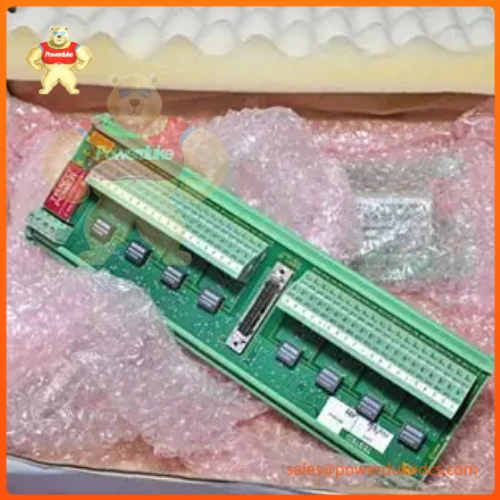
Description
The designation Alstom ICP232 (often associated with legacy power generation, substation automation, or industrial control communication sub-assemblies) refers to a specialized interface or communication card utilized within legacy Alstom control and protection architectures. Because Alstom’s automation portfolio has undergone multiple transitions (passing through GE Grid Solutions and GE Vernova), specific niche part codes like ICP232 frequently point to custom serial communication interface cards (typically handling RS-232 protocols) used within modular rack systems.
Commercial and Logistics Status
| Parameter | Value |
| Condition | Refurbished / Tested Surplus / Repair-Exchange (Subject to availability) |
| Availability | Rare / Obsolete — Dependent on specialized legacy surplus stock |
| Standard Lead Time | Varies by supplier; typically 1 to 2 weeks for legacy sourcing |
| Warranty | 12 months standard replacement or repair warranty (varies by vendor) |
| Pricing Note | Price subject to market conditions; contact us for a firm quote |
Technical Overview and Identification Context
Due to the proprietary and highly customized nature of legacy utility and industrial control hardware, detailed public data sheets for sub-assembly codes like ICP232 are limited. However, based on standard naming conventions in Alstom/GE automation lines:
- Prefix (Alstom): Designates manufacture or integration by Alstom’s power and grid automation divisions (historically spanning MiCOM, Moduveyor, or AlSPA systems).
- Identifier (ICP): Typically denotes an Intelligent Communication Processor, Interface Card Panel, or Communication Processor module.
- Suffix (232): Frequently indicates an RS-232 serial communication standard interface, used for local engineering access, diagnostic logging, or legacy protocol translation between rack controllers and external supervisory devices.
Engineering and Field Integration Notes
When dealing with obsolete or legacy communication cards in critical substation or industrial environments, careful validation prevents network disruption.
Integration Guidelines
- Pinout and Protocol Verification: Because RS-232 implementations on older proprietary racks can use non-standard handshaking or custom pin configurations, always verify cable pinouts against your hardware manual before connecting engineering laptops or external Modbus/ASCII devices.
- Rack Slot Compatibility: Ensure the card is inserted into the exact backplane slot designated in your system architecture drawings; placing communication processors in incorrect slots can cause address conflicts or backplane communication failure.
- Static Discharge Precautions: Handle legacy printed circuit boards (PCBs) using proper ESD wrist straps and anti-static bags to protect sensitive, obsolete electronic components from static damage.