Description
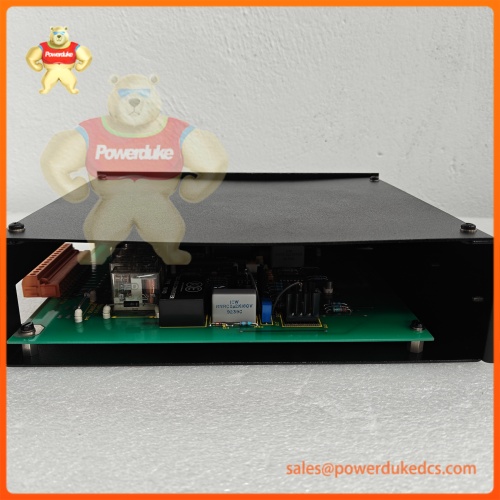
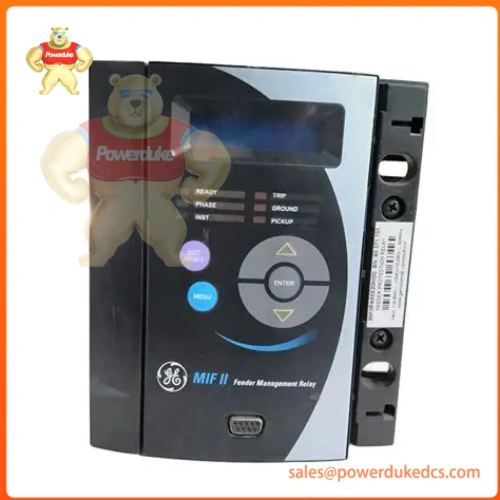
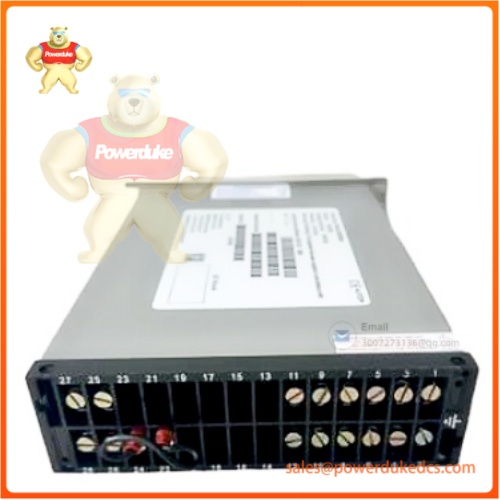
The ALSTOM / GE Vernova MVAJ105RA0802A is a high-speed, multi-contact hinged armature trip relay designed to directly actuate circuit breaker trip coils in protective relaying schemes. Built on the proprietary Midos size 2 case platform, this heavy-duty electromechanical relay acts as a deterministic, physical buffer between low-power protective measuring relays and high-burden substation circuit breaker trip circuits. It delivers rapid contact operation with negligible contact bounce, ensuring dependable isolation of electrical faults in power generation, substation transmission, and heavy industrial distribution grids.
Commercial and Lifecycle Logistics
+---------------------------+------------------------------------------------------------+
| Parameter                 | Value                                                      |
+---------------------------+------------------------------------------------------------+
| Product Condition         | New Original (Factory Sealed Surplus or Tested Refurbished)|
| Warranty                  | 12-Month Comprehensive Warranty                            |
| Availability              | In Stock / Ready for Worldwide Dispatch                    |
| Standard Lead Time        | 1–3 Business Days via DHL Express / FedEx / UPS            |
| Price Notice              | Price subject to market conditions; contact us for a firm  |
|                           | quote                                                      |
+---------------------------+------------------------------------------------------------+
Technical Specifications and Hardware Architecture
The MVAJ105 variant features specific design parameters that govern its operational burden, resetting mechanics, and contact layout.
Contact Configuration and Reset Mechanics
- Total Contacts: 10 electrical contacts contained within a compact Midos size 2 enclosure.
- Reset Mechanism: Hand and Electrical Reset. The physical target flag drops instantly upon actuation to indicate a trip event and must be physically cleared via the front panel reset lever or via an electrical reset pulse to the reset coil.
Electrical Operating Profiles
- Operating Voltage (V_x): 110 V to 125 V AC/DC nominal operating window.
- Operating Time: \le 10 ms at rated nominal voltage (fast-acting design for instantaneous breaker tripping).
- Contact Bounce: Meticulously engineered hinged armature assembly ensures virtually zero contact bounce, preserving the lifespan of downstream auxiliary contacts and breaker coils.
Burden Configurations and Capacitance Immunity
- High Burden Setup: Designed to comply with standard substation electrical utility noise immunity guidelines. It maintains immunity to accidental triggering caused by longitudinal wiring capacitance discharges during localized DC earth faults.
- Low Burden Selection: For applications with restricted control power availability, field engineers can convert the unit to a low burden profile by removing the external factory-installed link across the designated rear terminal blocks.
- Cut-off Mechanism: High-burden configurations utilize an internal, delayed mechanical or electronic economizing cut-off circuit (typically breaking the high current draw within 40 ms to 60 ms after positive armature latches) to safely drop the steady-state thermal loading down to a low-consumption holding burden.
Engineering Application and Field Constraints
Critical Application Warning:
When wiring the MVAJ105RA0802A into highly critical protection circuits, always confirm whether the system requires high or low burden modes. If utilizing High Burden mode for maximum noise and capacitance immunity, the relay is strictly rated for DC control voltage supplies. Do not supply alternating current (AC) to the primary initiation circuit while the external high-burden jumper link is installed.
- Inter-tripping Implementations: Commonly deployed for complex inter-tripping sequences, such as tying the high-voltage (HV) protection loop of a large three-phase power transformer directly to the low-voltage (LV) incomer breaker array.
- Enclosure Maintenance: Do not withdraw the inner relay module from its outer Midos case structure while the auxiliary control busbar is actively energized. Doing so risks transient arcing across the secondary CT/VT shorting switches or DC trip lines.
- Mounting Position: Vertical panel surface mounting is required to optimize gravity-assisted flag reset indicators and alignment constraints of the internal hinged armature mechanism.
Frequently Asked Questions (FAQ)
What is the exact difference between the MVAJ105 and an MVAJ051 model?
The MVAJ105 features 10 auxiliary contacts and is built within a Midos size 2 draw-out case footprint. The MVAJ051 is a smaller variant housing only 5 contacts in a tighter casing configuration. Additionally, the MVAJ051 relies on an instantaneous, internal electronic economizer cut-off rather than the time-delayed mechanical cut-off cycle seen on high-burden MVAJ10X series relays.
Can the target indicator flag be reset if the electrical fault trip signal is still present?
No. The mechanical design of the hand/electrical reset variant ensures that the flag and internal latches cannot be permanently cleared or overridden by operators if the underlying trip initiation signal (PR contact) remains active or energized.
What is the purpose of the high-burden vs. low-burden selectable link?
The high-burden setting ensures that the trip relay will not erroneously operate due to capacitive discharge currents caused by a sudden ground fault on long, distributed station battery wiring. If your panel layout features exceptionally short wiring runs or is completely isolated from battery-to-ground capacitance spikes, the jumper can be disconnected to minimize the instantaneous power demand on your control power supply bus.