Description
?? Product Overview
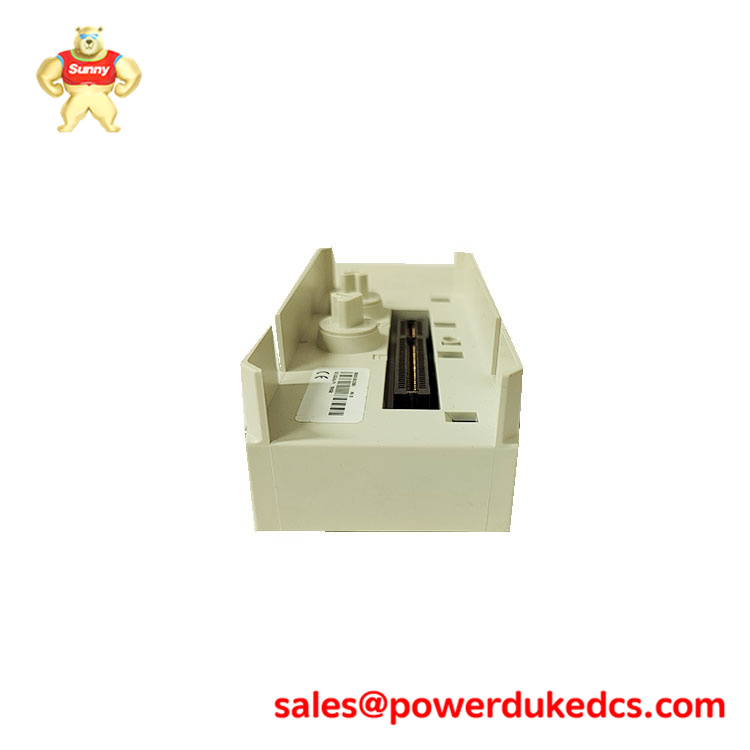
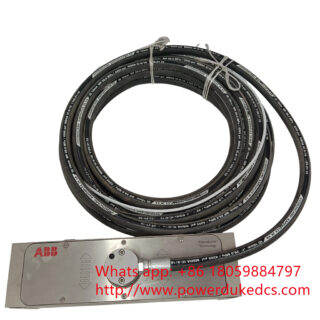
ABB TU842 3BSE020850R1 is a redundant module terminal unit (MTU) of the ABB S800 I/O system. It serves as the wiring terminals between the I/O module and the field devices, specifically designed for redundant I/O systems and suitable for 50V process signals. It is widely used in industrial automation scenarios requiring high reliability.
Key Parameters
Project Parameters
Product model: TU842 3BSE020850R1
Product type: Redundant Module Terminal Unit (MTU), installed horizontally
The system is compatible with ABB S800 I/O, and supports AC 800M controller and 800xA system.
I/O channels: Up to 16 channels (2×8 terminal blocks)
Process voltage: Maximum 50 V
Current per channel: Maximum 3 A
Total process power supply current: Maximum 10 A
Wire specifications: Solid core: 0.2 – 4 mm²; Stranded: 0.2 – 2.5 mm² (24 – 12 AWG)
Connection torque: 0.5 – 0.6 Nm
The stripping length is approximately 7 mm.
Insulation withstand voltage: 500 V a.c.
Installation method: 35 mm DIN rail (horizontal installation)
Operating temperature: 0 to +55 °C
Storage temperature: -40 to +70 °C
Relative humidity: 5 – 95% (no condensation)
Protection level IP20

Net weight of the product: approximately 0.6 kg
Note: Some information on the trading websites may be incorrect. Please refer to the official manual for accuracy.
?? Functions and Applications
Redundant I/O wiring
As the mechanical support and electrical interface for the S800 redundant I/O module, it provides up to 16 signal terminal blocks (2 I/O points + 1 ZP point per channel), and supports two sets of process power connections.
Module and Bus Management
Responsible for allocating ModuleBus signals between I/O modules and generating addresses for subsequent MTUs, supporting the chained expansion of I/O stations.
Mechanical error prevention design
Built-in mechanical keys, which can be compatible with various I/O modules such as AI843, AO845, DI840, and DO840, to prevent incorrect insertion.
High reliability certification
It has ATEX Zone 2, C1 Div.2 and other hazardous area certifications, as well as ABS, BV, DNV-GL, LR and other classification society certifications, and is suitable for harsh environments.
• Typical application scenarios
It is commonly used in industries such as petroleum, chemical engineering, power, metallurgy, and papermaking, providing reliable remote or distributed I/O connections for DCS/PLC systems.