Description
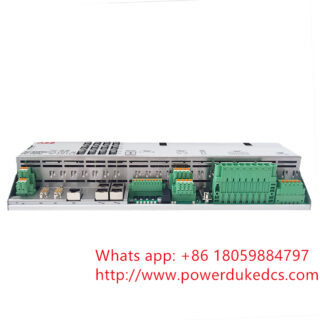
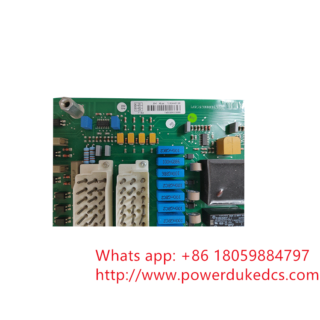
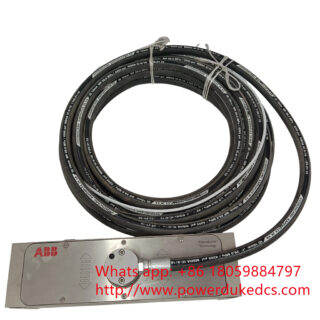
The Lam Research 832-129731-015 is a high-power, digitally controlled Radio Frequency (RF) Matching Network. Manufactured by Advanced Energy (AE) under the Navigator II (Model 3013-L65) product family, this specialized subsystem is designed for high-density plasma etching and deposition chambers within semiconductor fabrication platforms. Its primary function is to dynamically match the fluctuating impedance of process plasmas to a stable 50\ \Omega load, optimizing power transfer and preventing destructive reflected power.
Commercial Availability & Procurement
- Condition: Available as New Surplus, Used As-Is, or Component-Certified OEM Refurbished (fully tested under active RF load configurations).
- Warranty: 3 to 12 months depending on the designated semiconductor asset recovery tier.
- Lead Time: Ships within 2–5 business days from specialized semiconductor spare parts hubs.
- Pricing Note: As a critical capital equipment subsystem, pricing is tied to global wafer-fab equipment (WFE) demand and core exchange availability.
Technical Specifications
| Parameter | Value |
| Lam Research Part Number | 832-129731-015 |
| OEM Model Designator | Advanced Energy Navigator II 3013-L65 |
| Application Environment | Lam Research Plasma Etch / PECVD / NWFW Systems |
| Tuning Mechanism | Microprocessor-controlled digital tuning with high-speed stepper motor drives |
| Tuning Speed | Standard match response times under 1 second |
| Pulse RF Capability | Active tuning during pulsed RF operations (10% to 90% duty cycles up to 20 kHz) |
| Interoperability / Interface | Multi-protocol support (DeviceNet, RS-232, Ethernet, or analog interfaces) |
| Cooling Profile | Water-cooled internal plumbing (requires low-conductivity facility DI water) |
Field Experience & Engineering Insights
High-Speed Digital Tuning Architecture
Traditional analog match networks rely on slow searching algorithms that can take upwards of 5 to 6 seconds to achieve equilibrium. The Navigator II architecture uses advanced digital optimization algorithms, shifting both the series and shunt vacuum variable capacitors simultaneously along a nearly linear vector directly toward the 50\ \Omega center point.
- Plasma Ignition Stability: This sub-second response time minimizes “reflected power spikes” immediately following gas breakdown (plasma ignition). Lower reflected energy cuts down on premature wear to the expensive RF generators upstream and reduces wafer-to-wafer process variations.
- Pulsed RF Stabilization: Advanced processes use rapid RF pulsing to control ion energy inside the chamber trench. The 832-129731-015 is built to maintain stable matching during high-speed pulse cycles without experiencing mechanical capacitor hunting or dithering.
Mechanical Maintenance and Fluid Integrity
- DI Water Cooling Safeguards: Due to the dense concentration of high-voltage RF fields inside the compact enclosure, the internal copper coils generate significant heat. The module features integrated cooling loops. Technicians must check that the incoming Deionized (DI) water meets strict resistivity parameters. If resistivity falls due to facility contamination, minor electrical leakage currents will flow through the water line, causing localized galvanic corrosion and micro-leaks that can short out the expensive internal electronics.
- Capacitor Positioning & Stepper Wear: Over millions of production cycles, the internal stepper motors and drive belts that position the vacuum variable capacitors experience physical wear. During preventative maintenance outages, verify the mechanical backlash tolerances and run the factory homing routines via AE’s Virtual Front Panel (VFP) software tool to confirm position encoder repeatability.
Troubleshooting Checklist
- “Match Time-Out” or High Reflected Power Alarms:
- Check if the process gas recipe parameters (pressure, flow rate, or RF power) have shifted. A severe shift in plasma density can throw the impedance completely outside the physical tuning range (the Smith Chart window) of the match network.
- Inspect the internal vacuum variable capacitors for physical binding or fluid leakage from the bellows.
- RF Arcing Faults: Inspect the main RF output strap leading into the chamber pedestal or top electrode. Deposits of airborne process byproducts or loose torque settings on the connection brackets create micro-gaps that lead to severe RF arcing, leaving distinct black carbon scoring tracks on the components.
- Phase/Magnitude Sensor Errors: The 832-129731-015 relies on an embedded directional coupler sensor to read forward/reflected power arrays. If the software continuously reports phase errors despite a visually stable plasma beam, the internal RF sensor diode array may have suffered electrical breakdown due to an unsuppressed high-voltage transient surge.