Description
 Meta Description
Eliminate multi-week lead time exposures for the ABB 3BSE028144R65 DAPC 100 control unit. Access expert Min/Max levels, technical field specs, and TCO metrics.
Strategy 1: Standard Lifecycle & Lifecycle Analysis
Component Profile
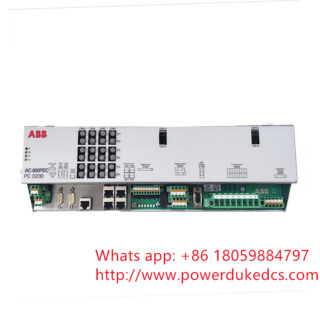
Field operational data from large-scale metal rolling facilities and critical marine propulsion drives classify the ABB 3BSE028144R65 (DAPC 100) application controller as a Class A strategic capital asset. This specialized unit executes high-speed closed-loop control algorithms within heavy-duty industrial drive systems and excitation panels. A processing failure on this specific hardware platform instantly trips the main power electronics stage, halting downstream operations and triggering catastrophic throughput loss.
Parameter Specifics
| Parameter | Value |
| Model Designation | DAPC 100 |
| Part Number | 3BSE028144R65 |
| Condition Profile | Factory Sealed or New Surplus (Mandatory for high-availability lines) |
| Mounting Architecture | Heavy-duty industrial chassis / sub-rack mounting |
| Communication Interface | High-speed fiber-optic channels & dedicated serial links |
Supply Chain Risk Assessment
Relying on spot-market procurement during an emergency drive shutdown is a massive financial gamble. Because this specific legacy controller is highly specialized, standard OEM lead times routinely reach 14 to 26 weeks—if component allocation is even possible. An unmitigated stock-out incident on a primary production line typically incurs operational losses averaging $30,000 per hour.
[Lead Time: 14-26 Weeks] ──> [Stock-out Threat: $30,000/hr] ──> [Classification: Class A Capital Spare] Stocking Recommendation & Cost Breakdown
- On-site Buffer Stock: 1 unit per active fleet (held strictly as an insurance policy).
- Reorder Point (ROP): 1 unit. Initiate an immediate asset sourcing workflow the same day the spare is deployed to the plant floor.
- Total Cost of Ownership (TCO): With market values for verified 3BSE028144R65 modules commanding significant capital premiums (often around 9,500), a standard 20% annual carrying cost equals an expenditure of 1,900 to carry this spare. This maintenance cost is negligible compared to the risk of leaving a major production line offline for months.
- Application Boundary: Do not store this unit in unconditioned warehouses; internal high-density components require climate-controlled storage to prevent premature component aging.